
This is good news, as it is every January 1, but it cannot be allowed to pass without a brief fit of grumpiness. Ninety-five years is an absurd length of time for copyright to persist. And remember that this is a temporary arrangement. Eventually our copyright laws will be brought in line with those in Europe and most of the rest of the world, where copyright lasts for seventy years after the death of the author.
The purpose of copyright (and patents) is defined quite specifically in the United States Constitution: “To promote the Progress of Science and useful Arts, by securing for limited Times to Authors and Inventors the exclusive Right to their respective Writings and Discoveries.” The goal is to promote science and art for the benefit of everyone. Therefore, authors and inventors should be able to earn a living from their hard work, because otherwise there would be no authors and inventors, and we could not have the benefit of their work.
But that is not the purpose of copyright that persists decades, or not infrequently more than a century, after the original publication. The plain purpose of such monstrous extensions of copyright is to create an intellectual-property aristocracy who live on the creations of dead artists and inventors, and whose distinguishing mark is that they never produce anything of benefit to society themselves.
Now, we know this is not unconstitutional, because the Supreme Court has ruled that no extension of the “limited Times” is unconstitutional as long as there is in fact a theoretical limit to the time. The decision is in line with the general tendency of the court to regard everything in the Constitution as meaningless blather unless it propounds a specific rule. But if it is not unconstitutional, it is at least obviously a development that would cause either laughter or tears to issue from the original authors of the Constitution. They stuck that explanatory phrase in there for a reason; they could just have said “Congress shall have the power to secure for limited times…” without any preface.
Enough of the sour persimmons. Dr. Boli will say only that twenty-eight years is enough time for any copyright to endure. If an author has not made money from his creation in that time, he never will. If he has made a lot of money, he needs no more; he should sit down and write something else that people like and earn our gratitude as well as our dollars.
With that out of the way, we can proceed to our celebration of what has finally entered the public domain in the United States. Dr. Boli will have more delights to point out soon, but for today he would like to introduce you to three motion pictures that have entered the public domain, because they are like nothing you will see in our own time, and—unless you have seen these particular movies—like nothing you have ever seen in your life. They are all available for download or streaming right now, free forever, unless Congress decides to revise the copyright law again and take them out of the public domain, which also is not unconstitutional and has been done before.
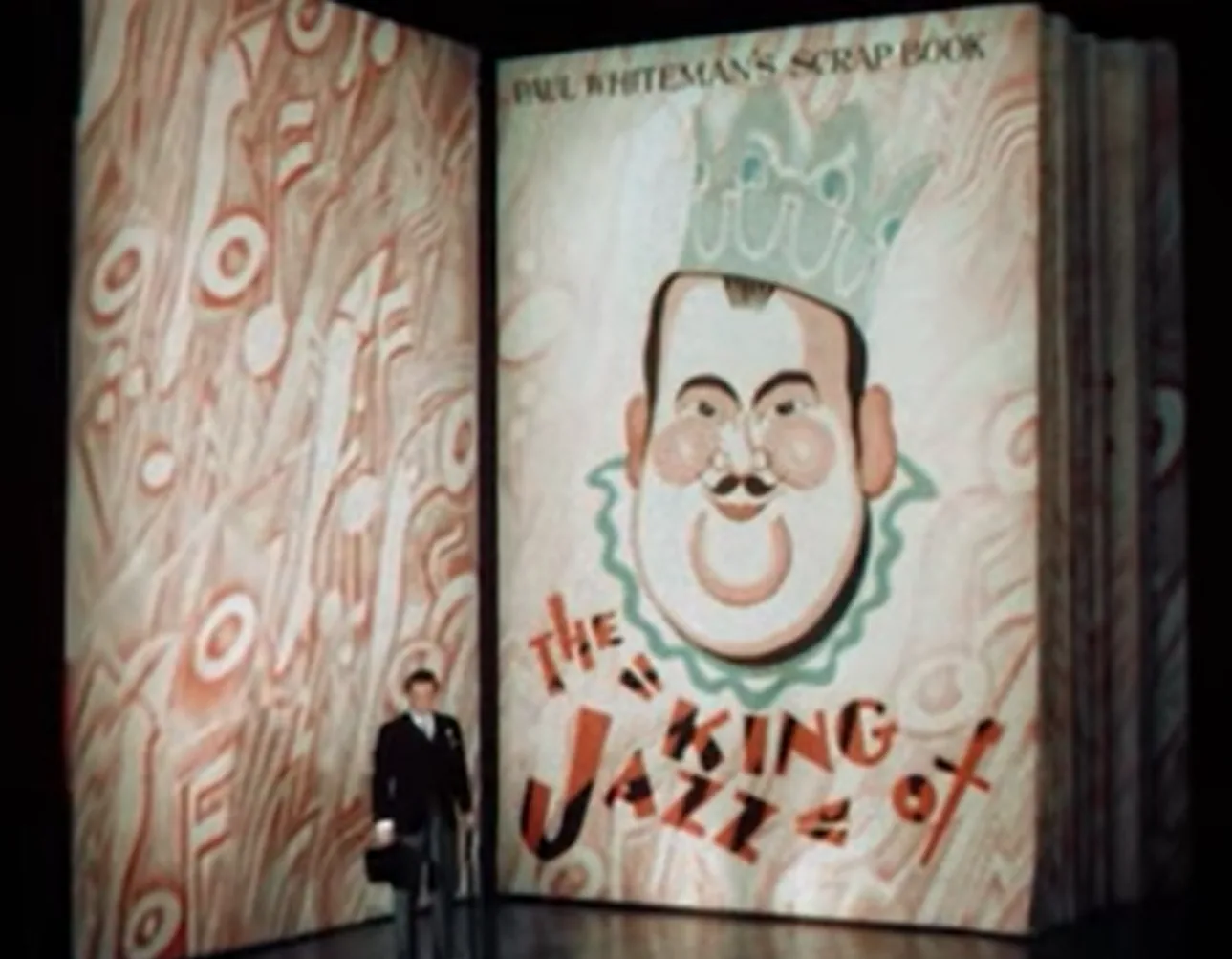
1. King of Jazz. This was perhaps the biggest and brightest of the musical revues that flooded out of Hollywood when sound was new. Nothing like them has been made since then, because a few of them were enormous hits, but by the time this one came out the public had tired of them, and this was one of several expensive revues that flopped. So you have probably never seen anything like it. And you may never have heard anything like it, either, if you are not familiar with Paul Whiteman’s music. Is it jazz? There’s a good way to start an argument. But stick to the question of whether Whiteman had talented musicians playing good arrangements, and the argument disappears. You get music of all sorts, dancing, comedy blackouts, and everything else you would expect from a stage revue. If you don’t like one number, you’re bound to like the next one. And as a bonus, you get the first color animated cartoon, made by Walter Lantz, who would later be famous as the creator of Woody Woodpecker.
There’s one way in which the movie is oddly like movies we do see today. It comes from the first great age of orange and teal. It was made in two-strip Technicolor, whose red and green dyes were pretty good at producing natural-looking flesh tones, but could not render blue, violet, or yellow. Today the fashion for orange and teal has passed into cinematic dogma, so once again we are seeing movies in what is effectively two-strip Technicolor, though we go through the silly intermediate stage of filming them in natural color and then running them through color-denaturing software.
King of Jazz in an excellent print at Wikimedia Commons.
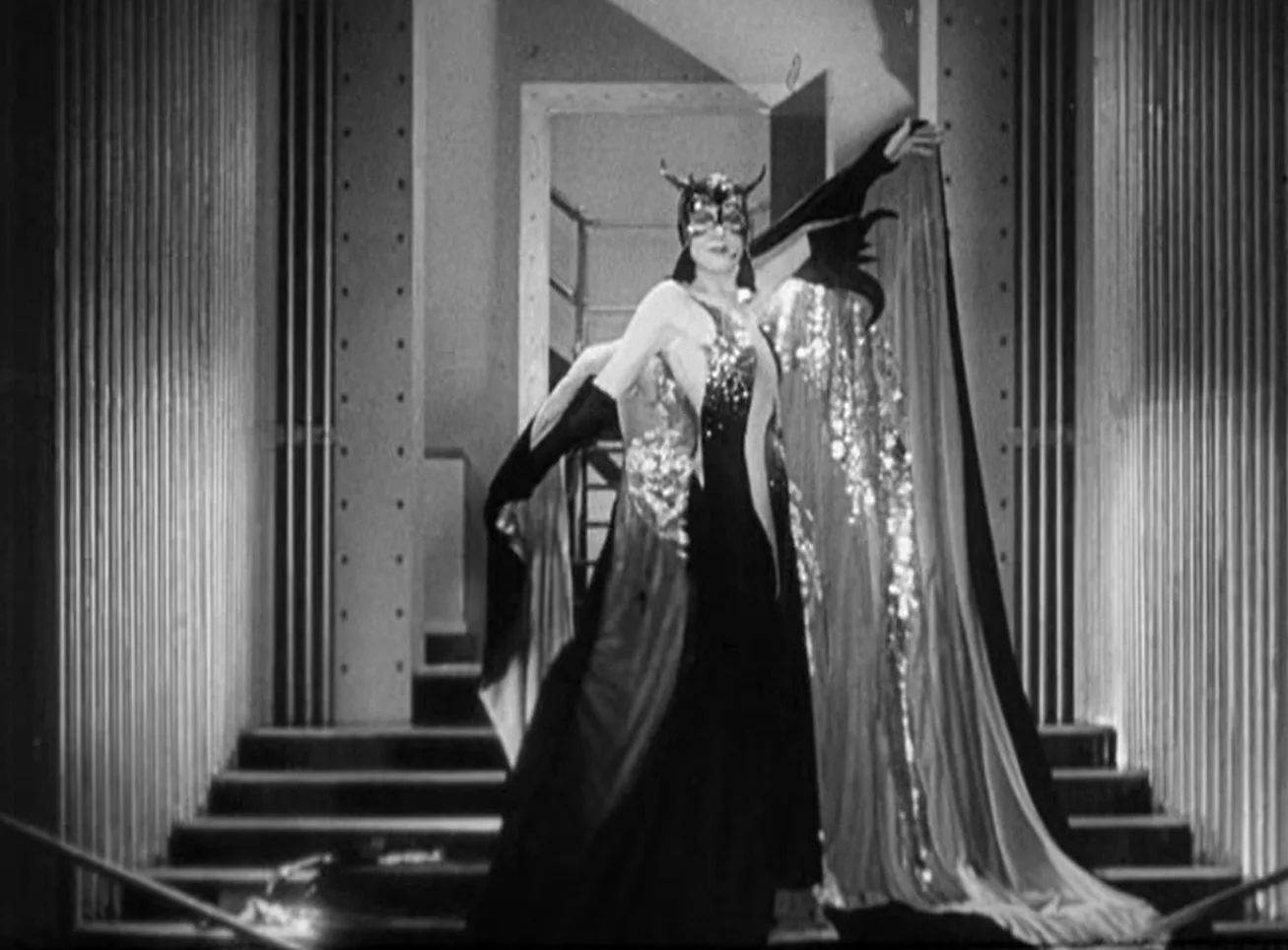
2. Madam Satan. When we hear the name “Cecil B. DeMille,” we think of Biblical epics; but he made his name with bedroom farces, and in between he made pirate adventures and westerns and war movies. In the entire list of his movies, though, there is nothing quite like this: a musical-comedy bedroom-farce disaster movie. It has some surprisingly sophisticated dialogue and some hot musical numbers, and it ends with a thrilling wreck of a dirigible. Dr. Boli will add that, if you ever have a chance to see it on the big screen, you should jump at the opportunity. As for the performances, two stand out: Lillian Roth is surprisingly funny and believable as the Other Woman, and Roland Young is Roland Young. You will not be bored.
Madam Satan in a very good print at Wikimedia Commons.
3. Just Imagine. If you have ever wondered why there aren’t more science-fiction musicals, the answer is because this movie was made—a musical about the unbelievable futuristic world of 1980, where numbers take the place of names and aerial traffic cops direct busy streams of flying machines, and—most relevant to the plot—eugenics is the dogma of the land. We will not pretend that it is a great movie. It was written by DeSylva, Brown, and Henderson; and if you are saying to yourself that you thought they were songwriters, you are correct. They are completely out of their depth in trying to build a plot that will carry a movie; and by the time we get to Mars and discover that every Martian has an evil twin, we have probably given up all hope of plot. Finally, the running time includes far too much of El Brendel, the unfunniest comedian in the movies, yet inexplicably the most popular comedian of 1930. We should point out that Charlie Chaplin was alive; Buster Keaton was alive; Harold Lloyd was alive. All four Marx Brothers were alive (Animal Crackers just entered the public domain yesterday, too), and even Zeppo could squeeze more laughs out of the word “Yeah” than El Brendel could wheeze into a whole movie.
But the effects are amazing. This is a movie that can stand with Metropolis and Things to Come in its miniature effects. Though the movie itself was a flop, some of the effects were recycled in Universal serials for years to come, and the Mars spaceship was sold secondhand to Dr. Zarkov of the Flash Gordon serials. This is another movie that ought to be seen on the big screen. We also might add that nineteen-year-old love interest Maureen O’Sullivan can really act, and it is much to her credit that her reputation survived this film.
Just Imagine in a fairly good print at the Internet Archive.