Posts by Dr. Boli
FROM THE ILLUSTRATED EDITION.
Advertisement.

FREE ZEN KOAN POSTER.
ENSLAVED PERSONS—OR SLAVES?

“Slavery,” by Fritz Erler, from Deutsche Kunst und Dekoration
I’ve always been annoyed when modern historians use the term “enslaved persons” to describe slaves. I know their intention is to imply that slavery is imposed rather than innate, but it strikes me as somehow disingenuous.
The phrase “enslaved persons” has always made Dr. Boli a little queasy, too. But why is using the term “enslaved persons” so objectionable?
First, because it deprives us of a useful distinction. A person who has been enslaved has gone from a state of not-slavery to a state of slavery. (We avoid the term “freedom” here so as not to provoke an endless debate with the Calvinists over what “freedom” means and whether anyone has it.) The verb “enslave” has precisely that meaning: to make a slave of someone who previously was not a slave. In the eventful record of human history, which is a catalogue of the crimes committed by humans against humans, it is necessary over and over to mark this passage from not-slavery to slavery in individuals and in whole populations. We need a word for it, and we had a perfectly good one.
But that is not what makes Dr. Boli cringe when he hears the term “enslaved persons” when what is meant is “slaves.” So what is it, then? Is it just the multiplication of syllables—four syllables where one would do the job better? No; Dr. Boli himself (you may have noticed) is sometimes willing to multiply syllables when the multiplication serves his purposes. The grating thing is the implication that, by inventing a new term, we have made it all better. We have restored human dignity to the generations of people who groaned under the yoke of slavery.
No, we haven’t. They were slaves. Millions of them were born slaves, lived slaves, and died slaves. They were human beings with all the natural rights that human beings inherit, and all the power of a civilized nation was marshaled to make sure they exercised none of those rights. That happened, and nothing we do can make it all better for them; our only consolation is the near certainty that they are now in a better condition than many of their former masters. We have a duty to come to terms with the fact that some very bad things have happened in history, and we can’t go back and kiss them better with a word. The only thing we can do is insist that those things will never happen again.
That is the thing we neglect, precisely because, when we say “enslaved persons” rather than “slaves,” it makes us feel as though we have already exercised all the virtue in the world, and there is nothing left to do. No—we have done nothing for anybody by saying “enslaved persons.” We have only rubbed a little ointment on our itchy conscience, without asking ourselves why we have that itch. Is it there because some little voice in the back of our minds is saying something we don’t want to hear? Do we hope to silence the voice by substituting “enslaved persons” for “slaves”? Then perhaps it is time for us to recognize that silencing the voice of conscience is exactly what has allowed slavery to fester over and over again throughout history. Perhaps we ought to listen to the voice instead of trying to shut it up by burying it under mounds of soothing syllables. Perhaps it has a message we need to hear. It might, for example, be trying to tell us, “You’re doing it again.”
FROM THE ILLUSTRATED EDITION.
THE ROMANIAN NATIONAL ROWING SONG.

Chorus:
Row, row, row, Romania!
You’ve just got to beat Albania!
We’ve all got Romania mania,
So row, row, row, Romania!
1. We’re the pride of Transylvania!
In our hair we wear gazania,
In our buttonholes, gerania—
So row, row, row, Romania! (Chorus.)
2. We were tops in Lithuania,
And we held off Mauritania.
We sure showed Tripolitania—
So row, row, row, Romania! (Chorus.)
3. And we’ll row to Pennsylvania
Round the south coast of Tasmania
(While we mispronounce “Tanzania”)—
So row, row, row, Romania! (Chorus.)
4. And our song keeps getting zania
(The effect of melomania)
Till it hurts our poor old crania—
So row, row, row, Romania! (Chorus.)
YOU ARE A SLAVE. NOW WHAT?
We have mentioned before that nearly everything you do comes with terms and conditions attached—an “agreement” that you agreed to without reading it, because it may well have been twenty thousand words long. You may have made multiple such “agreements” just today. If you have been alive for the past ten years, it is almost inevitable that you have “agreed” to more than a thousand of these articles of enslavement, and that is a very low estimate. And you are bound by these agreements that are not agreements.
If Party A can impose conditions at will upon Party B, then Party B is the slave of Party A. We must call things by their names, and only then can we begin to understand them.
But perhaps it is not as bad as it seems to be. Perhaps there is a kind of safety built into the system: we accept the terms and conditions because there is an unspoken agreement that the terms and conditions will not be unreasonable. Or, even if they are indeed unreasonable as written, the most unreasonable provisions will never be enforced, because corporations know that people will not tolerate the enforcement of unreasonable conditions.
Perhaps not now. But the conditions have become much more unreasonable over just the past two or three decades, and we have tolerated it just fine. Did you agree to let your corporate masters monitor your sex life? If you drive or ride as a passenger in certain brands of automobile, yes, you did, just by getting in the car.
Once we have admitted the principle that we can have conditions imposed on us, we are owned. We have fallen into the abyss, and the fact that we are still falling and have not yet hit the bottom does not make it less of an abyss. The next time you are confronted with terms and conditions to agree to, read some of them. Not all of them, of course: that would be unreasonable. But read enough to get an impression of the general tenor of the document. You will probably find that the various provisions, as they pile up in heaps too high to wade through, are all reinforcements of the same overall principle: you owe us everything and we owe you nothing.
It will be better in the long run, then, if we just admit that we have been enslaved.
And then what?
Now, before the Internet explodes with outrage for the five hundredth time today, Dr. Boli will point out that our condition of slavery is not at all like African slavery of the days before the Civil War. We have it easy. We are the privileged household slaves, not the tortured, abused, and short-lived field slaves. We call our condition slavery not because we have bloody stripes on our backs, but because it is necessary to understand that we have been placed under a kind of control from which we have no legal escape. It is a kinder, gentler slavery, but it is slavery.
So, once we have made the observation that we are slaves, what can we do?
There are two possible ways of dealing with this kind of enslavement. One is to be rich. If you are rich enough to hire lawyers more devious than the enslaving corporations’ lawyers (who, after all, are likely to be copy-and-paste timeservers), then you can make it inconvenient enough for the enslavers to try to impose their most outrageous conditions that they ultimately will not hold you to them.
But if you are not rich and well-lawyered, then you must learn to think like a slave.
That does not mean what you probably think it does. It does not mean that you must resign yourself to your condition and become a humble and obedient automaton, serving the master’s every whim. That may be what you think a slave is like, but that is because you have not known many acknowledged slaves. Through most of human history, slavery has been part of the fallen and broken human condition. And for most of human history, the reaction of the slave to the condition of slavery has been deviousness.
To learn to think like a slave, you must study Roman comedy. Plautus and Terence will show you how it is done. The slave must be one step ahead of the master at all times, to the point of making the master wonder whether it is worth the trouble to own slaves in the first place.
Once you have mastered the Roman comedies, you are ready for the advanced class. Here you study the works of Frederick Douglass, and learn how a modern genius deals with being a slave, with the ultimate goal not only of profiting in the short term but also of gaining permanent freedom. If you have not given yourself the pleasure of reading Douglass himself, Dr. Boli would certainly recommend his autobiographies—especially the first one, written in the heat of the fight for abolition. Mr. Douglass writes with anger, as you might expect, but also with a scalpel-sharp sense of humor. Slavery is an absurd condition, and no one is more absurd than the slaveholder who thinks he has a right of property in his slaves.
So we learn from Pseudolus and Frederick Douglass. We treat our masters with contempt—but devious contempt. If nothing belongs to us by legal right, then we will make everything belong to us by cleverness. Mr. Douglass will even teach us the art of combining deviousness with dignity. We can make the slaveholders wonder why they seem to have everything according to the law and yet never actually get anything they want.
There may come a time when the people rise up against their masters and defeat them on the only ground that will make any difference—in court. There may come a time when lawyers prove to the satisfaction of the highest court in the land that so-called agreements that, because they are so long and come in such numbers, are literally impossible for consumers to read are no more valid than a supposed contract that required one of the parties to levitate or teleport. But, until that distant day, we can learn to think like slaves and, like old Pseudolus, make pretty good lives for ourselves.
FROM THE ILLUSTRATED EDITION.
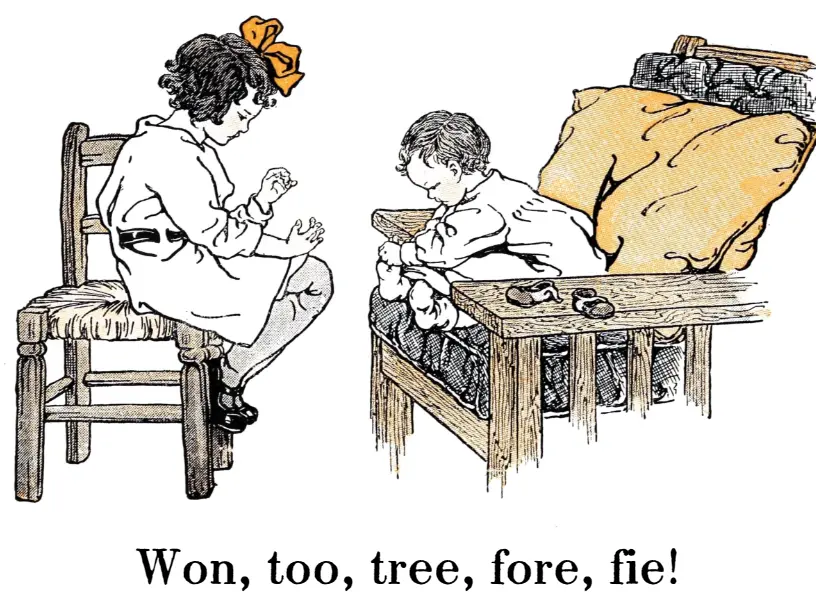
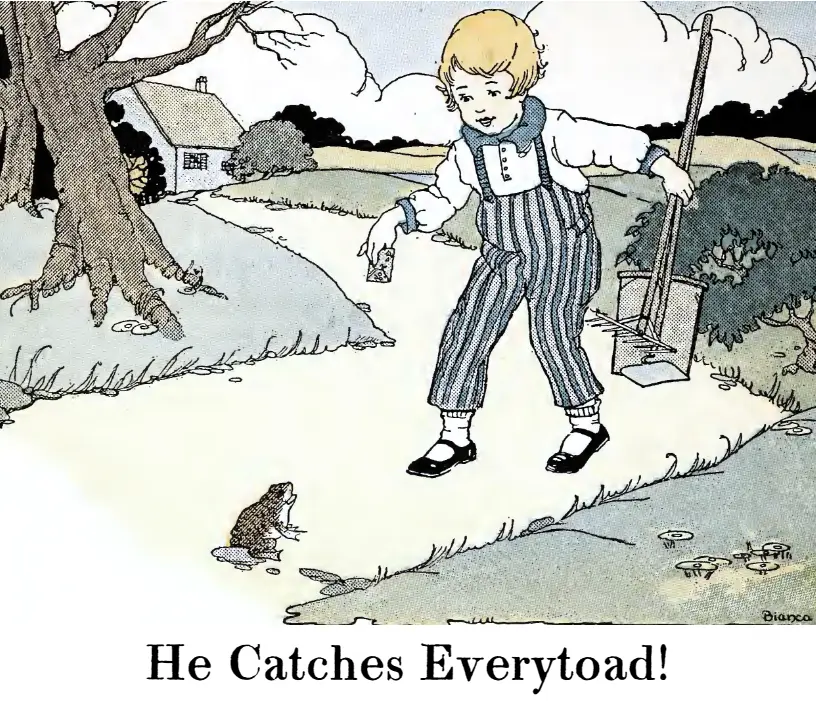
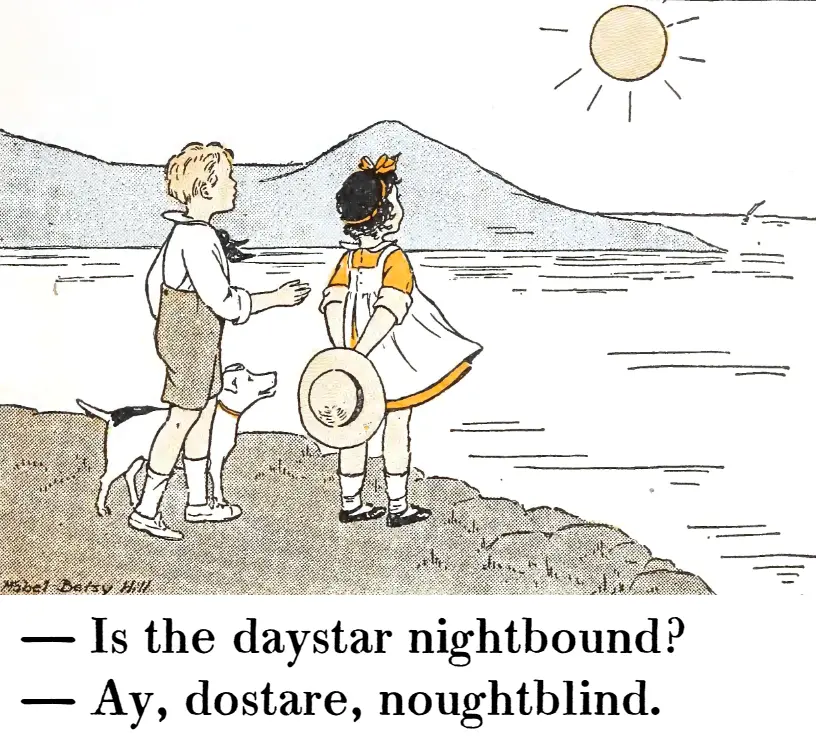
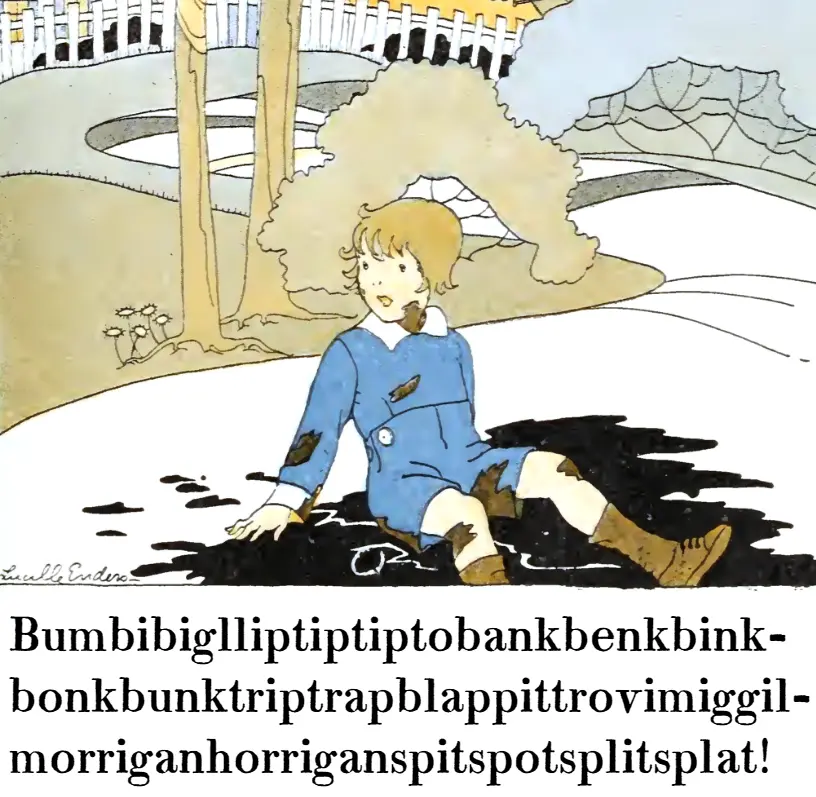
THE JAMES JOYCE FIRST READER.

From DR. BOLI’S UNABRIDGED DICTIONARY.
Landed gentry (nominal phrase).—First-class patrons who are permitted to disembark from the plane while the other passengers are still moping in their seats.