Posts by Dr. Boli
WARNING.

LOUIS SULLIVAN AND THE ALLITERATIVE SLOGAN.

“
What would Louis Sullivan have thought of that?
Over at Ink, we published an essay entitled “Form Follows Function, and Ornament Follows Form,” in which we suggested,
If you had asked Mr. Sullivan whether he meant that the bare outlines of form must be presented to the world naked and without ornament, he would have told you he did not mean that, possibly including some colorful Chicago language for emphasis. He spent his whole career trying to come up with a native American system of ornament that would beat the pants off the stale European imports. We can be sure that he did not mean to leave us an inviolable commandment against any kind of decoration.
However, we do not need to speculate on what Louis Sullivan would have thought of alliterative slogans. Let us ask Mr. Sullivan that very question.
When a group of progressive-minded architects grew discontented with the conservatism of the American Institute of Architects, they seceded and formed the Architectural League of America, rallying under the slogan “Progress before Precedent.” The Brickbuilder asked a number of well-known architects “for an expression of opinion upon the general subject, considering not only whether the maxim of the League finds favor with the coming men of the Middle West, so much as what is the best view to take of the subject itself.” Poorly phrased, perhaps, but they got some big names to respond. One of them was Louis Sullivan. It appears that alliterative slogans made him grumpy and pessimistic.
In my judgment a maxim or shibboleth, such as “Progress before Precedent,” is in itself neither valuable nor objectionable.
The broad question involved in the advancement of our art is one that lies specifically with the rising generation, and it will answer in its own way,—theory or no theory, maxim or no maxim.
If the coming men possess in a high degree the gift of reasoning logically and unwaveringly from cause to effect, the rest, practically without qualification, will take care of itself.
The present generation does not possess this gift, nor does it trouble whether or not: hence chaos. That the younger men have it is, as far as I can observe, quite conjectural. Talk and good intentions we have, but talk and good intentions do not build beautifully rational buildings. Talk may be had for the asking and good intentions become pavements here as elsewhere; but delicate clarity of insight, sturdy singleness of purpose, and adequate mental training are notably so rare in our profession as almost to be freakish. We have muddy water in our veins.
I am an optimist, and live ever in hope; yet what I wish and what I see are by no means identical. Still, doubtless, there is a ferment working that we wot not of. I would discourage no one in the belief.
Finally, when all is said and done, the architectural art is a proposition too easy or too difficult, just as you choose to regard it. It is an art as yet without status in modern American life. Practically, it is a zero.
ARE YOU A ROBOT?
☐ I’m not a robot.
☐ I’m not a robot, but I have an artificial limb.
☐ I am a robot, but I have some organic parts.
☐ I am a robot, but I have no ill intentions.
☐ I am a robot, but if you prick me, will I not bleed? Well, actually, no.
☐ I am a robot, and your puny human-designed web security is no match for my superior intelligence.
☐ I’m not a robot, but I can’t figure out how to make a mark in any of these stupid boxes.
FROM THE ILLUSTRATED EDITION.

Meanwhile, over at Ink…
KNOW YOUR REGULATORY SIGNS.

ASK DR. BOLI.
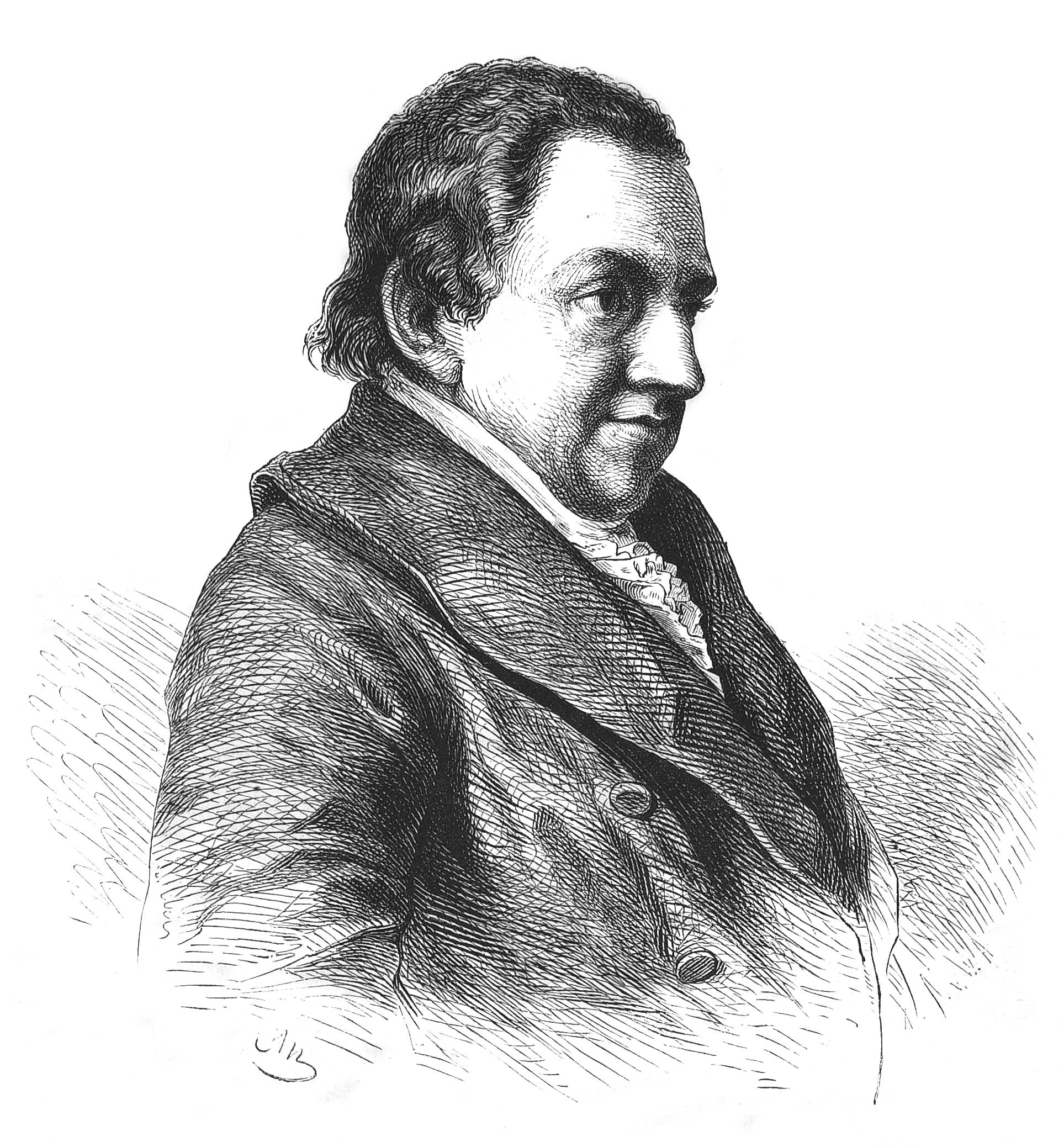
Some German guy.
Michael Flynn, who used to post to your site as Ye Olde Statistician, offered this quote, similar in tone, and presumably translated from German:
“Education should aim at destroying free will so that after pupils are thus schooled they will be incapable throughout the rest of their lives of thinking or acting otherwise than as their school masters would have wished.”
— Johann Gottlieb Fichte (1762–1814) Addresses to the German Nation.
Flynn added: (The inspiration of Horace Mann and other modern educators.)
Wondered whether you had any familiarity or interest in Fichte’s thinking especially as it relates to educational thinking/practice here; and whether the quote offered above is/not in context with Fichte’s overall thinking.
Dr. Boli has not read Fichte, for the very simple reason that Dr. Boli had a long and increasingly difficult relationship with German philosophy that finally ended in divorce.
First Dr. Boli read Hume. Hume was a delight: he expressed very complex ideas in clear and perfect English. Even if you did not agree with his ideas, you knew that you were disagreeing, and you could have a profitable discussion.
Then Dr. Boli read Kant. Kant swam in the same waters as Hume, but muddied them so completely that nothing could be seen through the murk. Furthermore, Kant exhibited the full range of symptoms of what Dr. Boli learned to recognize as German Philosopher Syndrome: an immovable faith in the inevitability of his own conclusions, and a fascination with the shape and movement of the argument itself, so that the subject often got lost in page after page of explanation of why Chapter Seventeen must inevitably follow Chapter Sixteen.
Then came Hegel, and the less said about Hegel the better.
Then Marx proposed to turn Hegel on his head. Well, thought Dr. Boli, he’ll make as much sense that way as any other, so let’s see what Marx has to say. Marx displayed German Philosopher Syndrome in its fully developed state. Not only was he sure of the inevitability of his conclusions, to the point of calling people who refused to assent to them stupid weenies, but he also was so fascinated by the argument itself that he saw all of history and all activity in the universe as a form of argument, or dialectic.
This ought to have been enough to make Dr. Boli part ways with German philosophy. But then came Freud, and people said such nice things about him, so Dr. Boli read Freud—quite a bit of him, anyway, although Freud’s fans would say nowhere near enough. It seemed to Dr. Boli that Freud had refined German philosophy by removing the argument, leaving only the assertion and the absolute faith in its inevitable correctness.
After Freud, whenever anyone mentioned to Dr. Boli that there was a German philosopher he really ought to read, Dr. Boli pretended to be going deaf.
Nevertheless, it was not hard to find a version of the passage quoted. Nor was it hard to see that, as Dr. Boli had expected, it was quoted out of context, probably by people who wanted to say, “See? That’s what Germans are like!”
Here is how it is translated by Jones and Turnbull in a 1922 edition of Addresses to the German Nation:
On the other hand, the new education must consist essentially in this, that it completely destroys freedom of will in the soil which it undertakes to cultivate, and produces on the contrary strict necessity in the decisions of the will, the opposite being impossible. Such a will can henceforth be relied on with confidence and certainty.
This sounds dreadfully totalitarian. But the whole thing hinges on the context, of course. In reading a quotation like this with a verb in the passive voice, we readers ought to ask ourselves, “Who is the agent?” You might think, without context, that the agent, the one who can do the relying, is the government. But in context we see that the agent is the possessor of the will. The person whose will conforms to strict necessity can rely on that will.
What does Fichte mean by the will being “free”? He means that the will still hesitates between good and evil. The purpose of education is to form a will so strong that it cannot choose the wrong course.
He who must still exhort himself, and be exhorted, to will the good, has as yet no firm and ever-ready will, but wills a will anew every time he needs it. But he who has such a stable will, wills what he wills for ever, and cannot under any circumstances will otherwise than he always wills. For him freedom of the will is destroyed and swallowed up in necessity.
The purpose of education is to form such an immovable will for good. Just as the best violinist has simply lost the capacity to play the wrong notes, and the best speller is no longer capable of misspelling “Massachusetts,” so the student whose will is well trained will lose the ability to choose the evil. In a very limited sense the bad speller is more free, because he can spell “Massachusetts” any number of ways; but most literate people would be happy to be relieved of that freedom. In the same way, the person whose freedom of will is swallowed up in necessity has fewer options open to him, but no longer has to worry about temptation. He can rely on his will to will the good, and nothing can move his will out of that course—not even a direct order from some bellowing cretin with a swastika armband. In that sense, his will is not free, but it is precisely because it is not free that it cannot be controlled by a tyrannical government.
That, according to Fichte, is the aim of education: to develop an immovable will for good in the student.
If you want to influence him at all, you must do more than merely talk to him; you must fashion him, and fashion him in such a way that he simply cannot will otherwise than you wish him to will. It is idle to say: Fly—for he has no wings, and for all your exhortations will never rise two steps above the ground. But develop, if you can, his spiritual wings; let him exercise them and make them strong, and without any exhortation from you he will want, and will be able, to do nothing but fly.
It seems to Dr. Boli that Germany in the twentieth century could have used a good bit more of this kind of education.
Advertisement.

WILLIAM TORREY HARRIS AND THE DARK, AIRLESS, UGLY PLACES.

“The great purpose of school can be realized better in dark, airless, ugly places. It is to master the physical self, to transcend the beauty of nature. School should develop the power to withdraw from the external world.”
—William Torrey Harris, US Commissioner of Education
So yes, ugly buildings have been the cutting edge of education for about 130 years now.
Father Pitt was delighted to hear from Mr. Moore and pointed his comment out to Dr. Boli. Thus it is his fault that you visited the Magazine today and found this essay dribbling down your screen.
The quotation made Dr. Boli wonder about its context. Our Constitution grants us a republican form of government, which we may define as a government in which the ruling powers are obliged to fool us into thinking they have our best interests at heart. What president with his eye on the voters would hire an open sadist to be Commissioner of Education?
The Wikipedia article on William Torrey Harris does not mention the quotation. But it did until about three years ago. An editor “removed quotes from the article that cannot be sourced back to Harris.” The quotation in Mr. Moore’s comment was one of them. The other was this:
Ninety-nine [students] out of a hundred are automata, careful to walk in prescribed paths, careful to follow the prescribed custom. This is not an accident but the result of substantial education, which, scientifically defined, is the subsumption of the individual…
The editor who removed the quotations cited this ad-laden page of quotations from William T. Harris, where both of those quotations are marked as suspicious. About “Ninety-nine [students] out of one hundred…” the page says, “As quoted in various 21st century books, each time cited only as from the The Philosophy of Education (1906), with no page number. For example, in John Taylor Gatto, A Different Kind of Teacher: Solving the Crisis of American Schooling (2000), 61. Note: Webmaster is suspicious of the attribution of this quote. The Library of Congress lists no such title by Harris in 1906. The LOC does catalog this title by Harris for 1893, which is a 9-page pamphlet printing the text of a series of five lectures. These lectures do not contain this quote.”
But in fact they do; our webmaster must have missed it. Dr. Boli could find only one copy of these short lectures on line, but here it is. The wording is slightly but meaningfully different.
Ninety-nine out of a hundred people in every civilized nation are automata, careful to walk in the prescribed paths, careful to follow prescribed custom. This is the result of substantial education, which, scientifically defined, is the subsumption of the individual under his species.
This quotation, like the one about dark, airless, ugly places, is all over the Internet, and all through books on what’s wrong with our schools, always quoted as if Mr. Harris was a fascist who intended to make pupils into mindless slaves of the state. One of the many people who quoted it was celebrity educator John Taylor Gatto back in 1992. He used it to show that education was intended to eliminate original thought, and that the architects of American education knew exactly what they were doing.
In school, a washing away of the innate power of individual mind takes place, a “cleansing” so comprehensive that original thinking becomes difficult. If you don’t believe this development was part of the intentional design of schooling, you should read William Torrey Harris’s The Philosophy of Education. Harris was the U.S. Commissioner of Education at the turn of the century and the man most influential in standardizing our schools. Listen to the man.
“Ninety-nine [students] out of a hundred,” writes Harris, “are automata, careful to walk in prescribed paths, careful to follow the prescribed custom.” This is not an accident, Harris explains, but the “result of substantial education, which, scientifically defined, is the subsumption of the individual.”
Scientific education subsumes the individual until his or her behavior becomes robotic. Those are the thoughts of the most influential U.S. Commissioner of Education we’ve had so far.
—“A Confederacy of Dunces,” in the Sun Magazine.
If you believe that was actually what Mr. Harris meant, you should read William Torrey Harris’s The Philosophy of Education. Dr. Boli is going to be very forthright here and accuse Mr. Gatto of not having read it, but rather having harvested the quotation from the same secondary source that provided it to everybody else. The alternative is to accuse him of dishonesty, because this is the very next sentence in the original lecture:
The other educational principle is the emancipation from this subsumption.
This other educational principle is the one Mr. Harris calls “scientific education.” Mr. Harris, in other words, is trying to explain that there are two kinds of education, and he will argue that we need them both in order to avoid making automata out of our students. Unfortunately, Mr. Harris is a disciple of Hegel, so he uses terms like “substantial” that have a technical meaning for him but are easily misinterpreted. You will forgive a long quotation (or you will skip it):
There are two kinds of education. The first may be called substantial education—the education by means of the memory; the education which gives to the individual, methods and habits and the fundamentals of knowledge.… It is this education by authority—the education of the past—that the modern or second kind of education seeks to supersede. This second kind may be called individual or scientific education; it is the education of insight as opposed to that of authority. When this kind of education is acquired, it frees the individual from the authority of the other. Under the system of education by authority when told, for instance, that the sum of three angles of a triangle are equal to two right angles, this will be blindly believed only as long as authority sanctions this belief; but when an insight into the reason for this geometrical truth is obtained, no change of authority is able to make the individual doubt. But there is this danger in the system of education by insight, if begun too early, that the individual tends to become so self-conceited with what he considers knowledge gotten by his own personal thought and research, that he drifts toward empty agnosticism with the casting overboard of all authority. It is, therefore, necessary that this excessive conceit of self which this modern scientific method of education fosters, be lessened by building on the safe foundations of what has been described as the education of authority. The problems of the reform movement centre, therefore, on the proper method of replacing this authoritative or passive method of education by education through self-activity.… These two kinds of education, that of authority and that of self-activity, should be made complementary.
This was a lot to swallow, but Dr. Boli will summarize it for you: A certain amount of rote education is necessary as a foundation for thought. But independent thought is the ultimate goal.
Now, how about that other quotation?
The great purpose of school can be realized better in dark, airless, ugly places… It is to master the physical self, to transcend the beauty of nature. School should develop the power to withdraw from the external world.
We notice three things about it right away. First, the style is right for William Torrey Harris, even though we have failed to find the source. Second, there is an ellipsis, which is a warning sign that some important context may have been left out. Third, it begins with a comparative—“better”—but we do not have the point of comparison.
Having seen the Harris mind at work in more extensive passages, however, we can venture a speculation. Dark, airless, ugly places are better than some crackpot theory about educational reform that Mr. Harris was attempting to set aside. This is hyperbolic speech: it is not his ideal of what a school should be, but his assertion that the other fellow’s theory is even worse.
Dr. Boli is perfectly willing to be corrected, however, by anyone who can come up with the source of that quotation, and thus provide the context. He will admit that he failed. It is all over the Internet and all through modern books about what’s wrong with education today, and always with the same ellipsis, never with any more context. All these quotations must go back, through complicated weaving routes, to the same secondary source.
Your mission, should you choose to accept it, is to find the primary source.
Meanwhile, however, we hope you have a better opinion of William Torrey Harris than you had when you started. He may have been right or wrong in his theories of education, but eliminating independent thought was not his purpose.
And think how much brighter your world looks now! When you woke up this morning you thought that there had been a ruthlessly efficient conspiracy to create an educational establishment that turned our children’s lives into a purgatory designed to make mindless automata out of them. Now you know that there was no such conspiracy. Instead, it was through bungling incompetence alone that we created an educational establishment that turns our children’s lives into a purgatory and makes mindless automata out of them. Don’t you feel better?
Advertisement.