Posts filed under “History”
ON THIS DAY IN HISTORY.

From DR. BOLI’S ENCYCLOPEDIA OF MISINFORMATION.
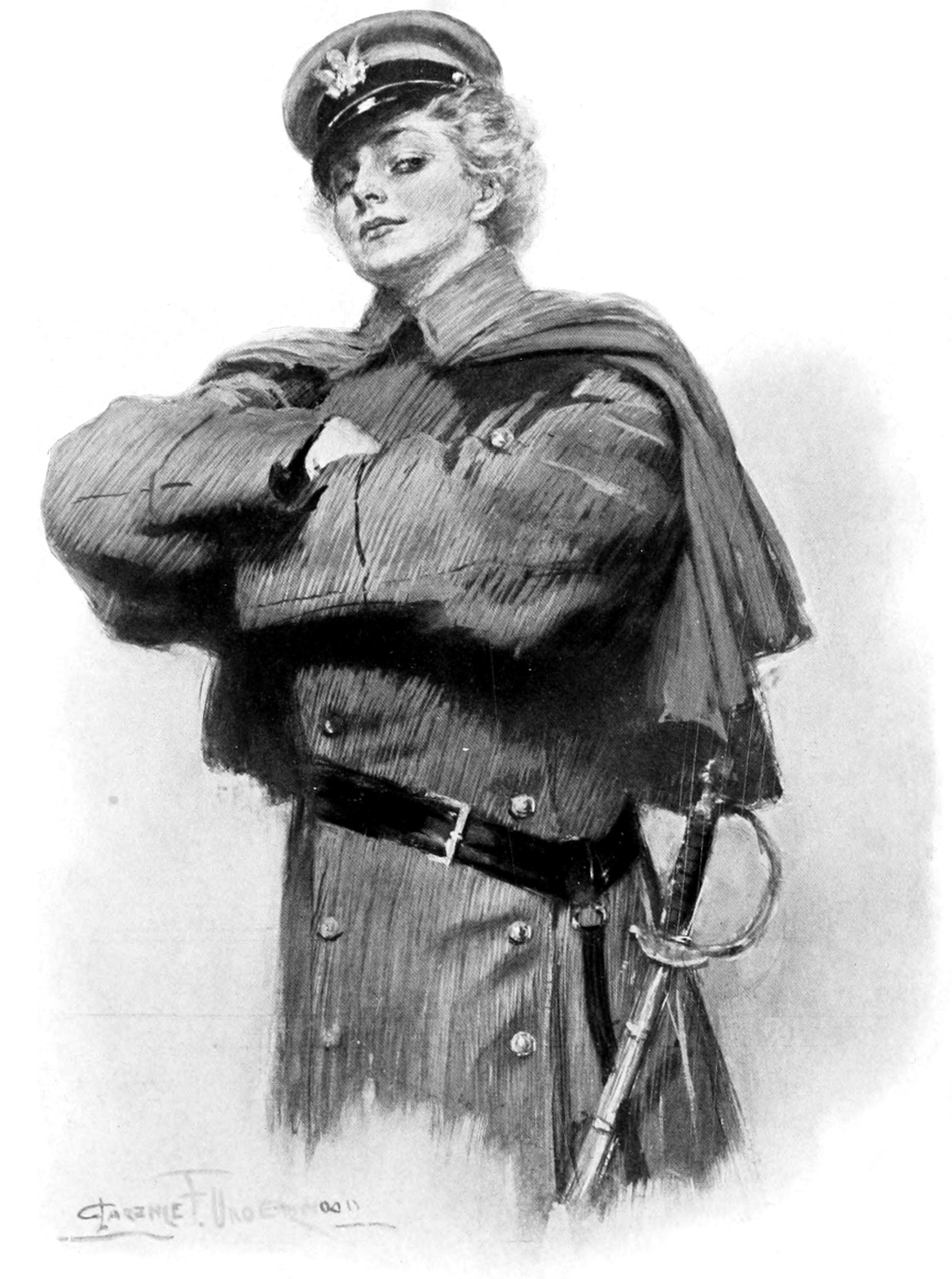
Illustration by Clarence F. Underwood.
Memorial Day. According to a ruling by the United States Bureau of Firsts and Superlatives, issued to settle a number of longstanding and intractable disputes among American towns and cities, Memorial Day was first celebrated on May 30, 1868, by 19,522 municipalities simultaneously.
ASK DR. BOLI.
Dear Dr. Boli: Reading over the United States Constitution (which of course, like all enlightened humanities students, I enjoy ironically), I noticed that, in the very terse and compressed language of the Bill of Rights, there is one amendment that comes with a preamble, almost as if the authors thereof had intended to establish some important context for the legal principle to follow. I refer to the Second Amendment, which begins with the words “A well regulated Militia, being necessary to the security of a free State.” What is the precise legal meaning of that preamble? —Sincerely, A Freshman Student of History at Duck Hollow University.
Dear Sir or Madam: According to the United States Supreme Court, the final authority on matters of constitutional law, the precise legal meaning of those words is “Blah blah blah blah blah blah blah blah blah blah blah blah blah.”
This is not the only or even the most egregious example of superfluous text in the Bill of Rights. According to modern legal theory, the entire Ninth Amendment has no meaning whatsoever.
ON THIS DAY IN HISTORY.

IN THE MOOD.

Sorry to be one those “actually” people, but Glenn Miller’s band really wasn’t a swing band. It wasn’t exactly a cornball band, either, but it wasn’t remotely close to Basie, Ellington, Lunceford. The best bands were black bands like the ones I mentioned, though Tommy Dorsey, Goodman and Woody Herman were also quite good.
First of all, no one needs to apologize for being one of those “actually” people around here. We thrive on debate about the actual: that is, the objective truth. So if Dr. Boli disagrees with Mr. Salmon, he wants it to be understood that he is disagreeing on those terms. He thinks Mr. Salmon’s taste is impeccable, because Dr. Boli doesn’t like Glenn Miller much either. In the days when Miller’s band was at its peak, whenever someone asked “Would you like to go hear Glenn Miller or…,” Dr. Boli usually picked “or” before even hearing the second name. This did expose him to the danger of Guy Lombardo, but that was perhaps a lesson in patient self-restraint that he needed to learn.
But it seems to him that there is no objective criterion by which Tommy Dorsey’s can be called a “swing band” and Glenn Miller’s not. If swing music is four-beat jazz with space left for solos and frequent use of riffs, then that is what both of them played. They also played sweet music: they were not uncompromising like Lunceford or Goodman, who played even their ballads in swing style. But if one was a swing band, so was the other. The only conceivable definition of “swing” that excludes Miller and not Dorsey is Swing is music I like, and not-swing is music I don’t.
And now, as a little expedition into musical history for the musical fanatics, we are going to trace the evolution of Glenn Miller’s most-remembered hit. In so doing we’ll see how Glenn Miller radically simplified swing until it was pared down to a kind of essential obviousness that even today’s teenagers can understand. It was brilliant marketing; whether it did any favors to the music will be left for readers to decide. We’ll link to YouTube for every recording we mention.
The riff that forms the basis of “In the Mood” has a long history under different titles. It first appears in 1930 as “Tar Paper Stomp” by Wingy Mannone (more commonly spelled “Manone”). This is a small-group jazz recording, but with a Chicago-style four-beat rhythm that is already headed toward swing.
In 1931, Fletcher Henderson and His Orchestra, an encyclopedia of Harlem jazz talent, recorded “Hot and Anxious,” which uses the same riff in the second chorus and adds several other riffs. This is a stompingly obvious performance by Henderson standards, but it has much more variety than the Glenn Miller recording that plays in your head when you think of “In the Mood.”
The Mills Blue Rhythm Band picked it up for “There’s Rhythm in Harlem,” and Dr. Boli will admit that this is his favorite of the whole lot. Again, the “In the Mood” riff stands at the head of a procession of riffs and solos, but the band tears into it with such joyous abandon that we might wish swing music had never progressed from here.
In 1938, Edgar Hayes and His Orchestra recorded the riff under the title “In the Mood” for the first time, credited to Joe Garland, and for the first time you’ll hear that familiar introduction you remember from Miller’s version, but then—once again—a succession of other riffs. Dr. Boli thinks this performance is objectively better than Glenn Miller’s version, but it is more complex, which puts it at a disadvantage.
Artie Shaw bought “In the Mood” from Joe Garland, though as far as Dr. Boli knows he never made a record of it. By the late 1930s, though, radio broadcasts were often being transcribed, sometimes by amateurs with good home recording equipment, so here is a live performance by Artie Shaw of “In the Mood.” You will note that it is six and a half minutes long, because although Shaw’s band slows it down to a speed even slower than Miller’s recording, the Shaw version still includes a whole string of other riffs. It would have taken two sides of a ten-inch record if it had been commercially released. Shaw seems to have decided that it was too long and boring and didn’t know how to fix it.
And so finally we come to Glenn Miller’s “In the Mood,” and we can see what Miller did to it. He simplified it radically, eliminating all but a couple of the riffs, and returning to the introductory riff with some of his trademark trick stops to pound it into your brain. Dr. Boli will emphasize that this is not a bad recording. It’s pretty good swing music. It just isn’t as good as any of the others (with the exception of Artie Shaw’s, which Dr. Boli agrees is too long and boring). But it is much, much simpler and demands much less attention from the musical part of your brain.
Glenn Miller was actually a very talented arranger who got his start writing remarkable scores for the Dorsey Brothers. When he formed his own band, he thought he would finally have a chance to pull out all the stops and write really interesting stuff. (Listen to his “I Got Rhythm,” where he outweighs the melody with a flamboyant countermelody in the reeds—and of course ends with some of his trademark trick stops.) He nearly starved to death. Just before he and the band opened their last can of Heinz Vegetarian Baked Beans, he hit on the winning formula of appealing to the musical lowbrows, and the rest is history—proving H. L. Mencken’s dictum that no one ever went broke by underestimating the taste of the American public.
So, once again, it is Dr. Boli’s contention that Glenn Miller’s was indeed a swing band, and he does not have to like the band to say that. It meets the objective criteria of four-beat rhythm, riffs, jazz solos, and all the other things that make up swing as a style. It just isn’t Dr. Boli’s idea of good swing music. He will go back to the Mills Blue Rhythm Band for that. Mr. Salmon has good taste in the only objective way anyone can be said to have good taste, which is that his taste agrees with Dr. Boli’s.
WHERE DID CUGAT GO?
Or, Mambo Sociology.
In a certain 1990’s Disney movie, the title character exclaims that there’s no way that a pop star who his son wants to go see could ever be as big as Xavier Cugat, the “Mambo King”. That name has been stuck in my head for nearly 30 years and never once did it occur to me that he might be a real person.
This is an interesting sociological phenomenon. Those of us who were of dancing age in the 1930s and 1940s remember that Latin bands were mainstays of the pop-music scene. That scene was divided into roughly four kinds of bands:
1. Swing bands, like the ones headed by Jimmie Lunceford, Glenn Miller, and Benny Goodman. They played all kinds of music, but were best known for their four-beat jazz.
2. Sweet bands, like Guy Lombardo’s, which leaned toward the saccharine and could swing only if a noose was involved.
3. Mickey-Mouse bands, like Kay Kyser’s and Shep Fields’, which relied on silly musical gimmicks. Shep Fields, for example, created his “rippling rhythm” by blowing bubbles through a straw. You young people probably think Dr. Boli is making that up, but look it up on YouTube. [UPDATE: At the earnest request of one reader, we are adding an earworm warning to that link.]
4. Latin bands. There were many—Enric Madriguera and Desi Arnaz (Cugat’s protégé) come to mind—but the king of all Latin bandleaders was Xavier Cugat. He was still a musical force in the middle 1960s, and still discovering new talent; at the age of 65 he married his latest discovery, Charo, who was somewhere between 15 and 25 when they were married (she changes her age with her clothes).
All these categories have disappeared from the popular consciousness except the swing bands. Swing music stands for the 1940s in every movie and television drama.
Arguably the sweet bands and the Mickey-Mouse bands were worth forgetting. But Cugie? How is it possible to forget Xavier Cugat?
This is one of the phenomena sociologists ought to be studying. In the middle of the twentieth century, ordinary middle-class Americans went wild for Latin music. Hollywood studios knew that the surest way to liven up a musical was to bring in the Cugat band. And most of the numbers were sung in Spanish. Cugat’s singers could sing in English, too, but middle-class Americans were perfectly happy to accept his music in his native language.
Even into the 1950s, Latin music was a big thing in American culture. The most famous television comedy of all time was about a zany redhead married to a Cuban bandleader—played by the actual Cuban bandleader (and actual husband) Desi Arnaz, who learned everything from Cugat. Even the show’s theme had a Cuban beat.
The strange sociological phenomenon is that we have almost completely forgotten what a force Latin music was in popular culture—yet we have a much larger Latin American population now. In nightclubs in any of our big cities, there are bands playing music that Cugat would have understood. He would have thought they were amateurs, but he would have understood that they were trying to be Cugats and failing, and he might have given them a few pointers. But all the people in those nightclubs speak Spanish, and the average middle-class American stays away from them.
How did we forget Xavier Cugat so completely?
Well, he does not have to be forgotten. There is a simple cure for this oblivion. Here is a Cugat appearance in Neptune’s Daughter, and once you have watched it you will not forget Cugat.
ON THIS DAY IN HISTORY.
ON THIS DAY IN HISTORY.

ON THIS DAY IN HISTORY.
ON THIS DAY IN HISTORY.
