Posts by Dr. Boli
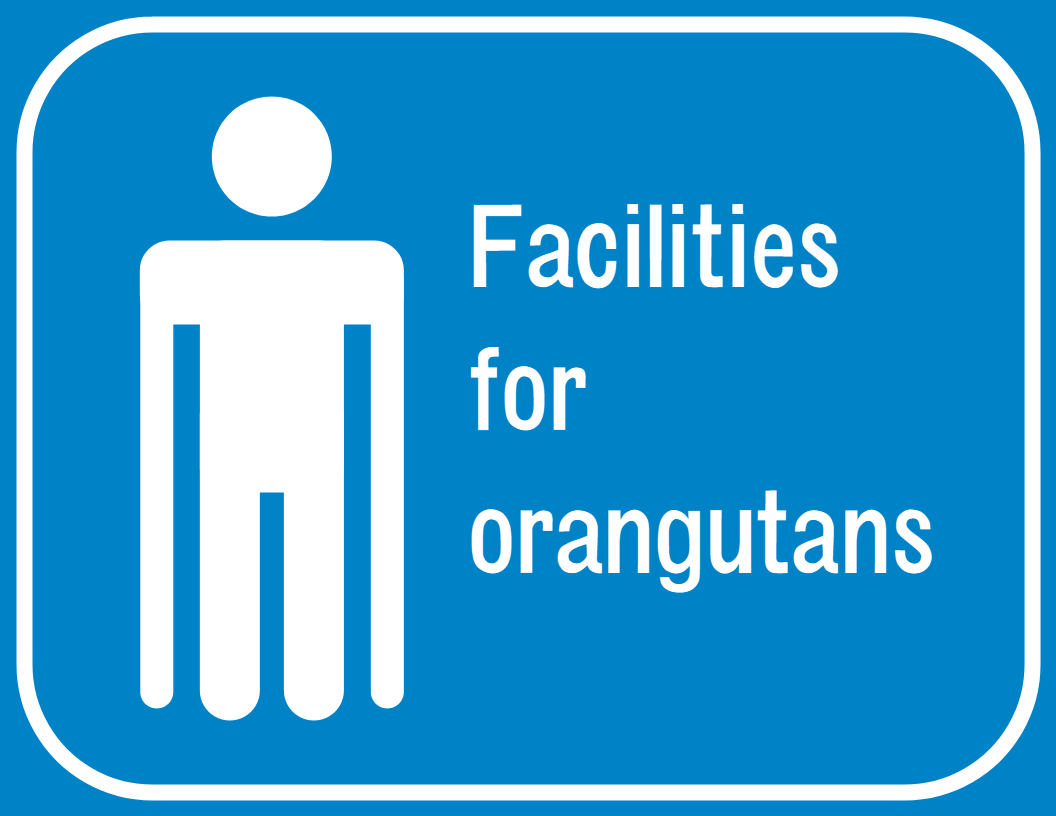
USEFUL SAFETY SIGNS YOU CAN PRINT.


SOMETHING ABOUT MEN’S CLUBS.

This makes sense. There is something about men’s clubs in Pittsburgh, and in some other cities Dr. Boli has seen as well: the members shun the light as if the sun would burn them to dust if it touched them. The architect may have provided tall, generous windows to flood the interior with illumination, but the club members take over the maintenance of the building themselves and gradually plug every hole through which a ray of sun might penetrate. That is what clearly happened to this building. The front was rendered safe for whatever fiendish rites of darkness the Polish club members practiced within.
Now enlarge the picture, if you like, and note the other details. Dr. Boli is thinking particularly of the doors on the second, third, and fourth floors.
This is one of those rare occasions when Father Pitt and Dr. Boli cannot agree. Father Pitt thinks the doors are evidence that there were once balconies, or a fire escape, on the front of the building. Dr. Boli believes that they were part of the initiation ritual for the club. Survivors of the ritual were admitted to full membership. The others—well, nobody ever goes into Woods Run anyway.

FUN FACTS ABOUT THE SIGNERS OF THE DECLARATION OF INDEPENDENCE.

William Hooper, William Ellery, William Floyd, William Paca, and William Whipple formed a group they called the College of Williams, pledging mutual support in the event of an American defeat. William Williams of Connecticut refused to join, calling himself “overqualified.”
Arthur Middleton, who considered literacy beneath his dignity as a South Carolinian gentleman, had to be coached in signing his own name by Thomas Heyward.
Elbridge Gerry came late to the session and was forced to squeeze his signature into a hook-shaped space that he complained looked like “some sort of ridiculous salamander.”
Philip Livingston of New York applied his signature with a novelty ballpoint pen in the shape of the Statue of Liberty. To this day, no one knows where he got it.
ON THIS DAY IN HISTORY.

Photograph by PTG Dudva, CC BY-SA 3.0, via Wikimedia Commons.
ARE YOU PRO OR ANTI NOUN?
Use Proper Capitalization of Pronouns
It’s simply lazy for a writer not to check the correct spelling and capitalization of pronouns. And remember not to capitalize a civic title, such as president or governor, unless it is used as part of that person’s name. For example, write: “It was time for the governor to speak.” Do not write: “It was time for the Governor to speak.” Similarly, it is correct to write: “It was time for Governor Watkins to speak.” It is incorrect to write: “It was time for governor Watkins to speak.”
Let us set this up as a multiple-choice quiz.
Based on the advice in the paragraph above, what do you think a pronoun is?
A. A noun referring to a professional, such as a governor or an insulation contractor.
B. A proper noun, such as “Watkins” after “Governor.”
C. A noun that gets paid for its work, as opposed to an amateur noun. (“ ‘When I make a word do a lot of work like that,’ said Humpty Dumpty, ‘I always pay it extra.’ ”)
D. A noun that stands in front of another noun, like “Governor” in front of “Watkins.”
E. A noun written in Donald Trump Capitals, such as Governor or Insulation Contractor.
Meanwhile, Over at Ink…
“Who Owns Your Work?” and “Own Your Own Work,” a pair of essays on why your intellectual property probably belongs to somebody else and what you can do to take it back.
THANK YOU FROM PRT.
LETTER TO THE EDITOR.
Sir: Yesterday, for the second day in a row, we had haze and smoke all over the city. In fact, we woke up to a thick blanket of fog-smoke-haze, and I have been trying to think of a portmanteau word for it, like “smog,” but including haze, too, but I get tied up in too many consonants every time I try.
Now, whose fault is this? No need to ask: the culprit has been identified. Once again, it is Canada. It is an old story by now: we import our weather from Canada, and the results are anything but satisfactory. This past Christmas Canada sent us positively miserable weather, but what could we do? Canada does not accept returns.
It is time to face facts. It is time to stop importing weather from Canada, no matter how cheaply it can be manufactured there, because we are getting shoddy goods. Inadequate weather is false economy. We pay more for it in the long run.
This is the season when presidential candidates pop up like toadstools, so here is our opportunity to have our say in public policy. The next president must make it a priority to develop a strong and resilient domestic weather industry.
It may be objected that a weather industry requires a large infrastructure, but this objection is raised mostly by people who like to say the word “infrastructure.” There is plenty of room for large weather mills. McKeesport is mostly vacant at the moment, and its location at the confluence of the Youghiogheny and the Monongahela gives it access to more syllables’ worth of navigable water than most cities its size can claim. Or, of course, we have at least one Dakota too many.
A strong weather industry would be an incalculable boost to our economy. It would employ thousands and make us independent of the Communist menace to the north of us. In the future we might even be in a position to export weather to places that desperately need it, like the Sahara Desert, which could be filled with attractive suburban tract housing if only it had access to suitable weather. But we must make a beginning, and only the federal government has the push and the pull to get the ball rolling. When you are considering candidates in the primaries next year, ask each one, Where do you stand on the domestic-weather question? Only a candidate who gives the right answer is worthy of your consideration.
Sincerely,
Aloysius B. Porridgewelder,
President,
Americans for Meteorological Independence
REST-ROOM SIGNS.




ON THIS DAY IN HISTORY.
