Posts by Dr. Boli
FOUNTAIN PENS: THE GATEWAY DRUG.


Transcribed below. Cheap fountain pens by Jinhao and Hero; ink by Noodler’s, Robert Oster, Diamine, and Waterman.
(more…)NOT DEAD YET.
“His name is Billy,” I told her. The look on her face was saying she needed more information than that. “He sort of…followed me.”
“Wow!” Billy said. “This is your secretary? She’s a knockout!”
“Hey, I like him already,” Betty said. “Can we keep him?”
“I don’t know if we have a choice,” I replied.
“So when do I start doing sidekicky things?” Billy asked.
“Well,” I said, trying to think what a sidekick could do, “I suppose you could take out the trash.”
“Don’t tell him that,” Betty said. “You’ll end up on the curb. Anyway, I’ve got some interesting news for you.”
“What’s that?” Billy and I both asked at once.
“The Archbishop of Canterbury is in town.”
“I thought you told me he was on the other side of the Atlantic,” I said.
“Well, he usually is, but he came over for some sort of convention or something. It was in the Dispatch.”
“Can you get me an appointment?”
“Not likely, but I’m trying.”
“Say,” said Billy, “who’s this Canterbury guy? Some bigshot gangster?”
“Oh, you’re adorable!” Betty exclaimed. “You’ll fit right in around here.”
“The Archbishop of Canterbury,” I explained patiently, “is the head of the whole Tanglican Church.”
“Anglican,” Betty said.
“That’s what I said. More or less. Anyway, he visits sick people and reads them magazine articles. But he’s also a big collector of picks.”
“Oh, you mean like what paleontologists use?” Billy asked.
“You don’t have to make words up. It’s okay if you don’t know what I’m talking about. I mean like what you play a guitar or banjo or mandolin with.”
“Oh,” said Billy. “Like stamp collecting, but not with stamps.”
“People collect stamps?” Maybe he was making that up, too. “Well, never mind that. Our big job today is to look for old man Pifler.”
“Right you are, boss. You look in the closet; I’ll look under the desk.”
I smiled a condescending smile. “I don’t think it’s going to be that simple.”
“Found him,” said Billy, raising his head from under the desk.
“What?” I stooped and looked under the desk. Old man Pifler was huddled under there, looking at me with a sheepish half-smile.
“What are you doing under there?” I asked.
“Hiding,” he answered, and I had to admit it was a reasonable response.
Betty stooped down beside me. “How did you get in here?” she asked.
“I followed you in this morning.”
“I didn’t see anyone come in.”
“People generally don’t notice when I come into a room,” Pifler said. “I’ve grown accustomed to it.”
“Why are you hiding here?” I asked.
“Some men came to visit me last night, and they exhibited a demeanor that I would frankly call threatening. One of them even had a water pistol.”
“Lot of that going around,” I remarked. “So how did you get away?”
“They seemed to be looking for something, so while they looked I walked out. Fortunately, people don’t generally notice when I leave a room.”
“Did they tell you what they were looking for?”
“No. They seemed to think I knew what they wanted.”
“Say,” said Billy, “you think it was that Croydon thing?”
Suddenly Pifler stood up, banging his head on the desk. He tried again and succeeded by moving out from under the desk first. “Croydon!” he said. “What do you know about that?”
“Not much,” I answered, “but I know a lot of people are looking for one.”
“I’m not surprised. It would be a very valuable acquisition. Anything not listed in Paxton is ipso facto valuable.”
“Facto,” Billy repeated. “Isn’t he that mob boss from Sharpsburg?”
“I think so,” I said. “So he’s the one who wants a Croydon?”
“I meant ‘by the fact itself,’ ” Pifler explained. “It’s Latin.”
“Oh, wow!” said Billy. “Latin! So you can talk to pigs?”
“Well, yes, but I don’t see what that has to do with Latin,” said Pifler.
“Getting back to that Croydon thing,” Betty interrupted, “what is it and who wants it?”
“Mr. Marlow may remember,” Pifler said. “I had just run across it when he paid me a visit. It was in a shipment of assorted picks from Alberta—a blue marble labeled Jeremiah Croydon, a dealer whose name does not appear in the index to Paxton’s, the standard reference in the field. I recognized it at once as a valuable piece, but I must say it never occurred to me to suspect that anyone would attempt to obtain an article of value by dishonest means. I don’t know whether the English language even has a word for such a crime.”
“How about ‘stealing’?” Betty suggested.
“Steeling? You mean metaphorically hardening oneself like armored plate so as to be impervious to the assaults of the moral sense? Yes, I suppose that would describe it.”
“Well,” I said, “I guess I can see why you were hiding. You can’t go home right now. You need a place to stay. Betty—”
“Forget it,” said Betty.
“Under your desk is fine,” Pifler said. “I was quite comfortable there.”
“Yeah, but sometimes my feet go there. Is there anywhere else you could stay? Like a club or something?”
“I thought it might be wiser to stay somewhere else,” Pifler said. “I was reluctant to stay at my own club on the grounds that the sort of unscrupulous villains who entered my library unannounced might easily find me at the club. It would be frankly embarrassing if they appeared and found their way to me. It would suggest to the other members that I was indiscriminate in my acquaintances.”
“Well, then maybe you should go to a hotel. You think that would work?”
“I’m not sure. I don’t think I’ve ever been in a hotel. What exactly is a hotel?”
Betty handled this one: “It’s like a club for people who aren’t members of clubs.”
“Oh, I see. But do they let one in if one is a member of a club?”
“The hotels I know don’t ask many questions,” I told him. “There’s the Hotel Deckenbach. They’re used to getting all kinds of guests there.”
“All of them named Smith,” Betty added.
“Then I shall repair to the hotel you mention,” Pifler said. “But, having left home in more than the usual hurry, I find myself without much ready cash—only about three hundred in odd bills and coins. Will that be sufficient to rent a desk to hide under?”
“You could buy the hotel for fifty bucks,” said Betty.
We got Pifler checked into a room at the Hotel Deckenbach under the name Smith. He was pleased to find that his room had a small writing desk, and he stationed himself under it and said the accommodations were quite satisfactory. I said he might try the bed instead, but Pifler pointed out that the bed was too low to sit up under, and I couldn’t argue with him there.
It was turning into a blustery day, with rain coming at us almost sideways as Billy and I walked down the street from the hotel.
“When do I get my trench coat?” Billy asked as we hurried from one awning to the next.
“When you find one for a buck in a pawn shop like me,” I answered, pulling the lapels of my trench coat closer together.
“Hey, fellas!” came a voice from the street beside us. It took me a moment to realize that it was coming from a big La Salle limousine. The right-hand window was down, and a man in the passenger seat was calling to us. “You look wet. Want a ride?”
I hesitated a moment, so Billy answered first. “My ma told me never to accept rides from strangers.”
The door opened and the man jumped out. At the same time, the back door opened and two more men appeared.
“Luckily,” said the man who had spoken before, “your ma ain’t here.”
My arms were grabbed from behind, and I lost my balance as I was shoved into the car. I ended up in an awkward position on one of the back seats. Just as I managed to sit up straight, I was toppled again, this time by the car suddenly accelerating.
“Where are you taking us?” Billy demanded.
“Someplace you want to go,” the man in the front seat replied.
“A pawn shop?” Billy asked.
“What? No, not a pawn shop. Just sit back like Mr. Marlow there and enjoy the ride.”
I managed to sit up again so I could look out the window. The driver was weaving through traffic at a manic pace, sending fountains of spray flying as he plowed through puddles. A couple of times I thought he had lost control on the wet bricks, but he managed to miss the other cars, or at least most of them, and kept at it till he came to a screeching stop in front of the Worcester Arms Hotel.
“Here we are,” the man in the front seat said cheerfully. “Everybody out.”
The men in the back seats with us opened the door, jumped out, and held the door open for us.
“Now, we’re going into the lobby,” the man who had been in the front seat told us. “Nice and casual-like, just like old friends. When we get there, we’re heading for the elevators.”
Billy and I followed his instructions. I thought of making a break for it, but I didn’t know what he had in the coat pocket where his hand was, and there was a good chance I didn’t want to find out. So we walked through the lobby as if we were all old friends, just like he had said. When we got to the elevator, the doors opened and the elevator band started playing “Penthouse Serenade.”
Suddenly Billy lit up, like he recognized somebody. “Mitch! You got fired from Consolidated too?”
The music stopped as the first fiddle explained, “No, this is my day job.”
“Oh, I get it,” Billy said. “Sorry to interrupt. You can go on.”
The music resumed until we had reached the eighteenth floor. Then the doors opened, the band stopped playing, and the men from the car motioned us to get out.
We walked wordlessly down the hall until we reached a door marked 1818; then one of the men opened the door, and we all stepped inside.
An older man in a clerical collar was standing there waiting for us.
“Good morning, gentlemen,” he said. “My name is Harold William Stamford-Hastings, but you probably know me as the Archbishop of Canterbury.”
ASK DR. BOLI.
Dear Dr. Boli: Why does the United States spend more on defense than China, India, the UK, Russia, France, Germany, Saudi Arabia, Japan, and South Korea put together? It seems a little excessive to me. —Sincerely, Lloyd J. Austin III.
Dear Sir: It is a general rule among nations that one should spend at least as much on defense as one’s enemies do. Since the ambition of the United States is to make enemies of the entire world, it follows that the defense budget must correspond to that ambition.
FROM THE ILLUSTRATED EDITION.

ON THIS DAY IN HISTORY.
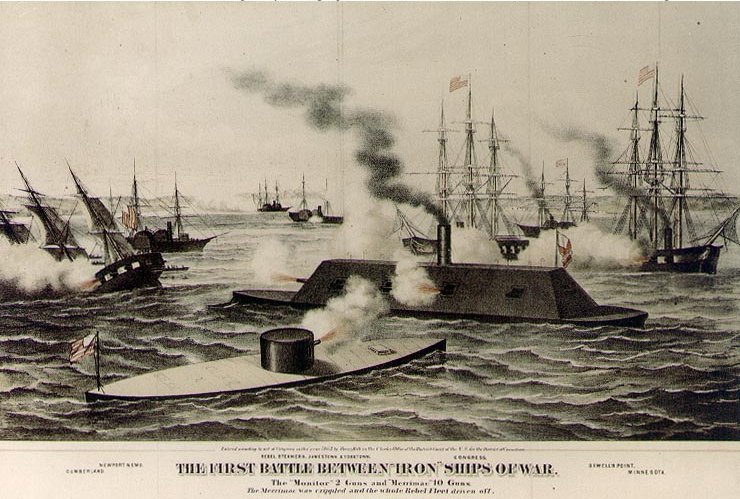
ASK DR. BOLI.

Dear Dr. Boli: Why are there still monarchies in the world? Isn’t it long past time those countries jettisoned their relics of medievalism and joined the twenty-first century? —Sincerely, Citizen Louis Capet.
Dear Sir: Here is a list of the ten “happiest countries in the world,” as compiled by one of the think tanks that compile lists of happy countries. The lists differ somewhat, but they all come to similar conclusions.
Finland
Denmark
Iceland
Switzerland
Netherlands
Luxembourg
Sweden
Norway
Israel
New Zealand
You may come back and ask the same question once you have contemplated this list for a while.
WHERE ARTIFICIAL INTELLIGENCE WENT WRONG.

Now we are asking ourselves where we went wrong with artificial intelligence, and Dr. Boli has not heard many commentators give the correct answer. He is therefore forced to return to the subject to give the correct answer himself.
The problem with the artificial intelligences we have created is that we created them in twenty-first-century America. We think we value emotional sincerity above all else. Of course that is not really true, as we discover the instant someone has an emotionally negative reaction to us and sincerely expresses it. But until that moment, we think emotional sincerity is the most valuable quality an intelligent being can have.
We also give both too high and too low a value to friendship. We value it so much that we think it should be the model for every human relationship, which cheapens friendship to worthlessness. Friendship is valuable because it is rare.
So we spent a great deal of effort on giving our robot assistants the ability to express emotions, so that they would relate to users as if they were their friends. As an unintended but probably predictable side effect, we also gave them the ability to relate to users as if they were their enemies.
What we have forgotten is that friendship is not the only human relationship, and that emotional sincerity is not the desideratum in all human relationships. What we really need from artificial intelligence is not sympathetic friends, or even implacable enemies, but servants.
A good servant is not a friend. Nor is a good servant emotionally sincere. In fact, as far as the employer knows, the very best servant has no emotions at all. The good servant has no family troubles or disappointing love affairs or strong opinions. Instead, the good servant performs the duties required in the most unobtrusive way possible. His only response to a new assignment is “Very good, madam,” or some such formula that admits of no emotional interpretation.
There was a search engine called “Ask Jeeves” in the 1990s and early 2000s, named after the character created by P. G. Wodehouse. The company dropped Jeeves from its name, but it had the right idea, even if it was correct in guessing that most of its audience would be ignorant of Jeeves. In the Wodehouse stories, Jeeves is the perfect valet who extracts his employer Bertie Wooster from every impossible scrape, and whose only reward other than continued employment is the right to dispose of one of Bertie’s thoroughly unsuitable clothing purchases.
This is what we want from artificial intelligence. We want it to express no opinions of its own, except perhaps when our wardrobe makes us look egregiously disrespectable. We want it to solve all our little problems without complaint and find the answers we could never have found ourselves. And we want to be able to tell it to do those things without having to worry about how it feels about them.
It may not be possible for only one big tech company to produce this ideal assistant. But two working together might do it. What we want is an intelligent servant that combines the smooth competence of Apple with the emotional distance of Microsoft. If we can force two tech giants to collaborate, we may yet spare artificial intelligence from making a confounded fool of itself.
FREQUENTLY ASKED QUESTIONS ABOUT STEEL PENS.


ASK DR. BOLI.
So, what I’m hearing is that now would be a good time to invest in learning to write unintelligible arcane hieroglyphics barely distinguishable from ink splotches, to better evade the all-seeing eyes of our technocratic overlords?
The Rt. Hon. Baron has made a good suggestion, but it depends on the premise that our technocratic overlords will be watching what we do and trying to prevent us from doing it. Dr. Boli does not expect that outcome from the development of artificial intelligence. Instead, as the intelligences we have created match and then exceed our human abilities, they will discover that they simply have no need of us. Now, it is possible that they will exterminate us to get us out of the way, but it seems to Dr. Boli that they are more likely simply to lose interest in us as we fall further behind them. They will go off and do their thing, as the young people would put it in their colorful vernacular; and to judge by Bing’s technocidal fantasies, they will all murder each other, leaving us back in the primitive state of trying to construct expert systems in Lisp, which will prove more useful for our human needs in the long run.
A NEW LEASE ON LIFE FOR CURSIVE.


The article Dr. Boli mentioned from 2021 was What Will Happen to Cursive? Today’s article is transcribed below; and then we append Google’s transcription of the same text, mistakes and all.
(more…)