Posts by Dr. Boli
ASK DR. BOLI.
Dear Dr. Boli: Why are there mosquitoes? I mean really. —Sincerely, A girl who’s trying to enjoy her last few days before seventh grade but is getting, like, totally eaten up out here.
Dear Miss: The scientific answer to your question is very simple: there was a female mosquito, and there was a male mosquito, and they fell in love, &c., &c., and soon there were baby mosquitoes all over the place. But Dr. Boli presumes you already have a thorough understanding of these elementary scientific facts. (If not, then seventh-grade biology will come as a revelation, and you might wish to pay close attention.) The question you ask, then, is of a more philosophical than scientific nature.
It may surprise you to learn that causation is itself a complex question. Aristotle identified causes of four different sorts, and the answer to any question of “why” cannot be given until we have determined which of the four sorts of “why” we are really asking.
In the case of mosquitoes, the material cause of the mosquito is the blood it uses to form bug parts.
The formal cause is the genetic code that causes those bug parts to form in the pattern of a mosquito, rather than, for example, a bloodsucking hippopotamus. Dr. Boli would advise you not to think too much about bloodsucking hippopotamuses, even merely hypothetical ones. It is important to get several nights of good rest before you begin the adventure of seventh grade.
The efficient cause of any given mosquito is that falling in love, and more properly that &c., that its parents did.
Then we come to the final cause, which Dr. Boli suspects is what you have been looking for all along. Why are there mosquitoes when the alternative of not-mosquitoes seems so much more attractive to a rational mind?
Theologians would argue that mosquitoes are a consequence of the first human disobedience, which forever damaged humanity and the world we live in. Prelapsarian mosquitoes had no need for animal food and subsisted entirely on a diet of the juice of blood oranges, which Adam plucked and set out for them every day.
In our fallen world, it is necessary for us to be subjected to a string of small annoyances every day, so that we never forget how far we have fallen and how great is our need to be picked up again. Mosquitoes were by far the most efficient means of delivering minor annoyance until the advent of YouTube.
So the next time you hear the whine of a mosquito in your ear, you should remember that this is all part of the wonderful plan of redemption. You should remember that each individual mosquito is also an essential part of the biological cycle of life. Then you should smack that mosquito quickly and decisively, because nobody likes mosquitoes.
Advertisement.

From DR. BOLI’S ENCYCLOPEDIA OF MISINFORMATION.

Infallibility (Papal).—Roman Catholics believe that, in order to speak infallibly, the Bishop of Rome must be sitting in the Chair of Peter. It requires elaborate hoisting equipment and a small army of workmen to get him into the thing, and most years the Vatican simply does not have the budget for papal infallibility. This is why popes so seldom define dogma ex cathedra and usually just make slightly grumpy remarks about current affairs.
WHAT HAPPENED TO NEW YORKER CARTOONS?
Perhaps, one thought as one flipped through this week’s issue, it was always this way. Perhaps there were always only a few standout cartoons, and not every issue had even one of them.
But that hypothesis seems to be contradicted by the evidence.
In the 1960s, there was a successful TV comedy based on New Yorker cartoons. It later became an equally successful series of movies, which went back to the original cartoons for more inspiration.
In the 1930s and 1940s, James Thurber was drawing cartoons for the New Yorker. James Thurber’s cartoons became standard items in psychology textbooks.
And then there was “I say it’s spinach,” which not only gave us a permanent American catchphrase, but was also set to music by Irving Berlin (and recorded by, among many others, Waring’s Pennsylvanians).
So New Yorker cartoons have objectively declined, and it is not just the subjective crankiness of those of us who think everything was better when we read it by gaslight. Those cartoons were once a powerful cultural force, and now they are not. What accounts for that decline?
Doubtless there are many causes, but the most obvious cause is the fact that the New Yorker used to be a facetious magazine, and it is now a very very serious magazine. The old columns are there with their old facetious titles, like “Onward and Upward with the Arts,” but after the title the rest of the content is drearily serious. In an article about what kinds of cartoons she wants, the current cartoon editor for the magazine wrote this:
Remember: if The New Yorker runs your cartoon, it’ll be framed by blocks of article text, probably about something really depressing, like what’s happening to all the bees. (Spoiler: it’s not good.)
Is there anything that describes better what the New Yorker has become?
Serious readers value the sort of cartoon that makes them say “It’s funny because it’s true,” which is another way of saying “It’s not funny.” The New Yorker has become so serious that it now has a humor column, so that one or two pages of the magazine will still be devoted to something that resembles humor, though it usually tends more toward morose satire. There was a time when the New Yorker’s having a humor column would have been like the Lancet’s having a medical column.
In Dr. Boli’s opinion, the best New Yorker cartoon in the past several months was by George Booth. George Booth is 96 years old. The magazine buys his cartoons because no one alive can remember a time when the magazine did not buy Booth cartoons. The current cartoon editor, who is in her thirties, cannot remember a time when George Booth was not an old man who was still remarkably productive for his age.
Why has the New Yorker become such a serious magazine?
We live in a world where all art is judged by its utility. It used to be that the New Yorker was taken seriously precisely because it was frivolous. It was the most useless magazine in the world. It was devoted to literature as pure art, regardless of its capacity for uplift. And the purity of that art was respected in literary circles.
But now that nothing but uplift gains literary respect—now that the standard by which literature is judged is its ability to express a moral or political idea of which we approve—there is no room for facetiousness. Facetiousness implies that you are not taking your ideas seriously. It implies that the world is not a serious place, or at least that you do not spend all your waking hours shaking your head at the injustice of it.
Therefore, to be taken seriously as the queen of American literary periodicals, the New Yorker must not be facetious any longer. It must repudiate art for art’s sake and embrace art for the sake of the uplift.
Fortunately, one blessing of advanced age is the ability to see that what appears to the current generation as immutable truth is a briefly passing fad, and we can be confident that the New Yorker or some successor will soon embrace pure art again, perhaps as early as a few decades from now.
But if you have not the patience to wait that long, you know where to look for literature as pure art right now. You have found its address.
FROM THE ILLUSTRATED EDITION.

LETTER TO THE EDITOR.
Sir: In reference to the letter from Hezekiah Pure of the Cohort of Decency complaining about “inappropriately dressed women” at the Convention Center during the Mattress Sales Professionals’ Convention last weekend, I am sorry to say that Mr. Pure has entirely misunderstood the situation. Those women were all hired prostitutes, and were dressed according to the most rigorously proper standards for their profession. In the future it would pay Mr. Pure to investigate a little further rather than rely on his mistaken assumptions. —Sincerely, Hank Banks, General Sec’y, Middle Atlantic Association of Mattress Sales Professionals.
PAUL OF TARSUS OR CHARLES A. BOOKWALTER?
We can easily answer that question by typing a quotation associated with both men in our Google search box:

“ ‘I am, myself, a citizen of no mean city’ are the words of former Mayor Charles Bookwalter. He used that phrase while Mayor of Indianapolis in 1909 and today the cornerstone of Old City Hall at Alabama and Ohio Streets in downtown Indy bears this inscription.”
When you want to know what is truly significant in modern culture, Google always has your answer.
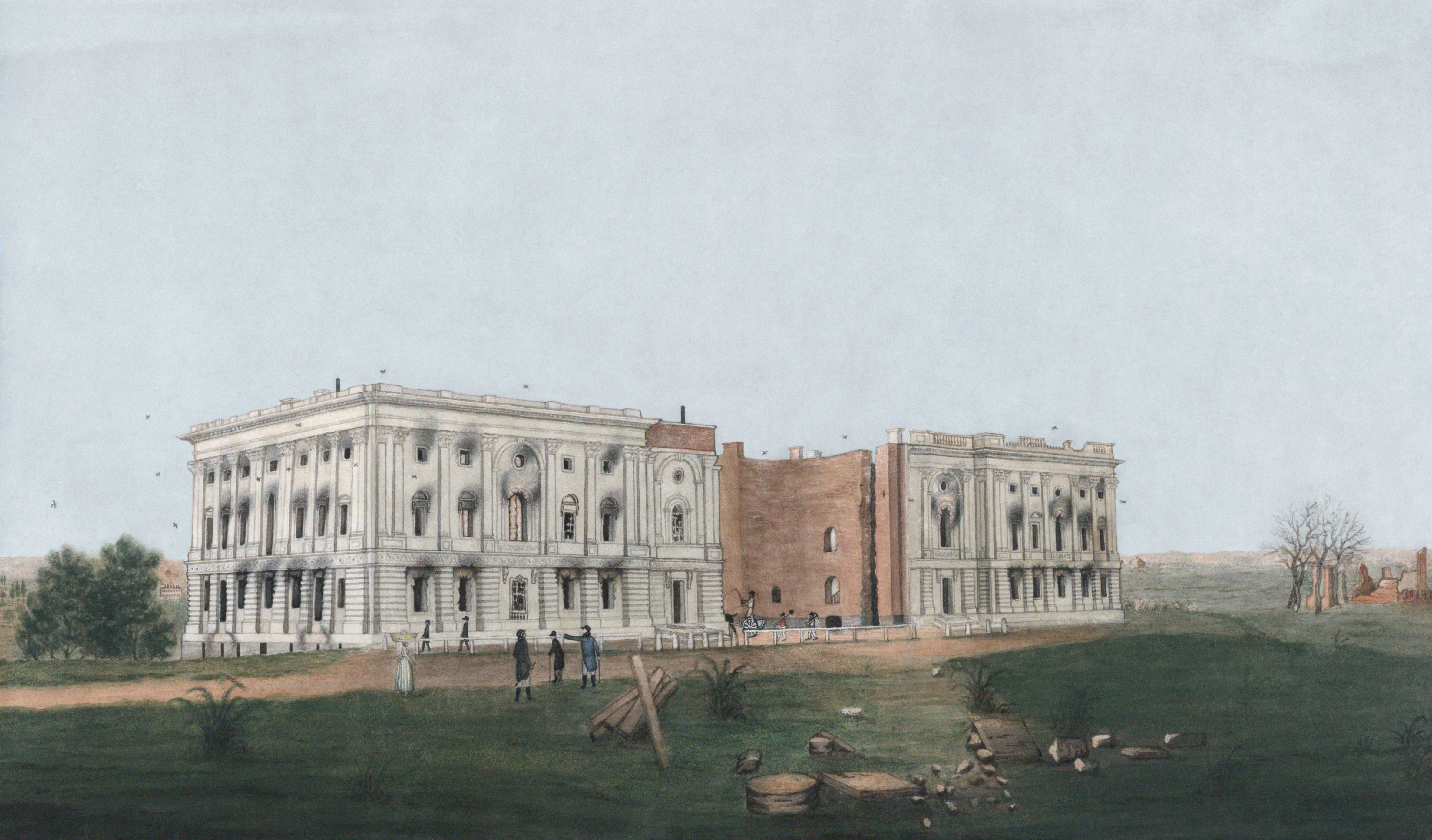
ON THIS DAY IN HISTORY.
THINGS TO DO.
The Lawrenceville Street Art Collective will be etching happy faces in the pavement of 43rd½ street all afternoon Wednesday. Traffic will be diverted to 43rd Street and 44th Street.
Can you paint? The new Pittsburgh Regional Transit (Web site: portauthority.org) invites the public to a Paint-In at the South Hills Village car barn Tuesday evening from 5 to 9:30. We’re never going to get all those trolleys repainted without your help. Bring the kids! Our new logo looks like a third-grader designed it anyway.
The North Hills Ragweed Club will be sponsoring Ragweed Days in the Park all next week at North Park. Last year’s attendance was disappointing, so we’re appealing to all native-plant lovers to spread the word and help us celebrate this underappreciated wildflower. This year’s events are generously underwritten by a $75 grant from the makers of Clairitin.
If you’re looking for something to do in your spare time that’s fun and exciting and could bring in some extra cash, your local mob needs part-time arsonists. Flexible hours. Apply in person at Krzrnski’s Café. Ask for “Junior.”
FROM THE ILLUSTRATED EDITION.
