Posts by Dr. Boli
CHILDREN PLAYING BACKYARD BASEBALL.
Overheard:
“Okay, but then I get four outs.”
“Dude, you had like eleven outs!”
DOCTOR FAUSTUS.
 If you are a student of English literature, you have read Marlowe’s Tragical History of Doctor Faustus. You might have been puzzled by the sudden shifts in tone from slapstick comedy to dire tragedy; and you might have read a lot of nonsense in explanation of those shifts in the introduction to whatever edition of the play you picked up in a university bookstore—presuming, of course, that you read the thing in that long-gone and nearly forgotten era when university bookstores sold books.
What was missing from your study of the play was an examination of its source. The English prose romance of Doctor Faustus, loosely translated from a German original, was very popular in the late 1500s under the title The History of the Damnable Life and Deserved Death of Dr. John Faustus. And if you do read it (it is very entertaining, by the way), you will at once see that Marlowe’s play had to be what it was, because he had to give the audience what they expected. If they showed up for Doctor Faustus and did not see him invisibly beating up the Pope, there would be a riot.
Unfortunately, the prose romance of Doctor Faustus has not been in print for a century and a half, so it was until now nearly impossible for professors of English literature to assign it to their students.
We say “until now,” because Dr. Boli, in the spirit of self-interested mercenary calculation that makes capitalism the best economic system ever devised by the absent mind of man, has brought the book back into print for you in an affordable and very legible paperback edition. It includes a learned introduction by William J. Thoms from his 1858 edition, in which he printed it as part of his large and expensive multi-volume anthology of Early English Prose Romances; but it has been completely reset in new type, each letter designed by Dr. Boli himself.
Naturally, universities will want to order copies in large quantities for the literature classes that are now bound to be studying this book intently. But as a special favor to his own readers, Dr. Boli is making an ebook version available free for instant download right here.
The English Prose Romance of Doctor Faustus
MOBI file for Amazon Kindle
EPUB file for every other ebook reader in the world
ON THIS DAY IN HISTORY.

On this day in 1520, Magellan found a strait that led from the Atlantic to the Pacific, and was delighted to discover that it was named after him. “What are the odds?” he asked.

THE CRIMES OF GALAHAD.
Why not start your summer reading in the fall? Here is The Crimes of Galahad, in weekly serial installments. Of course, if you grow impatient, you could always get the whole book right now.
CHAPTER I.
I am born, and grow to manhood, in such circumstances as would hardly seem conducive to evil.
Evil has been very good to me. I have wealth and social position, and moreover the nearly universal esteem of all men, who seem to regard me as a prodigy of virtue. All this has come to me through relentless devotion to the principles of evil. Indeed, I believe that the benefits of a course of evil, conscientiously pursued with unflagging vigor, have not been adequately impressed upon the minds of our young people.
I write, however, not to effect any improvement in our scheme of education, nor indeed necessarily to be read at all. If you, dear reader, have these words before you, then I must be dead and buried; for until the melancholy but inevitable event of my death, I shall take great care to keep this manuscript concealed. I write, therefore, mostly to amuse myself, and to have the satisfaction of living over in memory that brief period of my youth when I first understood and adopted the principles of evil. Nevertheless, the idea of future readers is not entirely absent from my mind as I write. If I occasionally address you, dear reader of the distant and unknown future, in a manner that seems quaint or antiquated to you, I trust you will be indulgent. I have every reason to believe that a great many years will pass between my writing and your reading. I have as yet reached only what I may reasonably expect to be the middle point of my life; I am in excellent health; I have no remaining enemies. That demise which is a necessary precondition of your reading these words seems a long way off.
It occurs to me that you, my distant reader, may wish to ask whether I recommend my own example, as you see it portrayed in these pages. It is not an easy question to answer. To persist in evil requires dedication and perseverance. At every step, the temptations to do good are numerous, and at times nearly overwhelming. Nevertheless, if you, dear reader, have the strength of character to resist such temptations, you may well profit by my example. The rewards of evil are many; it is a plant worth cultivating assiduously.
Now, I suppose, I must begin. I was born in the year 18— in the city of Allegheny, Pennsylvania. My mother did not survive my birth, which doubtless spared us both a great deal of trouble in the long run. My father, in a fit of fashionable medievalism, named me Galahad; but I have always hated that ridiculous name. Since I reached my majority I have gone by my middle name, Newman, which was my mother’s maiden name, and so I sign my name G. Newman Bousted—“Bousted” being pronounced as if it were spelt “Boasted.”
Shortly after my birth, my father removed the family—my older sisters Viola and Camellia and myself—across the river to Pittsburgh, where he opened a small stationery shop on Wood-street. Having thus reached the summit of his ambition, he was content to spend the rest of his life as an oafish tradesman, providing ink-pots and blank books to schoolmarms and junior clerks. That there was a world above this exalted station seemed to have escaped his notice; or, if he did take notice of it, it was only as one might take notice of the moon or the stars, without ever supposing that one might eventually inhabit those aethereal regions.
For the first few years, it was all my father could do to keep the store going and my sisters and me fed; but by the time I was eight years old, business had picked up to the extent that my father felt himself able to send me off to a cheap boarding-school, which he seemed to think would provide me with a “first-rate” education,—“first-rate” being his favorite term for anything that met with his approval. I suppose I was successfully educated, in that I can read, write, and cipher well enough. Whether the other stated objective of the school—viz., to inculcate in me a lively sense of Christian virtue—was duly accomplished, I leave for any future readers to determine. Certainly it would be difficult to find any evidence of Christian principles in the running of the place. Aside from the daily Bible readings, I saw little that would indicate any acquaintance with Christian doctrine either among the instructors, who administered the severest beatings for the most trivial offenses, or among the older boys, who administered even more severe beatings for no offense whatsoever: so that I sometimes thought the founders of the place had intended to make boys virtuous by giving them a foretaste of the torments prepared for the damned. I am sure that I never did anything to deserve such treatment, except on a few occasions when another boy had dared me to do something that was perhaps not in strict conformity with the rules; for if I had a single failing, it was that I could never refuse a dare. In the eyes of the other boys, of course, I had every other failing as well; but the chief among them was that I was two years older than anyone else in my class, owing to my father’s insistence that I must start my schooling at the beginning, and his inability to pay for it any sooner than he did. For some reason, this difference of age was enough to make me a universal object of scorn and contempt. Though I was always conscious of my own superior ability, I could not succeed in conveying a proper sense of that superiority to the boys around me.
In those months when school was not in session, I was given certain duties in the store, in preparation, as my father often told me, for my taking his place one day as proprietor. He was so certain that this prospect must be as pleasing to me as it was to him, that it never once registered on his mind how my shoulders slumped and my brow clouded over every time he mentioned it. For from the very earliest age, I could not view with equanimity, or indeed with any other feeling than horror, the prospect of a life like my father’s. It was apparent to me that my father had dedicated himself to the pursuit of oafish mediocrity with an almost religious zeal. The contempt with which he was regarded even by the junior clerks who stopped in to buy a gross of pens was never visible to him, but it was quite obvious to me. Was it my destiny to be lower than secretaries and schoolmarms, bowing obsequiously to men who lived in terror of assistant directors? The very children sent in to buy themselves exercise-books—children of other shopkeepers, equally oafish—felt no obligation to treat my father with even rudimentary politeness. Why was I suffering all the indignities of education, so called, if my lot was to perform such duties as an organ-grinder’s monkey might well consider beneath him? If this was my station in life, far better to have remained ignorant. Far better never to have learned to read.
For it was through reading that I learned of another world:—a world in which men thought thoughts beyond foolscap and writing-fluid—a world in which a conversation might touch on more than blank books and ruling-pens—a world in which men lived, and did not merely exist. This reading, I acknowledge freely, was not always in the best literature; but even the worst novels—and I have read, if not the worst novels, then at least some very indifferent ones—depict a world in which things are done, and men and women do them. I do not recall a single novel in which the action was confined to repeated sales of identical commercial goods.
As for my schooling, my only joy was in reading the great literature of the past. I could, when reading a play by Shakespeare, forget for a moment that I was immured in a dreadful prison, surrounded by boys who hated me and instructors who held me in contempt; when I closed the book, the walls closed in on me once more, and all my misery returned. This habit of reading has remained with me to the present, though it is now a delight for its own sake, my surroundings being such as I have chosen for myself according to my own taste, so that I no longer dread the end of the book as I did at school.
If I say little of my childhood, it is because I did not enjoy it, and it does not amuse me to dwell on it. I recall, therefore, only so much as is necessary to establish a proper foundation for the narrative that follows. I will say this much of my childhood in general: that, in spite of all that was vexing and unpleasant in my early years, I tried very hard to be good. How hard I tried! I was certain that virtue was its own reward: it must be so, since neither at home nor at school did I see any other reward for virtue. On the contrary, at school I saw clearly that cheating, prevarication, theft, violence, and every kind of wickedness were the certain roads to success and happiness. And yet I tried to be good! By what defective reasoning was I induced to love virtue, when vice carried off every prize? I have but one defense, which is that the misconception that virtue is of all things most desirable is inculcated in us from our earliest years. Nor would I make any alteration in that education, for now I see clearly the utility of it. For one who has given his life over to wickedness, nothing is more necessary than that the great mass of mankind should believe in virtue. In any jungle there must always be many more prey than predators. Therefore I applaud virtue; I give it my highest commendation whenever I meet with it; I lend it all possible aid and encouragement; I fatten it up, so that it shall in time fatten me up.
In my pursuit of virtue it seemed that all the world was against me. My fellow pupils at school made certain to take full advantage of the one boy who would not lie; and, of course, they were happy to find ways to cause trouble for me by daring me to do this or that. My instructors, though they were compelled to acknowledge my honesty, found as many reasons for punishing me as they found for punishing any other boy.
Of all my enemies, however, I had none more dedicated or implacable than my sisters Viola and Camellia. Never showing overt hostility (which my father, who doted on me, would not have tolerated), they contrived nevertheless to make every day just a little worse for me than it would have been without them. Viola, the elder, was old enough to remember our mother, and to hold me accountable for her loss; Camellia did not remember our mother, but was guided in everything by Viola.
My sisters are paragons of virtue, as I know from their having told me so on innumerable occasions. If, however, there is one virtue in particular that they possess to a pre-eminent degree, it is the gift of discerning the faults of others, and the ability to make those faults known to the possessors of them, for the sake of salutary reproof and correction.
This particular virtue they so often exercised with me, that I question whether I was more often reproved at school or at home: for whatever my father (who was foolishly indulgent of all his children) lacked in discipline was more than made up by my sisters. As they had already become paragons of virtue at a very young age, they keenly felt the magnitude of their responsibility toward me; and I lived with contempt for my father, but in dread of Viola and Camellia.
So much for my early youth.—Now my childhood is ended: behold me a young man of twenty, returned from school for the last time, and immediately put to the most degrading work I could think of: which is to say that I stood behind the counter in the store, waiting for the next patron to come in and insult me.
Imagine me having done this for a week now; imagine the cloud of gloom darkening every day as my hope dwindles and dies, and I face the prospect of living this way for the rest of my days. Now imagine one day that is slightly different from the rest: my father (who, mistaking my despair for diligence, is certain that I must be happy in the store, because, oaf that he is, he cannot conceive of any reason not to be happy in the store) sends me out on errands that will consume the whole day; sends me, moreover, with ready money for my luncheon, an extravagance he would not ordinarily have countenanced when, as he had told me more than once, Viola or Camellia could prepare a better meal than could be had at any cafe or restaurant (and that I never dared dispute this assertion must be an indication of how much my sisters terrified me).
This was at least an outing. I would still be required to be obsequious to clients on my itinerary, but I could be politely demanding of suppliers, and my luncheon money would buy me an hour of being served rather than serving.
“Take your time,” my father told me cheerfully. “We’ll manage without you for a day. No need for you to be back before dinner.” All this was, of course, in complete contradiction to his usual assertion that the store couldn’t do without me. Yet I thought nothing of it, except that my father seemed unusually cheerful. I have since learned to be more observant. Human nature is, of all studies, the one most essential for a successful life of wickedness.
But on this day I was far too eager to begin my adventure in the great world to question my father’s reasons for sending me out into it. I stepped out the front door of the store without a backward glance—quite unlike my father, whose usual practice on leaving the shop was to stare in oafish admiration at his own name spelled out in black paint over the display window. It was apparently as great a wonder to him to-day as it had been yesterday, and would doubtless be an even greater wonder to-morrow, to know that his own name, in large and ornate blackletter (which had been very fashionable nineteen years before, when it was first painted), was visible to all who passed in the street.
What I always saw on leaving the store, however, was not the name of Samuel Bousted behind me, but the enormous and inescapable name of Rohrbaugh in front of me. Rohrbaugh’s Department Store, at the corner of Diamond-street, towered over the other stores as a medieval castle towered over its client village. It occupied the better part of the next block, with five sales floors and a sixth for offices. I was certain that Mr. Rohrbaugh did not stare at his own name in oafish pride every time he passed through the door of his department store. Mr. Rohrbaugh was (to my mind) a great man; his brain must be filled with great thoughts. Every time I saw that name on his enormous building, I vowed that, some day, I should be as great a man as Mr. Rohrbaugh. In the interval before that happy destiny, I could at least refrain from such ostentatious oafishness as my father practiced daily.
My first visit was to a law office around the corner from my father’s store, where I was to deliver five gross of the No. 910 Cashier’s Pen and inquire discreetly about settling the bill.
As soon as I walked in the door, I was met by a middle-aged woman who apparently handled some of the clerical duties in the office.
“What can we do for you, young man?” she asked with a cheerful and motherly contempt. At once I felt my dignity compromised, and the thing I had known I was going to say when I walked in vanished from my mind.
“I’ve—brought—the pens, from Bousted’s,” I hesitantly told her.
“Oh, yes. Are you the new clerk? I don’t believe you’ve come around before.”
“I’m—the son.” What else could I tell her?
“You mean little Galahad? My word, how you’ve grown! Why, I didn’t recognize you at all! The last time I saw you, you were this high. Your father must be very proud of you!”
I think she babbled in this manner for about a quarter-hour, and I could only stand smiling like an imbecile while she talked, wondering whether the ordeal would ever end, and feeling as though I had been undressed and stuffed back into knee pants. When she finally ran out of breath, I set the five little boxes down on her desk and was about to mumble my farewell when I recalled that there was still the matter of the bill to settle.
“I—” I began uncertainly. I had walked in knowing exactly what I planned to say, but her incessant prattle had driven it completely from my mind. “I have brought the,— the statement of your account, and— and I was—”
“Oh, yes, of course, the bill! I suppose Papa would be very disappointed if you returned without the money, wouldn’t he? Well, we mustn’t disappoint him. Will a bank draught be acceptable as usual?”
Thus, dear reader, I departed from that first encounter of the day having succeeded perfectly in both my tasks, but with an inescapable sense of utter failure. I had left my father’s shop feeling, for the first time perhaps, an independent man; I had been reduced in half a minute to a boy.
Nor did the rest of my rounds lift my spirits at all. At every step, clients and suppliers treated me in the most insulting manner: a manner made all the more insulting by the absence of any intent to insult me. They did not intend to degrade me: it was quite obvious that they saw me only as the insignificant son of an insignificant shopkeeper. For them I had no independent existence apart from my father.
Even at the Allequippa Hotel, where I took my luncheon, I was treated with obvious condescension. There was nothing I could complain about in the service; my orders were filled with alacrity—but with a knowing, superior smile, as if the adults around me were indulging a boy in a game of make-believe. How it irked me! Today, of course, I should simply find some way to turn their impression of me to my advantage, for evil does not spurn any ready tool that presents itself. But then I still hoped to be a man pre-eminent in virtue!
In this morose state of mind I walked back toward the store in the late afternoon, my eyes cast down, my mind filled with despair. I should never be as great a man as Mr. Rohrbaugh (it astonishes me to think of it, but such at that time was my limited notion of greatness). I should not even be so much as an oafish shopkeeper like my father, at least not for twenty or thirty more years. No, I should always be the son of an oafish shopkeeper. I could see nothing beyond that for me: my education, which, such as it was, had taught me to look above my station in life, was of no more use than to prevent me from making gross errors in letters to junior clerks. I saw the world above me, but I could no more reach that world than I could expect to dwell in the clouds.
It was in this frame of mind, therefore, that I entered my father’s store, having seen little but cobblestones and shoes along the way, to find my father brimming over with some fresh oafishness, a sickeningly cheerful smile on his face. I laid the payments I had collected, and the receipts from the suppliers, on the shop counter; my father, instead of immediately counting the money, continued to smirk in the most revolting manner, completely ignoring the fruits of my labors. At last, unable to contain himself any longer, he spoke.
“Well, then,—what do you think of it?”
“Of what?” I asked, barely repressing my impatience.
“Of the sign, of course!” he answered with an oafish laugh.
“He didn’t even see it!” Viola exclaimed, taking obvious delight in my stupidity.
“The goose!” Camellia added.
My father laughed even more. “Oh, Galahad, you have been diligent today! But your mind was so much on your work that you missed what was right in front of your nose. No matter—this way I shall have the joy of showing you myself. Come outside with me. I think you’ll be very pleased.”
It was something to do with the store, certainly, so how could I be pleased? Nevertheless, the irrational optimism of youth was irrepressible. For a fleeting moment, because my father had said I should be pleased, because even my sisters seemed to imagine that I should be pleased, I thought that, somehow, I would be pleased: that perhaps, in some mysterious and altogether un-oaflike way, my father had found something, some gift to give me, that would really increase my happiness. In spite of my certain knowledge to the contrary, for one brief moment of utter folly I allowed myself to believe that things were looking up.
We stepped out the door and, when the stream of passing pedestrians cleared, took a position in the street in front of the store. “Now turn around,” my father directed me.
I turned around.
“Look up,” he said.
I looked up.
The unfashionably medieval blackletter that had spelled my father’s name over the display window was gone. In its place were crisp modern gothic letters, very large ones, that spelled out
S. BOUSTED & SON.
“There you are, Galahad!” my father cried, gleefully slapping my back. “My son and my partner! What do you think of that?”
“It’s very large,” I said. I was holding back tears.
“Large enough for the whole world to see!” Clearly my father interpreted my remark as an expression of approval. “This is my proudest day, Galahad!”
Then, as I gazed in blank horror at the pitiless assassination of all my dreams and ambitions, I heard the sound of feminine laughter—surely of all sounds the most jarring and revolting. I let my gaze drop to behold my sisters standing in the doorway.
“Oh, Galahad!” cried Viola, still laughing her corrosive laugh. “If you could see the look on your face! It’s simply priceless!”
MANIFESTO OF THE WEST END AND ADJACENT BOROUGHS POETRY MOVEMENT.
We embrace the wind, the sky, the earth, the flowers, the rocks, the water, the stars.
We embrace trees occasionally, when no one is looking.
We do not embrace thistles, because ouch.
We disdain cosmopolitan elitisms and rural anti-intellectualism.
We disdain rural elitisms and cosmopolitan anti-intellectualism.
Unlike upper-middle-class white suburbanites, we disdain facile stereotypes.
We disdain Brussels sprouts.
We disdain remunerative labor.
We disdain disdainfulness as being too disdainful.
We sing the downtrodden, the poor, the obscure, our beloved sisters and brothers who are not quite as good as we are.
We sing the forgotten musty corners of Stowe Township.
We sing with words, but not with music, because we are Poets.
We believe that Poetry is too often neglected even in literate circles.
We believe that this is the fault of the System and that guy who runs the bookstore on Craig Street.
We believe that Poetry must be part of the great struggle against the System.
We believe that Poetry must be part of the great struggle against that guy who runs the bookstore on Craig Street.
We believe that a Poem can make a real difference in our lives.
We believe that a Poem can make a real difference in the lives of people who are too stupid to be Poets themselves.
We believe that a Poem is meant to be read.
We believe in Readers.
Someday we hope to meet one.
HORROR OF THE DANCING TOMBSTONES.
Google Photos, in an obvious attempt to warn us of the impending zombie apocalypse, has been animating some of the pictures Father Pitt takes in Pittsburgh cemeteries. Continue only if you are mentally prepared for the sight of graves just about to vomit forth their contents.
From DR. BOLI’S UNABRIDGED DICTIONARY.
Fundamentalist (noun). An adherent of any religion who latches on to the extraneous details and decorative fripperies of the faith, to the utter neglect of the basic principles. A Christian fundamentalist insists on the literal truth of the creation hymn in Genesis while defying every precept in the Sermon on the Mount. An Islamic fundamentalist worries himself sick over whether the faithful can carry their groceries in paper bags (because infidels might have recycled the paper from old Korans, infidels being just the sort of people who would do that), while continuing to kick the poor and helpless in the teeth, which is the one thing known for a fact to make Allah mad as a hornet.
Etymologically, the word comes from a Latin term meaning having to do with the fundament.
Fundamentalists are unpleasant, but fortunately you will never meet one. The word is used in modern English only to describe the religious beliefs of third parties not present in the current conversation.
ON THIS DAY IN HISTORY.
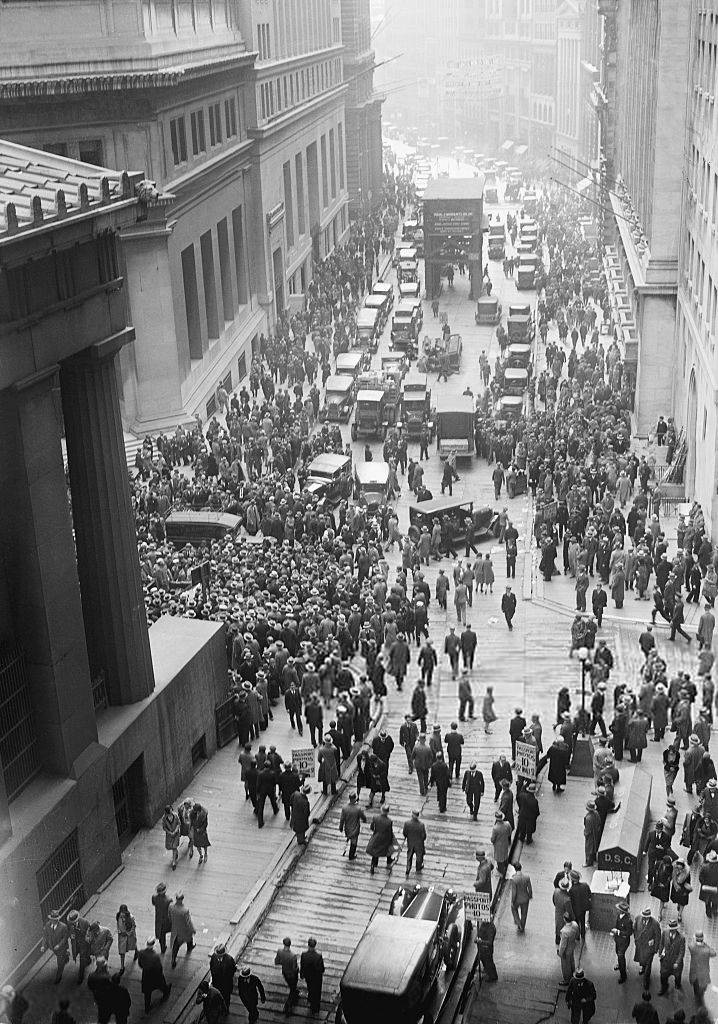
On this day in 1929, it was discovered that the entire basis of capitalist economics was fictional. Fortunately, the leading figures in capital came together and selflessly agreed not to profit from that knowledge.
ANSWER TO A BILLBOARD.
A nearby university has put up billboards all over the city with the slogan “An MBA isn’t always the answer.”
Dr. Boli agrees. In fact, he will go further. If you believe that an MBA is ever the answer, then you are asking the wrong question.
Further than that, if you believe that, as the billboard suggests, the answer may instead be a degree in human resources management, then you do not even speak the English language, and should probably address that problem before attempting to answer any more questions.
Dr. Boli is being facetious, of course. The phrase “human resources” has, in fact, a very specific meaning in the English language. The common English term for “human resources” is “slaves.”
ASK DR. BOLI.
Dear Dr. Boli: I have watched the debates of the various presidential candidates, and I feel as though I am no closer to a decision. (I am an independent and a non-voter, but primary season is no fun without a team to root for.) What do you consider the most important issues in the coming presidential election? —Sincerely, A Woman Who Enjoys Politics as a Spectator Sport.
Dear Madam: “Issues” are a distraction. The candidates will always shout loudest about the things that are least under the president’s control. The election will then be decided by people who “vote on the issues,” and who shake their heads in pity and disgust over the lazy rubes who show an insufficient interest in those “issues.” But the president will not be able to make America’s borders impervious to brownish people or stop corporate executives from making all their decisions on the basis of short-term greed. The president will not be able to make teenagers wise and moral, and will have no effect whatsoever on the crime rate in your neighborhood. The president will have no power to stop the war on Christmas, and no one will become a jot more tolerant because A was elected instead of B.
In fact, there is one thing and one thing only that matters in the election of a president. The government must provide certain essential services, and the provision of them is the special duty of the executive branch of government. Will the president we choose manage a competent executive branch that is capable of delivering those services to the citizens who need them? The more stridently a particular candidate insists on his particular “issue,” the more certain you may be that his honest answer to that question would be no.