Posts by Dr. Boli
ON THIS DAY IN HISTORY.

On this day in 1883, the Orient Express first ran from Paris to Constantinople. One of the passengers was mysteriously murdered along the way, beginning a beloved tradition that was scrupulously honored until the train ceased to run in 2009.
Advertisement.

DR. BOLI’S CALDENDAR FOR 2012.

October brings a cheery glimpse of hell,
Each vacant storefront filling up with ghouls
With zombie, ghost, and pirate masks to sell
To clever children and to grown-up fools:
For we’ve decided the deterioration
Of Western culture’s cause for celebration.
FROM THE ILLUSTRATED EDITION.

TONIGHT ON DUMONT.
Holmes & Watson (premiere). First episode of Dumont’s eagerly anticipated entry in the contemporary-Sherlock-Holmes genre. Tonight: Obsessive and reclusive consulting detective Sherlock Holmes is forced to accept the companionship of “Dr. Watson,” an adorable capuchin monkey. Check local listings.
ST. JEROME POLITELY RESPONDS TO HIS CRITICS.
Today is the feast of St. Jerome in the Lutheran, Roman Catholic, Anglican, and various other traditions. In honor of the great theologian and translator, we present the preface to his translation of Jeremiah, in which he demonstrates his application of Christian charity to the authors of unfavorable reviews that had appeared in the Observator Romanus some time before.
—
I pay little heed to the ravings of disparaging critics who revile not only my words, but the very syllables of my words, and suppose they give evidence of some little knowledge if they discredit another man’s work—as was exemplified in that ignorant traducer who lately broke out, and thought it worth his while to censure my commentaries on Paul’s Epistle to the Ephesians. He does not understand the rules of commenting (for he is more asleep than awake and seems utterly dazed), and is not aware that in our books we give the opinions of many different writers, the authors’ names being either expressed or understood, so that it is open to the reader to decide which he may prefer to adopt; although I must add that, in my Preface to the First Book of that work, I gave fair notice that my remarks would be partly my own, partly those of other commentators, and that thus the commentary would be the work conjointly of the ancient writers and of myself.
Grunnius, his precursor, overlooked the same fact, and once upon a time did his best to cavil. I replied to him in two books, and there I cleared away the objections which he adduced in his own name, though the real traducer was some one else; to say nothing of my treatises against Jovinianus where, you may remember, I show that he [Jovinianus] laments that virginity is preferred to marriage, single marriage to digamy, digamy to polygamy. The stupid fool, labouring under his load of Scotch porridge [scotorum pultibus praegravatus], does not recollect that we said, in that very work, “I do not condemn the twice married, nor the thrice married, and, if it so be, the eight times married; I will go a step farther, and say that I welcome even a penitent whoremonger; for things equally lawful must be weighed in an even balance.” Let him read the Apology for the same work which was directed against his master [Jovinianus], and was received by Rome with acclamation many years ago. He will then observe that his revilings are but the echoes of other men’s voices, and that his ignorance is so deep that even his abuse is not his own, but that he employs against us the ravings of foes long since dead and buried.
(Translated by W. H. Fremantle.)
Advertisement.

ASK DR. BOLI.
Portrait of William Shakespeare, from the First Folio.
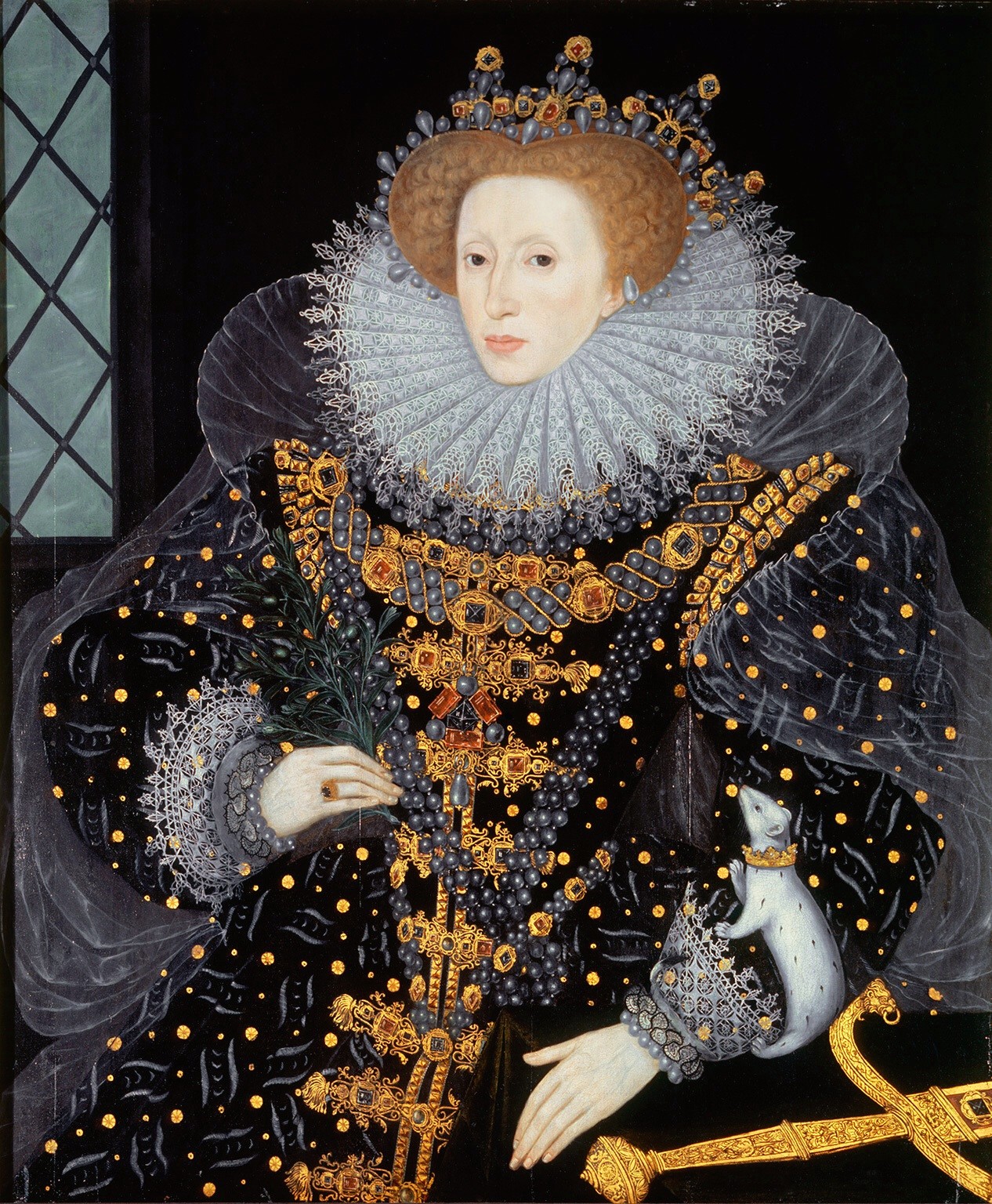
Dear Dr. Boli: A friend of mine says that the Earl of Oxford wrote Shakespeare’s plays. I thought everybody knew that Sir Francis Bacon wrote Shakespeare. But when I looked on line, I found all sorts of other theories—some people say Queen Elizabeth wrote Shakespeare, and others that it was Sir Thomas Bodley, or King James I, or the Earl of Salisbury, or Cardinal Wolsey, or Mary Queen of Scots, or Sir Thomas More, or the Earl of Derby, or the Earl of Essex, or the Earl of Rutland, or the Countess of Rutland, or Sir Philip Sidney, or Baron Brooke, or Sir Francis Drake, or the emperor Constantine the Great. So who wrote Shakespeare’s plays, anyway? —Sincerely, a Professor of Literature at the Pennsylvania University of California.
Dear Sir or Madam: Dr. Boli clings to the old-fashioned opinion that Shakespeare wrote Shakespeare’s plays, even though it causes children in the street to laugh at him as he passes by. (At least he assumes that his opinions on the Shakespeare question are the cause of their laughter, since it is well known that American children are full of unreasonable prejudices on questions of English literature.) He might bring forward any amount of literary evidence to support his unfashionable theory, but instead he argues from quantity rather than quality.
A gentleman of the nobility might amuse himself by writing two or three plays, and perhaps even having them produced on the stage; he would, of course, follow classical models and adhere strictly to the Aristotelian unities. But only a man whose continued existence depended on producing the next play would have written such a prodigious quantity of plays. Setting all questions of style and content aside, the mere number of Shakespeare’s plays tells us that we have here a man who wrote for a living. Dr. Boli is of the opinion that literary critics ought to consider the word count before they attempt to attribute such a mass of literary labor to a nobleman whose days were filled with affairs of state. As is so often the case in English literature, the critic’s most effective tool is a pocket calculator.
FROM THE ILLUSTRATED EDITION.

HOW TO TELL THE TEMPERATURE FROM A CRICKET’S CHIRPING.

The common cricket is a complete mobile weather station, and it is a very easy thing to read the temperature by counting the insect’s chirps. Follow this simple formula, and you will be the life of any party that is otherwise so sedate that you can hear the crickets chirping.
1. Count the number of chirps in one minute, and enter that number on the first line (let us call it “Line 1”) of a fresh page in your pocket memorandum book.
2. Enter your latitude on Line 2. Be sure to express degrees south of the equator as negative numbers.
3. Multiply the number on Line 1 by 23 and one third per cent (0.23333), and enter the result on Line 3. This is your adjusted gross chirp rate.
4. Add 40 to the number on Line 3 and enter the result on line 4.
5. Were any of your chirps subject to withholding? If so, enter the number withheld on Line 5. (If not, enter 0, which is the numeral zero and not the letter O, which would just be silly.)
6. Subtract Line 5 from Line 4, and enter the difference on Line 6. This is your estimated annualized chirp liability.
7. Subtract 32 from Line 6, and enter the difference on Line 7. This is your estimated annualized chirp liability minus thirty-two.
8. Divide the number on Line 7 by 1.8. This is the temperature in degrees Celsius.
9. Announce the temperature and receive merited applause.
10. After you have announced the temperature, you may also read off the latitude you entered on Line 2. Nothing stimulates intelligent conversation at parties like a good latitude.