Posts by Dr. Boli
From DR. BOLI’S ENCYCLOPEDIA OF MISINFORMATION,
Second Series.

Mrs. Richard Brinsley Sheridan, by Gainsborough.
Gainsborough, Thomas. Even at the height of his fame, Thomas Gainsborough, the great portrait and landscape artist, and perhaps the most talented English painter of his generation, could not draw a tree to save his life.
FROM THE ILLUSTRATED EDITION.

HOW TO BE A CAT.

ANNOUNCEMENT.
PITTSBURGH PARKING COURT would like to request Mr. Aelfric Timmons Wright to stop filing amicus curiae briefs. Mr. Wright is hereby informed that the Court does not consider him an amicus, and that in fact the Court doesn’t like him very much at all.
From DR. BOLI’S ENCYCLOPEDIA OF MISINFORMATION,
Second Series.
—
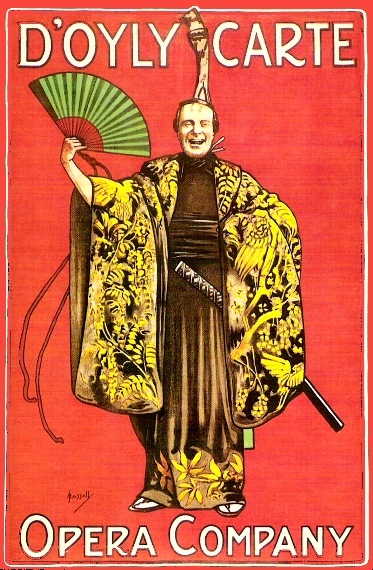
Mikado. The term “Mikado,” once used in English to refer to the Emperor of Japan, comes from a Japanese phrase meaning “I said ‘Emperor,’ you stupid foreigner.”
Advertisement.

THINGS WE SIMPLY CANNOT IMPROVE.
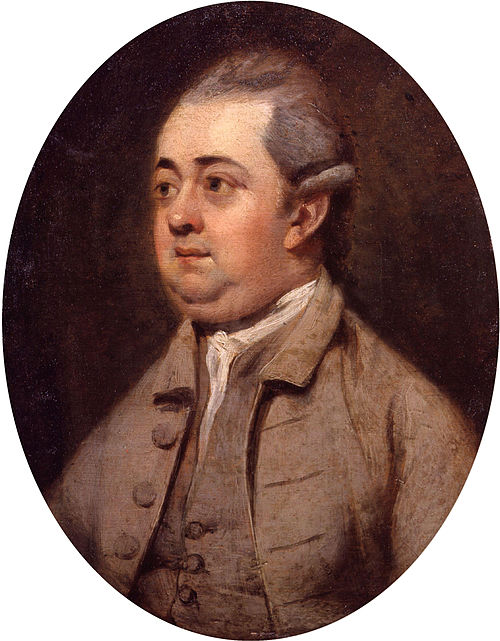
WHEN EDWARD GIBBON published the first volume of his History of the Decline and Fall of the Roman Empire, he expected a fair number of literary attacks. He read them all, and responded to none, until he came to a furious 284-page scribble by one Mr. Davis, who “styles himself a Bachelor of Arts, and a Member of Balliol College in the University of Oxford,” and who accused Gibbon of every species of incompetence and mendacity. Mr. Davis ought to have known that, if he made a personal attack on Gibbon, he was wielding a blunt stick against well-placed field artillery. In beginning his reply, Gibbon manages the remarkable feat of excusing himself for replying while simultaneously portraying his adversary as a contemptible insect unworthy of his notice.
—
I should have consulted my own ease, and perhaps I should have acted in stricter conformity to the rules of prudence, if I had still persevered in patient silence. But Mr. Davis may, if he pleases, assume the merit of extorting from me the notice which I had refused to more honourable foes. I had declined the consideration of their literary Objections; but he has compelled me to give an answer to his criminal Accusations. Had he confined himself to the ordinary, and indeed obsolete charges of impious principles, and mischievous intentions, I should have acknowledged with readiness and pleasure that the religion of Mr, Davis appeared to be very different from mine. Had he contented himself with the use of that style which decency and politeness have banished from the more liberal part of mankind, I should have smiled, perhaps with some contempt, but without the least mixture of anger or resentment. Every animal employs the note, or cry, or howl, which is peculiar to its species; every man expresses himself in the dialect the most congenial to his temper and inclination, the most familiar to the company in which he has lived, and to the authors with whom he is conversant; and while I was disposed to allow that Mr. Davis had made some proficiency in Ecclesiastical Studies, I should have considered the difference of our language and manners as an unsurmountable bar of separation between us. Mr. Davis has overleaped that bar, and forces me to contend with him on the very dirty ground which he has chosen for the scene of our combat. He has judged, I know not with how much propriety, that the support of a cause, which would disclaim such unworthy assistance, depended on the ruin of my moral and literary character. The different misrepresentations of which he has drawn out the ignominious catalogue, would materially affect my credit as an historian, my reputation as a scholar, and even my honour and veracity as a gentleman. If I am indeed incapable of understanding what I read, I can no longer claim a place among those writers who merit the esteem and confidence of the Public. If I am capable of wilfully perverting what I understand, I no longer deserve to live in the Society of those men, who consider a strict and inviolable adherence to truth, as the foundation of every thing that is virtuous or honourable in human nature. At the same time, I am not insensible that his mode of attack has given a transient pleasure to my enemies, and a transient uneasiness to my friends. The size of his volume, the boldness of his assertions, the acrimony of his style, are contrived with tolerable skill to confound the ignorance and candour of his readers. There are few who will examine the truth or justice of his accusations; and of those persons who have been directed by their education to the study of ecclesiastical antiquity, many will believe, or will affect to believe, that the success of their champion has been equal to his zeal, and that the serpent pierced with an hundred wounds lies expiring at his feet. Mr. Davis’s book will cease to be read (perhaps the grammarians may already reproach me for the use of an improper tense); but the oblivion towards which it seems to be hastening, will afford the more ample scope for the artful practices of those, who may not scruple to affirm, or rather to insinuate, that Mr. Gibbon was publickly convicted of falsehood and misrepresentation; that the evidence produced against him was unanswerable; and that his silence was the effect and the proof of conscious guilt. Under the hands of a malicious surgeon, the sting of a wasp may continue to fester and inflame, long after the vexatious little insect has left its venom and its life in the wound.
Advertisement.

ASK DR. BOLI.
Dear Dr. Boli: What are “antioxidants,” and what do they do for people? —Sincerely, P. H., Famous Nutritionist.
Dear Sir or Madam: Antioxidants are molecules that inhibit oxidation, or rusting. Sometimes, no doubt, you have seen a musician or an acrobat or some such performer give a substandard performance, and offer as an excuse that he is “a bit rusty.” Such performers are lacking in antioxidants. The next time you attend a poor performance of any sort, you should hold the performer down and stuff blueberries into him until he feels better.
OUR VALUED CORRESPONDENTS.
SEVERAL YEARS AGO, Dr. Boli offered his readers “The Darwin Diet,” in which he explained his discovery that evolution had provided us with a sense of taste in order to guide us to the foods ideally suited to us. As he wrote at the time:
To eat a perfect diet, we must eat exclusively food that tastes good.
As an illustration, observe the following two lists:
Things that taste good:
Fresh blueberries
Yunnan tea
Stilton cheese
Stayman apples
Rhone wine
Home-grown tomatoes
Whole-grain breadThings that don’t taste good:
Sewing machines
Mortar
Plastic bags
Kerosene
Light bulbs
Bureaucrats
Aluminum sidingNow observe that we could, without altering the lists at all, change the headings above the lists to “Things That Are Healthy to Eat” and “Things That Are Not Healthy to Eat.” The correspondence is perfect. Things that taste good are things that are healthy to eat. It follows, of course, that the things that taste best are the healthiest to eat.
Today a correspondent from Australia, who has also published a nutritional program called “The Darwin Diet,” takes issue with Dr. Boli’s claims:
This is plainly balderdash! Chips taste good as do ice cream sundae and sticky date pudding, but they will all make you fat. Whoever wrote this garbage has no knowledge of nutrition. Thank you for letting me reply. J. Duncan McNeill, author of “The Darwin Diet: Survival of the Leanest” and numerous articles on nutrition that have been published internationally.
First, please allow Dr. Boli to say how envious he is that his correspondent lives in a country where sticky date pudding is common.
Second, Dr. Boli is suitably impressed by his correspondent’s Web site, which has nearly four thousand words on the home page alone, along with numerous illustrations of fat people with bad posture and slim people with good posture. Clearly Mr. McNeill has devoted many more words to the study of nutrition than Dr. Boli has.
Nevertheless, Dr. Boli takes issue with the unqualified claim that eating sticky date pudding “will make you fat.” Many people have eaten sticky date puddings repeatedly and not got fat. Obviously, one would not want to eat sticky date pudding for every meal of every day, and one would want to get up and do something between meals. But a reasonable amount of sticky date pudding would be good for the soul, and it is well known that psychological well-being is one of the most important predictors of bodily health.
Dr. Boli worries that Mr. McNeill may have fallen prey to the fallacious puritanical assumption that earthly pleasure is contrary to heavenly virtue. Creation may be tainted by our sin, but it is still “very good” (Genesis 1:31). Dr. Boli still stands by his two lists. He hopes that Mr. McNeill does not expect us to live on a diet of kerosene and aluminum siding.
Incidentally, Dr. Boli clearly has a prior claim on the name “The Darwin Diet,” having used it in this Magazine three years before Mr. McNeill’s book was published. He does not wish to cause his correspondent any inconvenience whatsoever, and it is of no consequence to him whether Mr. McNeill uses the name; he merely wishes to prevent any misunderstandings that might lead to the involvement of attorneys.