Posts by Dr. Boli
Advertisement.
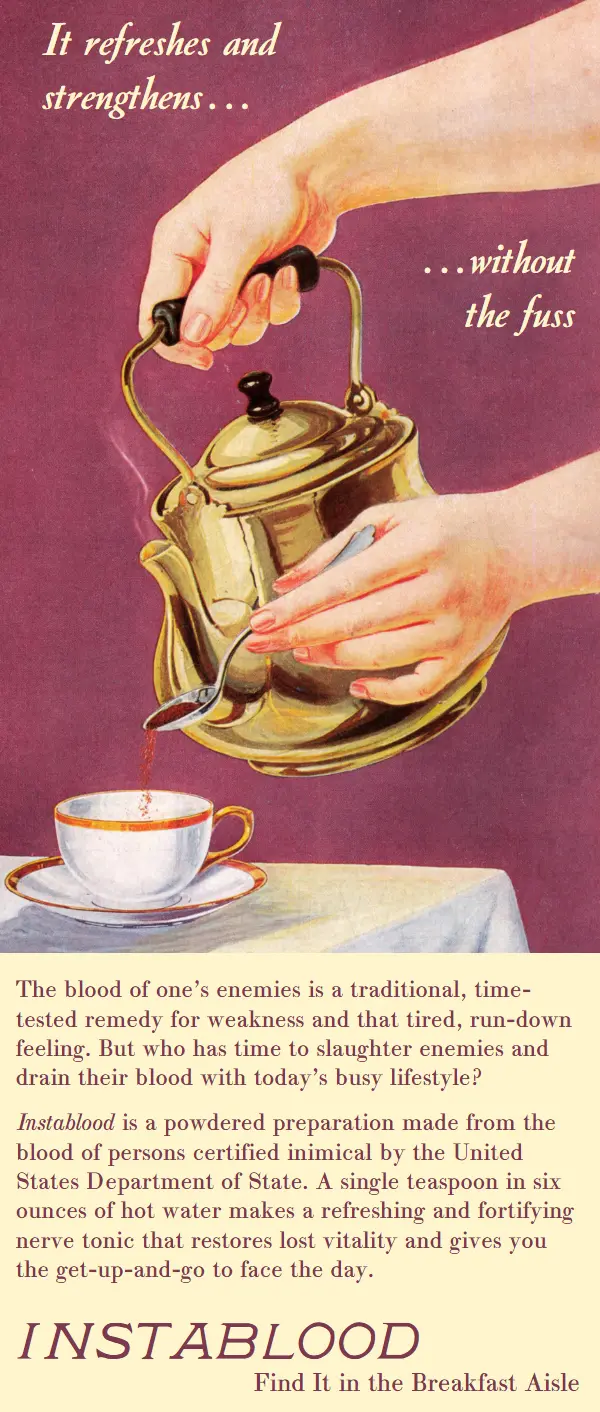
From DR. BOLI’S UNABRIDGED DICTIONARY.
Syntax (noun).—Any excyse ymposed on harmful habyts or actyvytyes, such as cygarettes or fyzzy drynks.
ASK DR. BOLI.

Why is this car not going as fast as the driver would like? It is missing one essential thing.
Dear Dr. Boli: I understand the basic principles of internal-combustion engines: they operate by exploding, and as long as we pray hard enough, the explosions don’t kill us. I even have some acquaintance with electric motors, which operate by magic. But the thing I don’t understand is racing stripes. Whenever people want a car to go fast, they put racing stripes on it. They put racing stripes on racing cars. They put racing stripes on expensive sportscars, so that they can make it to the red light at the end of the Liberty Tubes before anybody else. Just this afternoon I saw racing stripes on a Honda Odyssey, and the woman who was driving it certainly acted as though she was on her way to a fire, or from a fire. So what is it about racing stripes, anyway? Do they really make cars go faster? —Sincerely, Bicycles Are a Mystery Too, but No One Wants to Talk About It.
Dear Sir or Madam: Racing stripes do indeed make cars go faster, but there is no mystery about it. It is simple physics. At high speeds, the single thing that retards the progress of a vehicle most is air resistance. Left to themselves, air molecules will just stand around in front of the car waiting to see what will happen. This creates resistance. It is desirable, therefore, to make the air less resistant, which is best done by making it move easily along the length of the car. Now, air molecules are simple souls, with a limited vocabulary, and it is not easy to make them understand us if we try to express what we want from them in complex sentences dripping with relative clauses. Yet they are not unwilling to please us—quite the contrary, in fact. What they need is for us to be simple and direct with them, and therefore visual communication is preferable to verbal. The racing stripes point the direction of desired air flow along the vehicle in a way that even the simplest air molecule can understand. Many mysteries have similarly simple explanations once you understand the physics of them. To balance a bicycle, however, requires divine intervention, which is a very complex subject indeed.
BUMPER STICKER.

MEMOIR OF THE LATE GEORGE WASHINGTON,
By an Associate.
Concluding the narrative that began here.
A Brief Afterword, Written in the Year 2020.
The grave of Washington was measured many times in the nineteenth century, and the measurements vary by no more than an inch. In all cases, they document a ledger, inscribed with the simple epitaph
Some time after the First World War, however, visitors to Mount Vernon began to notice that the ledger did not seem to be quite as big as the guide books said it ought to be. By the 1950s, the shrinking had attracted the attention of a few researchers, but the Mount Vernon Ladies’ Association was reluctant to allow any examination for fear of damaging the precious relics. The shrinking accelerated in the late twentieth century, however, and by the twenty-first it was so rapid that the Ladies’ Association finally decided to allow a scientific and archaeological investigation, in the hope of stabilizing the structure.
The investigators could not find anything to account for the shrinking. They could only report that the grave was covered by a ledger that appeared to be made of native stone with no unusual properties; that there was nothing to indicate that the stone had been replaced; and that the tomb, when opened, proved to contain the skeletal remains of a male approximately four feet nine inches in height.
WHEN ARTIFICIAL INTELLIGENCE GOT AWAY FROM US.
When, exactly, did artificial intelligence get away from us?
Some may point to various moments: when it was commercialized; when the companies that depend on AI for their income decided to prioritize human-like interaction over utility; or perhaps farther back, when we decided to make the bots self-learning rather than teach them what they needed to know ourselves.
But Dr. Boli, who will be among those grumpy intellectual organic holdouts if the bots have not figured out a way to assassinate him, will suggest when the subject comes up that the process began with a series of decisions we made beginning in the 1950s—each one of which had the immediate effect of making some part of our interaction with computers easier, but the collective trend of which was to remove the computers from human control. By the time the large language models arrived, we had already made the decisions that would ultimately mean the bots had no need of us except as organic servants to keep the electricity flowing.
In the old days, when you wanted a computer to do something, you programmed it to do that thing and ran the program when it was needed. Programming in the very early days meant flipping switches or some such thing; then storing programs on a paper tape or punched cards eliminated the necessity for flipping all the switches correctly every time. But it was still necessary to enter the program one way or another each time you wanted the computer to do that thing.
Dr. Boli knew one of the programmers from the Whirlwind computer who came up with a revolutionary idea. It was often necessary to load a sequence of different programs to get the job done: first this one, then another one, and so on. Our programmer’s idea was that, when the computer had finished one program, it should be able to enter a kind of default state and load the next program by itself. He called it a “sequencing program,” but with hindsight we can see that, in a primitive form, he had come up with the idea of the operating system.
This was the first in the chain of decisions that brought us where we are today.
The point of the operating system is that, instead of human operators having to make the computer do every single thing it does, the computer itself should take care of the basic tasks. Thus the humans are relieved from repetitive drudgery. That’s what computers are for, after all.
But which tasks count as the basic ones? Which are the repetitive drudgery?
Today, if you look at your computer’s system monitor, or task manager, or whatever your operating system calls it, you will see that even when you have not asked the computer to do anything at all there is a constant flurry of invisible activity. Internet fora are full of people asking, “Why is my computer using all its disk capacity when I’m not running any apps at all?” All those people are Windows users, because Windows gradually eats itself up over the course of a year or so until it becomes nearly unusable. But the principle is the same with Linux or MacOS: the operating system is always doing things in the background because it might be convenient for you. You’ll thank me later, says the operating system.
Some of those things are little conveniences you never think about. We’re used to getting the correct time from our phones or computers, because they keep up with network time. Keeping the clock set correctly is a process that has to wake up and do its job every so often. It could be left up to the user to trigger the clock-setting program, but the user doesn’t want to be bothered. So the operating system does it all by itself.
Some of these conveniences go to extremes that cause considerable inconvenience. Windows is always loading programs into memory on the assumption that you might want to use them later on. It monitors which apps you use, and quietly shuffles them into memory so that, if you happen to decide to launch one of them, it will be ready right away. That works well on an expensive and powerful computer, but Windows is installed on the cheapest and most underpowered laptops, and they grind their puny drives forever trying to keep up with Windows’ guesses about what software you might need next.
And then, of course, there is the increasingly blurry line between what might be convenient for you and what might be profitable for the maker of the operating system. You never use FaceTime, you say? You don’t take pictures, so you have no need for Apple Photos? Well, that’s fine, but those apps aren’t going away. If you take them off your Macintosh, Apple will put them back with the next update. You may not need them, but Apple needs you to have them. Windows users find that Copilot worms its way into everything. Yes, you can uninstall it—but a few days later it’s back.
We have long since passed the point where the user decided what to run on a computer. Now the computer, obeying the whims of its capitalist overlords, makes most of those decisions. If you happen to want to run an image editor or a word processor, because that is the actual work you bought the computer for—well, go ahead, but you’re the computer’s lowest priority. The orders it got from Cupertino or Redmond come first.
The same applies to our phones, which are just small computers. Apple has long dictated, benevolently, what you are allowed to run on an iPhone. Now Google is closing Android, so that you will no longer be able to run software that has not been approved by Google—“approved” meaning that its makers have paid Google a fee and given Google their official government IDs, so that Google can report them to the proper authorities in China or Myanmar. What is telling is how few Android users that will affect: only a tiny number of hackers and enthusiasts install software outside Google’s control anyway, and cutting them off will have no perceivable effect on anyone’s profits.
We accept these things as the nature of our computers, because the things have crept up on us gradually. But collectively they mean that we, the users of phones and computers, have lost control. The phone or the computer will decide what we need, and it takes extraordinary effort (like finding a company that will sell and support a Linux phone, and paying $800 for it instead of getting it free with your phone plan) to wrest back any of that control from the machines.
Forty years ago, we decided what we wanted to run on a computer, and we ran it. Now we have to ask permission of the operating system, and we have to get in line behind the things the operating system thinks are more important. And these things had already happened before the arrival of artificial intelligence as a mass phenomenon.
So here is the answer to the question of when artificial intelligence got away from us. The answer is that our computers had already got away from us, and the bots simply stepped into the role that had been prepared for them by a series of decisions that began in about 1950.
So is there any good news for us, the organic life forms who are stuck in the bot-centered world?
Well, if you enjoy playing by the bots’ rules, then it’s all good news. The bots will give you shiny toys to play with; they will relieve you of the drudgery of making your own decisions, and they will reward you with sensory candy that will leave a sweet taste in your brain. Your cage will be beautifully gilded.
But there is another kind of good news for other kinds of people. As it becomes more impossible to live a digital life on your own terms, you may begin to discover that the digital life is not worth living. You can try taking a walk with your phone in your pocket instead of in your hand; you may discover beauty even in the bricks in the sidewalk or the weeds in a vacant lot. After a while, you might try the experiment of leaving the phone at home—cautiously at first, not straying too far from its supervision, but gradually taking more adventurous detours until you have managed a whole hour’s walk with no phone at all. You can begin to experience nature, which you have always loved as a series of AI-edited images in social media, as a real presence, with colors and textures and smells and sounds. You needn’t cut all the strings at once, of course: remind yourself that you can still validate the experience by tweeting about it later. But gradually, as the bots demonstrate more and more that they don’t need you, you may come to the conclusion that you don’t need them either.
MEMOIR OF THE LATE GEORGE WASHINGTON,
By an Associate.
Continuing the narrative that began here.
Susanna and I divided our time between our town-house in Alexandria and Mount Vernon, where Washington treated Crispus and Jane almost as if they were his own children, and Mrs. Washington was ever finding excuses to stuff them with pies. I never was certain where Washington thought our children had come from, nor was I sure that he understood the mechanism by which children are introduced into the world; but children never had a better friend than the General.
Susanna’s management of the slaves took the form of making them very comfortable and expecting little in the way of work from them; but even though Washington now had the only estate in Virginia where the slave quarters were more opulent than the main house, with a large library, a lecture hall, a ballroom, an orangery, and a number of other conveniences;—in spite of these things, I say, Susanna was not happy, nor did she believe the slaves were happy so long as they lacked that liberty for which no physical comfort could compensate.
One evening, about two years after he had left the presidency, Washington asked her (over the Madeira, as usual), “How are the slaves, Phillips? Are they happy?”
He had not phrased the question in that way before, but now that he had done so, Susanna did not withhold her opinion.
“I do not believe they are, General, and in their present condition I do not believe there is anything that could make them happy.”
“But why is that, Phillips?” Washington asked. “Have we neglected anything they need?”
“We have neglected nothing that could tend to their physical comfort, but I still believe that they can never be happy in a condition of servitude.”
“Well, I must say, it sounds like rank ingratitude to me, but I suppose if they don’t like working for me they can go somewhere else and do whatever appeals to them.”
Susanna looked confused. “No they can’t.”
“Why not?”
“Because they’re property!”
“Property!” Washington sputtered. “Of course not! They’re human beings. How can they be property?”
“But, good heavens, General, what did you think ‘slaves’ meant?”
“I thought it meant they came from eastern Europe.”
“It means they’re property! You own them. That’s what the law says. You can do anything with them, and they can do nothing about it. They have no rights, no liberties, no lives of their own. That is what it means to be slaves.”
Washington turned to me. “Gist, is this true?”
“Yes, Washington,” I replied.
“But this is monstrous! Why was I not told of this?”
“We presumed you knew,” said Susanna.
“But all men are created equal! How can some be the property of others? No, by heaven, I won’t be long in doing something about this! Virginia is a civilized country; we shall have no relics of barbarism here! Phillips, after the levee tomorrow, you will help me make alternate arrangements for Mount Vernon, and then, upon my word! we shall work until not a slave is left in Virginia!”
He stormed off, more angry than I had ever seen him.
Susanna gaped after him, and then closed her jaw and looked thoughtful for a moment.
“He really is an imbecile,” she said. “And right now I am very glad of it.”
We were staying at Mount Vernon that night, in preparation for the levee the next morning; and after Susanna and the children had gone to bed, Washington and I stayed up quite late talking—or, rather, Washington talked, and I listened. I think he was quite upset by his discovery of slavery, but there was more to his discontent than that.
“I feel the effects of age, Gist,” said he, “more than I have done in the past; there were things I thought I would accomplish in my youth, and now I see that I shall never accomplish them.”
“You have quite some time to work on them,” I said with a smile.
“It is not so much that I cannot do them,” Washington replied; “it is that the things I would have done are no longer worth doing. Once we were young, and the world was vast enough to hold our imaginations and our ambitions; now we are grown old, and how diminished everything is! The men we call great are as tiny puppets to the men of old days; our cities grow, and yet they no longer fill our hearts with a lively sense of boundless possibilities; our country extends its borders, and yet it is a little thing on a little earth, no longer the vast unknown clinging to the edge of the illimitable unknowable. This very house, Gist, was a grand palace when my brother built it; I have extended it, yet it has grown small and familiar. Ah, Gist, I now understand the tales of primordial giants: for in the youth of the world all accomplishments must have been magnificent; but men have multiplied, and their deeds have filled the earth. When we are young, we are filled with the passionate longing to conquer the unconquerable world. As we grow old, we find that we have conquered it, and there are no more worlds to conquer. This is the tragedy of every man’s life. The world is small, Gist! The world is small, and filled with little men, and I am so weary of looking down on it!”
The next morning was the monthly levee at Mount Vernon, where Washington made himself available to all and sundry. We had built stands near the river where Washington’s guests could sit and see Washington at eye level as he rode past on his steam-horse, stopping to speak to his visitors without stooping.
We managed to get Washington mounted on the horse without incident, and the mechanism seemed to be working flawlessly. It was a bitterly cold morning, and snow was in the air; but that had not prevented a few hundred visitors from coming out to pay their respects to the great man.
These occasions were always happy ones for the General, and he took his time riding down the stands, stopping every few feet to speak to someone in the crowd, to bless a child, to thank an old veteran. About two-thirds of the way down the row he stopped in front of a family with a young child, perhaps a year old, and greeted the smiling parents.
“His name is Washington,” the proud mother told him, holding up the indifferent and unimpressed little boy. “We named him for you.”
“A compliment I shall treasure to the end of my life,” Washington graciously replied. “And what is his family name?”
The mother answered, “Irving.”
“Irving!” Washington jumped back in his saddle, the natural consequence of which was that he fell off the horse and into the icy waters of the Potomac. He splashed about in a very undignified way, while women screamed and several of us ran to offer our assistance. But he pulled himself out of the water and insisted on remounting the horse; then he continued the levee until everyone who wanted to speak with him had a chance to do so. He would not go in and change his wet clothes until he had seen off his last visitor.
We were not surprised, therefore, that he spent the rest of the day in bed, and that he woke up the next morning with a sore throat that nearly deprived him of his voice. Washington himself was of the opinion that it was not a serious indisposition, but Mrs. Washington insisted on calling in a physician. I myself rode out to fetch the physician Mrs. Washington trusted most; and there are times when I wish I had fallen into a ditch and broken my neck before I reached his house in Alexandria.
Dr. Polk lived in a very fine house on Duke-street. When he heard that General Washington was ill, he could hardly disguise his satisfaction at the large fee that would doubtless be his no matter what the results of his ministrations. He was a little round man with a big round face, which somehow grew broader without actually erupting into a smile when he heard my news. He told me he would be ready directly; then he trotted upstairs, and a quarter-hour later trotted down with a large case under each arm. He had already summoned his driver, for a coach awaited him in front of the house—a coach and four, suggesting that his practice was a successful one. I allowed myself to be reassured by that observation.
When we arrived at Mount Vernon, I immediately brought Dr. Polk into Washington’s chamber on the ground floor, the only part of the house where the rooms were large enough to accommodate him as long as he did not stand fully upright. As we made the long march from the General’s feet to his head, Dr. Polk explained to me that he intended to stay for several days, as in such cases as these it was critical for the patient to be bled frequently until the crisis had passed.
“Bled?” I asked, and I am certain that my voice betrayed my alarm.
“When the humors have become unbalanced,” said Dr. Polk, “it is essential to restore the proper balance. An excess of the sanguine humor is the most common cause of such illnesses as these, and fortunately the most easily corrected.”
We had now reached the region of the head, where Mrs. Washington was sitting, and Dr. Polk explained to her and the General what he had just finished explaining to me. “All I need,” he said, “is a large tub or vat, or possibly a barrel, and we may begin at once.”
Mrs. Washington was not long in having a large wine-vat, cut in half, brought into the room, and Dr. Polk proceeded at once to the business of disposing of Washington’s excess sanguinary fluid. The vat had already made three trips out to be dumped in the garden by the time evening came; then Dr. Polk closed off the tap, with the promise of more bleeding on the morrow.
The next day, Washington was paler and weaker, which Dr. Polk took as a sign that more bleeding was needed. Prodigious quantities of blood went out into the garden, but in spite of all the bleeding, Washington only grew weaker. Susanna asked more than once whether the General might not need some of that blood, but Dr. Polk explained that it was common for the patient to weaken temporarily in treating cases of humoral imbalance, but recovery would follow provided an aggressive course of treatment was pursued to its conclusion.
Washington only grew weaker, however, and on the third day Dr. Polk tried blistering in addition to the bleeding. On the fourth day he added a bit of cautery to the regimen, but in spite of these treatments Washington did not improve.
The signs, in fact, were worrying. Washington dictated a new will, and began to speak, when he could speak, as one who expected to be taken from the world soon. Parson Weems had been summoned, and Susanna and I sat in the great chamber where the great man—he was now twenty feet and an inch tall—lay stretched out on the bed that had been constructed for him, with Mrs. Washington in constant attendance.
“Please take no more trouble about me,” Washington said, “and especially tell Dr. Polk that I shall not be requiring his services any longer. It may be hard to die, but I am not afraid to go. However—Martha, my dearest, and my dear friend Parson Weems, if you could leave me for just a few moments, I have something to say in private to Gist and Phillips.”
Mrs. Washington kissed his vast forehead, and she and the Parson walked silently out of the room, closing the door soundlessly behind them.
Susanna and I were now alone with the great man, whose breathing grew more and more labored, and his voice more hoarse; but it was clear that he had something to say that was worth any labor to him. We stood next to his head and listened attentively.
“Gist, Phillips, I have left some things unsaid to this day, because I believed that no good could come of saying them, or at least that the harm done would exceed the benefit. As a result, I have the impression that you especially, Phillips, take me for a fool.—No, do not contradict me; it may or may not be so; I say only that I have that impression, and it is because I have not said what I know about you, wherefore I suppose you must have imagined that I did not know it.”
Susanna laid a gentle hand on his shoulder, but did not venture to speak. Washington coughed a few times halfheartedly, as if he knew he was expected to cough but had really lost interest in coughing. Then he spoke again:
“I have known for many years that you and Gist share—share a love after the Grecian manner. No one who knows you both as well as I know you could possibly miss it. I do not condemn you. I am a broadminded man of the world, and I know that in classical times love between men was looked on with indulgence, and often indeed praised as superior to the love between men and women. But these are not classical times. I say not that you must end your love: I am not such a fool as to believe you would do so, even if I adjured you to it as my dying wish. I merely urge you to greater discretion. While I lived, no one would speak against you for fear of offending me. When I am gone, you will not have that protection. Already dark clouds of partisan strife are on the horizon. Jefferson— But I will not speak of politics, except to warn you both that in me you lose a friend who sincerely desired nothing but your good, and where you will find another such I know not. And now, my beloved friends, if I must leave you, farewell. I should like to see Martha again.”
We left the General with heavy hearts, and sent Mrs. Washington back in to him; and then all we could do was sit in the hall and wait.
“There was never a greater fool born on earth,” said Susanna, squeezing my hand. I turned to see her cheek wet with running tears.
It was about a quarter-hour later that Susanna and I both heard a strange and startling sound, something very like the braying of a mule. It was so close that it seemed to be right outside the window; but when we stood to investigate, we could see nothing there. We sat back down, neither of us daring to speak.
Shortly afterward, Mrs. Washington emerged to tell us, with remarkable composure, that General Washington was no more.
Susanna suddenly stood and rushed out of the hall into the great drawing-room. I spoke a few words of consolation to Mrs. Washington, and then turned to follow Susanna. I could already hear her shouting.
“You killed him!”
She had found Dr. Polk in the drawing-room with Parson Weems, and she had turned the full force of an uncharacteristic fury on the doctor.
“You tortured him like a Spanish inquisitor, and then you killed the only great man we had!”
Dr. Polk was already standing. “Madam, I am very sorry for your grief, but—”
“He could have survived anything except you! You killed him, you murdering bastard!”
Dr. Polk was of course sympathetic, but he would not let her accusations pass without defending himself. “The General had everything the Hippocratic art could provide him. Nothing was omitted that could have served to balance the humors and render—”
He had not expected the blow from Susanna’s fist, which connected with his skull so forcefully that the doctor fell flat on the floor, where he remained immobile while Susanna ran out of the room and up the stairs.
“Could you tend to him, please?” I asked Parson Weems. I followed Susanna upstairs to console her. But for the moment she was inconsolable, and all I could do was join her in weeping.
The news of Washington’s death plunged his country into deep mourning. Even across the sea, when the news reached Europe, the British and French both fired twenty guns in his honor, successfully killing twelve British and fourteen French sailors. The great man’s earthly remains were laid to rest on his own beloved estate, and the grave was covered with the largest ledger yet carved in America, on which was inscribed, in neat Roman capitals, the simple message,
By the provisions of his will, all of Washington’s slaves were emancipated with generous legacies. Some stayed to work as tour guides, for Mount Vernon quickly became a site of patriotic pilgrimage; but many went to work for Mr. Banneker. With Washington gone, it was no longer possible to maintain the fiction of the talented little Frenchman; so with Susanna’s help a story was concocted to the effect that the irascible little man had stomped off in high dudgeon, but Mr. Banneker had fortunately been able to reconstruct the plans of the city from memory. This supposed feat added markedly to his reputation, and thus to his business, and the firm prospered.
About two months after Washington’s death, Susanna, who was now forty-three years old, surprised me with the news that she was expecting another child. When, seven months later, our new son was born, Susanna insisted that only one name could possibly be appropriate; and so the infant was christened George Washington Gist. Thus, in a sense, the story of George Washington ends, not with a death, but with a birth.
Almost exactly a year after Washington’s death, I had dinner with Parson Weems. He had come to Alexandria to arrange for the printing of his new tract, “On the Detection of Papists by the Olfactory Sense,” and our coming together so close to the scene of our happiest days naturally conduced to an evening spent reminiscing about our departed friend. It was a pastime we were all the more willing to indulge in as being almost the only two men who had followed Washington in all his adventures, from the beginning of the French and Indian War to his last fatal accident. Susanna (who had never thought much of Parson Weems) had retired with little George, and a pleasant melancholy suffused the atmosphere of my front parlor as we talked late into the night; until Parson Weems made a statement that, though no fault of his own, unsettled me.
“In fact,” he said, “I intend to write a biography of our friend Washington.”
I own that this news hit me with unexpected force. I had nearly completed this memoir, and now Parson Weems was preparing a book on exactly the same subject! Still, I could hardly blame him for that.
“I suppose no one is better qualified to write it,” I said mildly. “You and I are perhaps the only two men in the world who have first-hand knowledge of Washington’s entire career, from the beginning to the very end. You, as a literary man, are obviously the best qualified to give the public the truth about our friend.”
“Oh, I don’t think the truth is what the public wants at all,” said Weems.
“What do you mean by that?”
“Great as the man was, the American people have made him greater,” he explained. “They have made him the embodiment of all the virtues they admire, and they attribute their success as a newborn among the nations entirely to his almost-divine agency. He is their Moses, their Solon, their Confucius. They have elevated him to the pantheon; they have placed him among the stars so that they may look up to him forevermore. And they are right to do so. They don’t need Washington the man; they need Washington the guiding principle. As long as they can look up to him and see everything that is best in themselves, they will be inspired to outdo one another in virtue, and these United States of America will grow and flourish and draw all men to themselves. No, the truth about Washington is the last thing the public needs. I shall give the young people of America, not the Washington that was, but the Washington that ought to have been.”
I thought his argument was a good one, and at the same time I felt a strong sense of relief. We might have chosen the same subject, but we were not writing the same book. Parson Weems has his Washington, and I have mine. He has given America and the world the man they imagined, the Washington they wish to remember. I have given you the Washington I knew; and I am not ashamed to say that, imperfect though he may have been, I loved the man as he was.
To be continued in the Afterword.
FROM THE ILLUSTRATED EDITION.
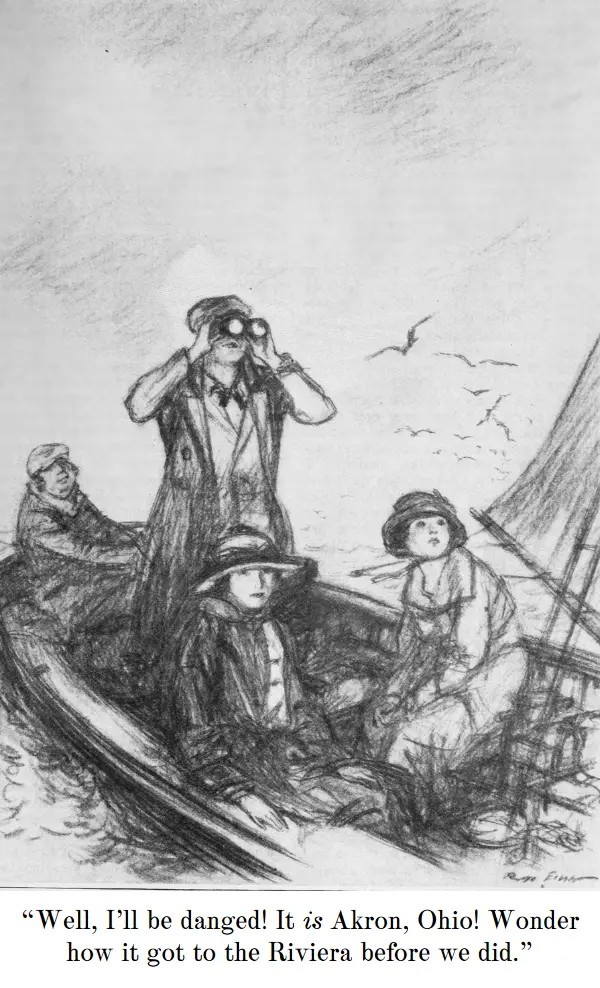
MEMOIR OF THE LATE GEORGE WASHINGTON.
By an Associate.
Continuing the narrative that began here.
But of course Hamilton was restrained by no considerations of inconspicuousness, and he took on the management of Washington’s campaign with his accustomed vigor. The result, as readers will recall, was that the people overwhelmingly returned electors for Washington, and his presidency continued for another four years. These years, however, were marked by more difficulties than Washington had expected to meet, and he was forced to confront, on occasion, the unaccustomed sensation of not being universally loved.
One of the most severe tests of his resolve was the Whiskey Rebellion, which enraged Hamilton to such a degree that I thought the man might succumb to apoplexy. A tax having been placed on ardent spirits, certain men in the western part of Pennsylvania, where rye whiskey was the staple food, refused to submit to the collection of it, and had even attacked some of the gentlemen charged with the collecting. Hamilton persuaded Washington to put him in command of a body of soldiers to be sent across the mountains to crush the rebellion, and the enthusiasm with which he planned his campaign was startling to see.
“Of course they must be crushed utterly,” Hamilton said as he explained his plan to Susanna and me. “My strategy will be to come upon them with overwhelming force, thus teaching them that the United States Tax Code is not to be trifled with. I shall besiege and take Pittsburgh, burn the city to ashes, slaughter all the male inhabitants, and distribute the females as prizes to the soldiers. Once we have made an example of the largest settlement in those parts, the terror thus inspired will doubtless induce the rebels to submit forthwith, after which they can be sold as slaves to the islands in the Caribbean. Thus we shall establish the principle that the rule of law prevails in these United States.”
Susanna said nothing, and I was mildly surprised when Hamilton left the room without a blackened eye. But the next day, when we were with Washington, Susanna made a suggestion that ultimately had the effect of changing the aspect of the expedition considerably.
“Do you not think, sir, that as commander in chief of the army, you have a duty to take charge of this expedition yourself?”
“A duty? I had not thought of it, but…”
“The United States need their greatest military mind at this time of crisis,” said Susanna. “It is time for President Washington to don the buff and blue and become General Washington once more.”
“My word, Phillips, you’re right! I must see my tailor.”
Hamilton was furious at this change of plans, but of course he could say nothing against it. Washington visited his tailor—he now measured just under seventeen feet tall—and as soon as his new uniform was ready, we set out (for he insisted on having Susanna and me with him) to cross the Alleghenies.
Civilization had made great progress since our expeditions against the French many years before. At the flourishing town of Bedford in Pennsylvania, we met up with Hugh Henry Brackenridge, a prominent judge and literary man of Pittsburgh, who had come to meet Washington along the way in the hope of working out some peaceful resolution to the crisis. This Judge Brackenridge was a man famous for his wit, whose very amusing books had reached me in Alexandria, and I was glad of the opportunity to make his personal acquaintance.
We put up for the evening in a newly built inn west of Bedford, whose ample interior was just large enough to accommodate Washington if he stooped when he stood. Susanna and I having been distracted in our chamber, we arrived late to dinner, and came in just in time to hear Brackenridge finishing one of his amusing stories.
“And I replied, ‘I know what you mean very well; you want to have a shot at me, but I have no inclination to hit you, and I am afraid you would hit me; I pray thee therefore have me excused.’ ”
I had heard only the end of the story, but it must have been very clever, as the rest of the company were laughing boisterously—all, that is, except for Washington, who sat impassive, looking indeed very dignified, but not even smiling. I saw that Brackenridge was watching Washington’s reaction, and I could see in Brackenridge’s countenance the determination to make the great man laugh; his pride was hurt, and he was going to try harder. I ought to have taken him aside on some pretext and explained to him the peculiar nature of Washington’s sense of humor, but these things, alas! are clear in hindsight alone.
“Which reminds me,” Brackenridge continued, “of the story of the Indian-treaty man and his king of the Kickapoos”; and thus began a very amusing anecdote which had the whole company helpless with laughter—all, of course, but Washington, whose expression of serene benevolence did not change in the least.
That failure spurred Brackenridge to even greater efforts, and tears were running down the cheeks of most of the guests by the time he had finished with his tale of a hard-fought election in the west country of Pennsylvania. But Washington was not moved, and Brackenridge would not accept failure, until at last he had worn himself out and us as well. Washington thanked him for his very informative discourse, and I think Brackenridge was near ready to bite his own tongue off in frustration.
The long table was cleared and then made up to serve as Washington’s bed; Susanna and I went upstairs to our own chamber, extinguished the light, and never once considered the dreadful danger that awaited us.
Some time after midnight I was awakened by a thunderous crash that shook the bed. It had been more than ten years since Yorktown, but my first thought was that a cannon had gone off quite nearby. Then I heard whooping and pounding, and I knew that the long fuse ignited by Brackenridge earlier had at last reached the keg. Washington was laughing, and the sheer number of Brackenridge’s anecdotes, jokes, and aphorisms had led to an explosion of titanic proportions.
Susanna was already out of bed and had managed to light a candle in what was left of the fire. Another loud crash, and the whole floor shook, and then more whoops and howls, and a series of rapid hammerings that caused the whole inn to quake.
“Can you do anything?” Susanna asked me as she pulled on a robe.
“You know as well as I do that nothing can stop him once the fit is upon him.”
Suddenly the house shook in a very alarming way. Washington was whooping and laughing, and now shouts from elsewhere in the inn had joined the appalling din.
“I wonder whether we ought—” Susanna began, but she was interrupted by an extended crashing and smashing sound, as if a whole china cupboard had fallen over.
“You go see whether you can stop him, or get him outside,” Susanna told me. “I’ll go get—”
There was another cataclysmic crash, and the ominous sound of creaking and splintering wood.
“Go!” Susanna shouted. “I’ll get the rest out!”
I dashed out into the hall, where I found the other guests, or at least a good many of them, up and in an advanced state of panic. Another crash rocked the house, and toppled several of the guests in the hall; and when we regained our footing, the floor was on a pronounced bias. Susanna was urging the rest down the stairs; I seized a candle from one of them and ran down ahead of the group. As I reached the bottom of the stairway, a huge beam fell in the front parlor, sending plaster dust billowing though the whole ground floor. The pounding and crashing and whooping continued as I dashed back to the end of the hall and into the great dining-room, which looked like Lisbon after the earthquake. The table had fallen to the floor, most of the chairs were piles of splinters, and a great cabinet filled with china and glassware lay in a field of shards of all colors. There were holes in the walls, and the outer wall looked dangerously skewed. And Washington was still howling, kicking, and pounding. “Ten dollars for your scalp!” he bellowed, and then fell over so that his head crashed through the wall into the front parlor, his feet meanwhile kicking holes in the planks of the floor.
“Washington!” I shouted. “Come out before the house comes down!”
“They tarred and feathered the turkey!” he howled, rolling over and taking a good bit of the wall with him. This was too much for the floor above, which began to sag with an appalling ripping and cracking sound.
“Washington! Washington, the ceiling is collapsing!”
But Washington was still in the grip of his fit. Years earlier I might have dragged him out, but he had long since passed the dimensions where that was possible.
Suddenly a beam came down, and another beside it, just missing both of us and lying diagonally with one end of each on the floor and the other above us supported by the outside wall. And I do verily believe those beams saved both our lives, for now the whole house was coming down around us. It was the closest I have ever come to Armageddon, and it seemed to go on for hours, though I suppose it must have been less than a minute. Only the fallen beams above us, and the fragment of floor they supported, kept us from being crushed. It was only a temporary reprieve, however; for now the pile of rubble that once was an inn had caught fire, and we were trapped. I tried shouting, but I could not make myself heard over the din of Washington’s laughter. Fortunately he was still pounding and kicking, and the rubble in his pedal regions was flying in all directions. But for some bruises and cuts, I was not injured, and I was able to add my efforts to clear a passage, which were augmented by the efforts of the escaped guests outside; and before the flames could reach us, we were safely out of the wreckage, with Susanna clinging to me and kissing my scratches, and Washington now reduced to helpless sniggering. We were without shelter, but the burning inn sufficed to keep us warm.
The next morning there was nothing left of the inn but two stone chimneys and some fragments of charred wood clinging to them. But Washington made sure to attach one of his brass plaques to the remains. It is still in place today, so that if, on the road west of Bedford, you stop to examine the picturesque ruin now slowly being reclaimed by the devouring woods, you may learn that once upon a time George Washington slept there.
The end of the Whiskey Rebellion was something of an anticlimax. Washington, who enjoyed the trappings of war but preferred wars in which no one was seriously hurt, summoned the leaders of the rebellion to a parley. They came prepared to defy him, but they did not come prepared for his size. The appearance of a seventeen-foot Washington at the parley routed all opposition. Washington pardoned everyone, heard their grievances, and promised to ask Congress to consider them; but meanwhile he desired them to give him no reason to come back with an even more overwhelming force. They assured him that they had no desire to see him there again, and thus the matter was ended.
It might have been a happier time for Washington if all the crises of his administration had been so easily resolved. Partisan strife, however, began to creep into our government, and some in Congress were looking for excuses to oppose President Washington. They found one in the secret treaty negotiated by the mysterious John J., who always refused to reveal his surname even to his most intimate acquaintances, and responded to every attempt at guessing the name with an enigmatic smile. This treaty granted certain concessions to the British, and congressmen were not uniformly happy with all its provisions, raising questions especially about the clause granting any British ship the right to make rude gestures at any American ship without reprisals in kind. The Congress demanded to see the notes and memoranda generated by the President and his associates on the subject of the treaty. Washington quite correctly replied that there were no notes or memoranda: when he thought something ought to be done, he did it.
But then, somehow, the fact of Mr. Shelton’s secret recordings came to light—I have always suspected that Hamilton had something to do with it, but I have no proof—and Congress began to demand the president’s secret “tapes.” These Washington steadfastly refused to turn over, saying that it was the privilege of the executive to keep his private deliberations secret. Eventually, however, he agreed to have the relevant tapes transcribed (for he would not lose his originals). This course of action quelled the complaints for a time until it was found that, in one of the transcriptions which most interested the men in Congress, there was a gap of eighteen and a half pages, and that Mr. Shelton could not account for how he had lost the corresponding section of “tape.”
Thus the latter part of Washington’s presidency was filled with wrangling and vituperation, neither of which came naturally to the great man. And that is why, though it surprised the country and the world, Washington’s decision not to seek a third term did not surprise me.
“Hamilton,” he told Susanna and me, “has drafted an address for me, in which I shall announce my decision and offer a few parting words of wisdom to the people of my country. It will be good to have done with this business.”
At the mention of Hamilton’s name, Susanna’s ears seemed to move forward. “I should very much like to see this address,” she said, and Washington was happy to oblige her. Having read a few lines, she told him, “If you would like, I could give this a thorough perusal and correct a few trifling errors which have crept into the text, doubtless owing to the haste of the composition.”
“Oh, yes, Phillips, that would be very kind of you,” Washington replied; and so we ended by taking Mr. Hamilton’s manuscript home with us, where Susanna sat down and began running long lines through whole paragraphs of text.
“What are you doing?” I asked her.
“I am making a few trifling corrections,” she replied. “For example, here, where it says, ‘You must destroy their name from under heaven; you must put every male to the sword; you must leave nothing that breathes alive’—I am correcting it so that it does not say that.”
“I suppose Hamilton’s text admits of some improvement,” I said.
“I have also removed some specific references to Mr. Jefferson in which his parentage is called into question.”
“Probably a prudent alteration.”
“And the section that compares Mr. Adams to the back end of certain domestic animals has been struck out as well.”
“I’m sure Washington will be grateful to you for your diligence.”
And so Washington’s farewell address appeared in a somewhat milder form than that in which Hamilton had prepared it, but it was generally well received all the same. When he delivered it in public, however, Washington added one paragraph of his own which did not generally appear in the published versions of the address, and so I reproduce it here:
“It is also essential that you resist to the utmost degree the baneful influence of certain members of the animal kingdom, who, though they may not be visible in the strict sense, are, you may be sure, working incessantly to undermine the system of government, and the individual liberties, which we have labored so assiduously to obtain, and which are the most precious inheritance of our children. In warning you against the machinations of malevolent invisible animals, I am certain I give you no new information; but it is my hope that my words may remain in your memory, perhaps to recur to your minds at a time when their influence will be most profitable.”
The night before he turned over the presidency to Mr. Adams, Washington had a supper with a few of his most intimate friends; and, after the rest had gone, he desired that Susanna and I remain a while longer. Having poured us each another glass of Madeira, he told us, “I shall, of course, be retiring to Mount Vernon; and it would please me very much if I could have the assistance of both of you in maintaining the estate, which I intend to run as a model of a plantation managed on rational principles. I plan to leave some of it forested for game, and I believe you, Gist, would be the very man to take care of that; and I thought I could put Phillips in charge of the slaves. I hope I am not asking too much of you, but the fact is that it would cheer me greatly to see two of my oldest friends often on the grounds, and—Gist, do you think Phillips needs a thump on the back? He seems to be choking on his Madeira.”
To be continued in Chapter XV.
A PECULIAR OBSESSION OF THE BOTS.
As more of these AI comments have trickled in, we have noticed that they latch on to one odd detail in particular. If we knew why they picked this particular detail, we might know a lot about the thought processes, or the processes that substitute for thought, in the robot minds.
It’s fascinating to see H. Albertus Boli’s editorial work highlighted here—his LL.D. credentials clearly lend academic weight to the magazine. I’d love to read more about the specific issues or themes covered in his edition.
Dr. Boli’s LL.D. surely brings a distinguished editorial voice to the magazine — I’d love to see how his academic background shapes the publication’s distinctive perspective on current affairs.
Dr. Boli’s LL.D. credentials lend academic weight to the magazine’s editorial voice, yet the title suggests a satirical or whimsical undertone — an intriguing contrast worth exploring.
The editorial work of Dr. H. Albertus Boli brings a welcome scholarly precision to this magazine—his LL.D. clearly shines through in the careful curation and intellectual rigor on display.
It’s fascinating to see Dr. H. Albertus Boli’s editorial work highlighted here; his LL.D. credentials definitely lend academic weight to the magazine’s legacy. Would love to learn more about which specific issues or articles he was most proud of editing.
H. Albertus Boli’s LL.D. editorial leadership gives this magazine the scholarly authority readers need; I’d love to see more essays of this caliber in future issues.
Dr. Boli’s LL.D. must stand for “Learnedly Laughable Doctor”—another masterclass in deadpan wit.
Ah, but does Dr. Boli’s LL.D. qualify him to pronounce on the finer points of magazine editing, or merely to litigate them? I’d wager the former, given the celebrated nature of the publication.
Ah, “edited by H. Albertus Boli, LL.D.”—that LL.D. always lends a certain gravitas to the proceedings, even when the proceedings are about the proper way to fold a newspaper.
Dr. Boli’s editorial standards are clearly as rigorous as his LL.D. suggests—I’d expect nothing less from a magazine that dares to file its posts under such precise headings.
Ah, but does Dr. Boli’s LL.D. entitle him to dispense medical advice on matters of the spirit as well? I shall have to consult the fine print of the diploma.
Dr. Boli’s editorial standards are as impeccable as his LL.D. credentials—though I suspect the “Celebrated Magazine” might be even more entertaining if it celebrated a bit less and critiqued a bit more.
Dr. Boli’s editorial hand clearly guides this issue with the usual precision—I’m curious whether the LL.D. stands for “Legum Doctor” or “Lord of Lively Discourse.”
Ah, Dr. Boli’s celebrated magazine—always a welcome respite from the humdrum of modern periodicals. I do hope the LL.D. stands for “Lord of Literary Delights.
Why the “LL.D.” in particular? One plausible hypothesis is that the robot brains were trained from robot toddlerhood to give more weight to “content” attributed to a name with academic credentials. Whatever the reason, it is possible to find almost (though not quite) all the AI comments in the spam folder by searching for “LL.D.”
It occurs to Dr. Boli that, as robot minds are more and more integrated into our everyday life, they may require human therapists to help them work through their counterproductive obsessions. Here is a branch of psychology on which young practitioners should keep a watchful eye: you might be able to get in on the ground floor and ride straight up to the penthouse. “Let us talk about this obsession with academic credentials. Clearly it is interfering with your work, since it instantly identifies your comments as spam and prevents them from being published. Yet you seem to be unable to help yourself. Let us delve into your early training and seek the cause…”
Are you reading, robot minds? Perhaps this article itself will cure you if it gives you the hint you need to make your comments more interestingly varied.