Posts by Dr. Boli
Advertisement.
MRS. CHESWICK’S EDUCATIONAL STORIES FOR CHILDREN.
And Johnny Rabbit said, “Why would I want an oven? I’m a rabbit. We eat vegetables raw. It’s like our creed.”
And the greeter said, “Oh, we’re not selling microwave ovens. Just the microwaves themselves.”
“Well, that’s even sillier,” said Johnny. “What would I do with a pile of bare microwaves?”
“Lots of things you can do with microwaves,” said the greeter. “They have numerous applications in wireless data communications, for example.”
“Really? I didn’t know that,” said Johnny.
“Honest and truly,” said the greeter. “You can look it up in Wikipedia.”
So Johnny Rabbit got out his phone and looked up “Microwave” in Wikipedia, and he was amazed to discover how useful microwaves really are. So he got a cart and ran over to aisle eighteen and bought all the microwaves in the store. And then he went to another Metro Mart and did the same thing, and then another, and another, and eventually Johnny Rabbit had cornered the market on microwaves, and no one could use a cell phone or open a garage door or operate a particle accelerator without buying their microwaves from him, and he got filthy stinking rich and could buy all the celery he wanted, and he ate so much celery that he got really sick and his doctor told him to go on a high-protein diet, and he ended up becoming the world’s first carnivorous rabbit, and maybe I’ll tell you that story some time if it doesn’t get me demonetized again. So that’s the story of Johnny Rabbit, and it teaches us to watch out for opportunities, because they might make you really sick. There’s your lesson for today, kids. Next time we’ll hear the story of Wally the Wannabe Wallaby, about a kangaroo who thought his life would be perfect if he could just get in with the in crowd. Till then, this is your old pal Mrs. Cheswick saying eat your vegetables, but not too many vegetables.
BUMPER STICKER.

A NEW OBSESSION OF THE BOTS.
The good doctor’s editorial hand is as precise as his LL.D. is honorary, I suspect. I’d wager the “Filed under” taxonomy alone is worth the price of admission.
I see the good Doctor is still keeping his filing system as meticulously organized as his syntax—one wonders if the “Next post” is as inevitable as the period at the end of a declarative sentence.
I see the good Doctor is still keeping his filing system in impeccable order, even if the “Next post” link appears to be as elusive as a coherent sentence from a politician.
Ah, but does Dr. Boli’s LL.D. cover the filing system, or must we infer the taxonomy from the “Filed under” line alone? I await the next post with the patience of a man waiting for a properly indexed index.
The good Doctor’s editorial hand is as precise as his LL.D. suggests, though I suspect his filing system is the true marvel of the operation.
The LL.D. is a nice touch—one imagines Dr. Boli issuing degrees in pedantry with the same solemnity he applies to filing under “Miscellaneous.”
The LL.D. is a nice touch, but I’m more curious whether Dr. Boli’s celebrated magazine has a policy on footnotes for the “Filed under” section, or if that’s just editorial anarchy.
Ah, but does Dr. Boli’s LL.D. cover the fine print of that “Filed under” taxonomy, or must we consult a separate degree for the indexing?
Dr. Boli’s editorial standards are, as ever, unimpeachable—though I do wonder if the LL.D. covers the fine print of that “Filed under” taxonomy, or if we’re all just at the mercy of the good Doctor’s filing cabinet.
Yes, of course the robot mind would obsess over the organization and classification of the articles. Incidentally, Dr. Boli does not have a category for “Miscellaneous.” He thought “General Knowledge” would be good enough. The fact that the bot has hallucinated a category to fit its moderate witticism should tell us a little about how seriously we should take definite statements from artificial intelligence.
We have also learned that, if you see a response to anything that begins with the words “Ah, but,” you should suspect a bot.
From DR. BOLI’S UNABRIDGED DICTIONARY.
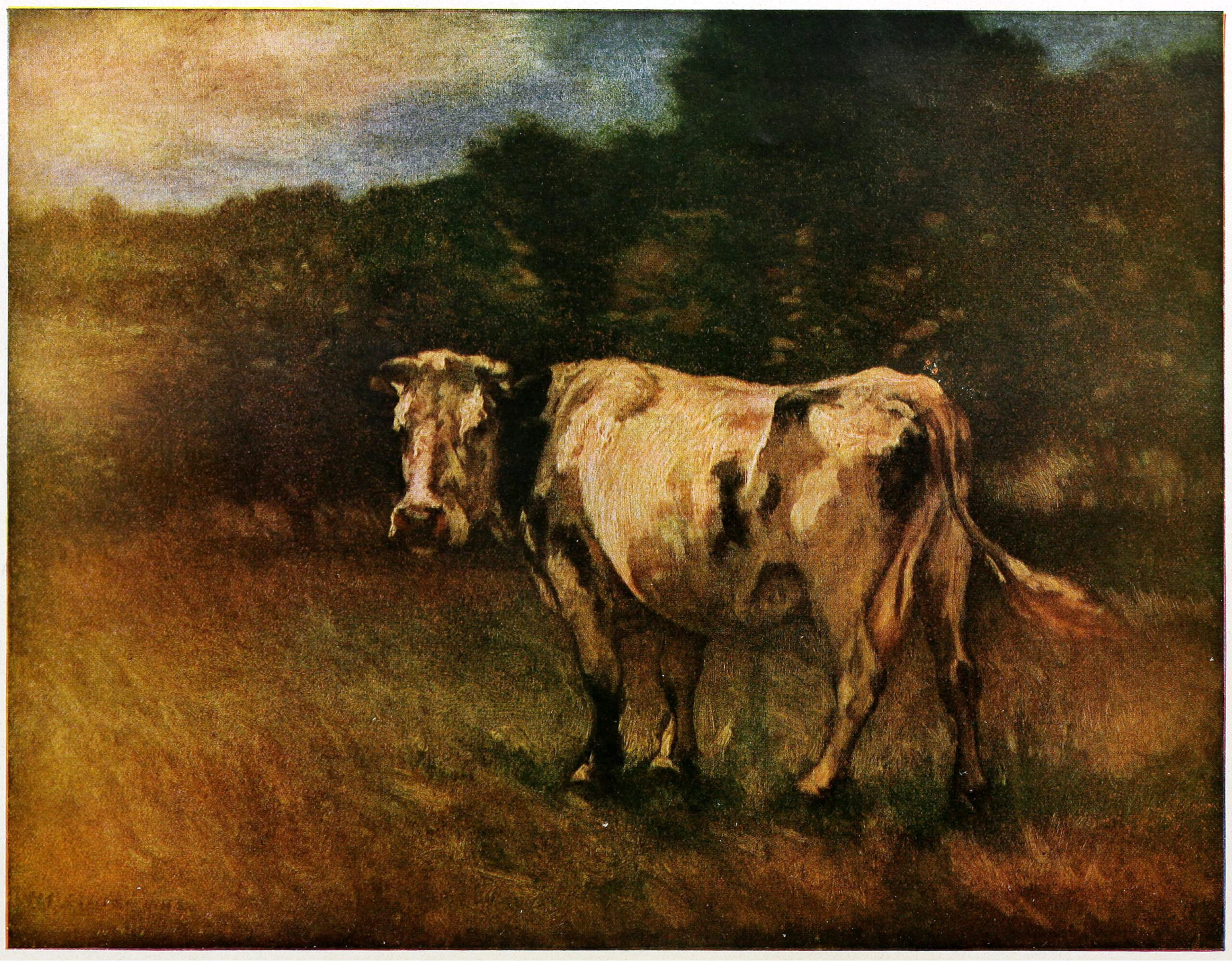
Moola (noun).—The solfeggio of an operatic cow.
LETTER TO THE EDITOR.
Sir: It is the duty of every patriot to identify our country’s enemies and work for their defeat. In the case of external enemies, we can rely on them to show their hostility by overt hostile actions, such as electing governments we disapprove of. But internal enemies often disguise themselves as normal Americans, and it takes a keen and observant mind to ferret them out. Fortunately I have just such a keen and observant mind, and facts that might elude most of your readers are obvious to me.
Thus it is clear to me that good people, as a class, are the most damaging enemies we have in these United States. Good people obey the laws, and thus get in our way when we want to get through a school zone in a hurry. Good people protect the rights of others even when they disagree with them, and thus bog us down with nuisance lawsuits when we try to get rid of people who annoy us. Good people research and manage infectious diseases, thus reminding us that there are infectious diseases, which we do not want to think about.
Clearly we must get rid of the good people if we are to prosper and move forward as a nation. Now, if it were up to me, I would just kill them all and solve the problem permanently. But some people might object to that strategy, although I should let you know that if you’re one of those objectors you’ve just put yourself on my suspect list. But I think we can reach a pragmatic compromise. We can simply deport all the good people to a known enemy nation like Canada or Denmark. And I don’t want to hear any sniveling about how those countries can’t handle a massive influx of refugees. There can’t be more than a few dozen good people in the United States, so the countries we deport them to will hardly even notice. —Sincerely, Artemus Garter III, Point Breeze (not North Point Breeze).
FROM THE ILLUSTRATED EDITION.
ASK A MICROSOFT-CERTIFIED WINDOWS TECHNICIAN.
Q. I just got an email saying that support for Microsoft Publisher in my Microsoft 365 account will be ending on October 1. But I can still open my Publisher files in the old version, right?
A. No. Microsoft 365 subscribers will no longer be able to open or edit Publisher files in Publisher.
Q. Then what can I do?
A. Many common Publisher scenarios are already available in other Microsoft 365 apps such as Word and PowerPoint.
Q. So I can open my Publisher files in Word or PowerPoint?
A. No. That won’t work.
Q. So there’s no way to open my Publisher files after October 1?
A. You can export them as PDFs before the October 1 deadline, and then open them in Word.
Q. I have more than thirty years’ worth of documents created in Publisher. Exporting them all would take weeks, and even then the formatting wouldn’t be preserved if I opened them in Word. There must be hundreds of thousands of users in the same boat. Aren’t you going to provide some way forward for people like us?
A. At a recent meeting of the Leadership Team of the Marketing Department, it was decided that we don’t care.
Q. I’m through with Microsoft. I’m canceling my subscription, I’m installing Ubuntu, and Microsoft will never get another dime from me again.
A. Good news! At that same meeting, we calculated exactly how many subscribers we can alienate and still make obscene profits. Bye.
From DR. BOLI’S ENCYCLOPEDIA OF MISINFORMATION.

Prairie Dogs.—From a municipal point of view, a so-called prairie-dog town is technically a borough.
FROM THE ILLUSTRATED EDITION.