Posts filed under “Books & Literature”
A BRIEF GLOSSARY OF COMMON TERMS IN ACADEMIC LITERARY CRITICISM.
SINCE WE HAVE been speaking of academic literary criticism lately, it may be useful to include this brief glossary for the sake of those who do not spend their days behind the gates of the university English department.
Bourgeois. Having to do with what the critic assumes are the thoughts and beliefs of people who are ignorant of or reject current fashions in literary criticism. It should be noted by linguistic conservationists that academic literary criticism is the very last refuge of this term in the English-speaking world.
Criticism. The art of separating the bourgeois from the transgressive.
Gendered. Making a conventional distinction between male and female. A novel or other text that overturns bourgeois assumptions about gender is transgressive and therefore good. One way of challenging the gendered nature of bourgeois society is to write a female character with thoughts of her own, since academic literary critics believe that no one but academic literary critics has discovered that women have thoughts.
Masculinity. A collective term for all the stupid stuff guys do.
Simplistic. Failing to find what is transgressive in a text. If one critic finds a text to be simply bourgeois, another may reject that criticism as simplistic. This generally leads to blows.
Text. Anything with words in it: a novel, poem, grocery list, bar tab, patent-medicine broadside, etc. For the purpose of literary criticism, all texts are more or less equal, and the duty of the critic is to determine whether the text is bourgeois or transgressive.
Transgressive. Not bourgeois. That which is transgressive defies, in some subtle way, what the critic perceives as the ordinary mores or assumptions of the era in which it was written. To say that a text is transgressive is the highest compliment a critic can pay to it. Most texts, with sufficient critical labor, can be found to be transgressive, since no one with enough brains to form letters with a pen actually harbors the thoughts that academic literary critics assign to the bourgeois.
THE ANSWER.

Title page of the Tauchnitz edition, published the same year as the first London edition.
—
THE ANSWER TO yesterday’s literary puzzle: East Lynne, by Mrs. Henry Wood, one of the most popular novels of the nineteenth century.
The book is very easy to find on line, though ambitious graduate students will be disappointed to learn that neither the word “bourgeois” nor the word “masculinity” may be found anywhere in the novel.
A good scanned copy of the Tauchnitz edition:
FROM THE ILLUSTRATED EDITION.

AN AMUSING DIVERSION.
This text appears in a Wikipedia article:
Critical assessment
Some critics argue that the novel champions middle classes over the lower orders; others, however, find this claim “too simplistic” and argue that the novel “highlights the shortfalls inherent to bourgeois masculinity.” Sally Mitchell argues that the novel simultaneously upholds and undermines middle-class values.
For an afternoon’s amusement, here is a challenge: Without resorting to a search engine, see if you can guess what novel is here described. The answer will be given tomorrow in this space.
For further amusement, try to list as many novels as you can think of to which this description might apply. You may wish to give yourself a time limit: as many as you can think of in five minutes, for example. Having compiled your list, award yourself a graduate degree in English Literature.
FROM THE ILLUSTRATED EDITION.

THINGS WE SIMPLY CANNOT IMPROVE.
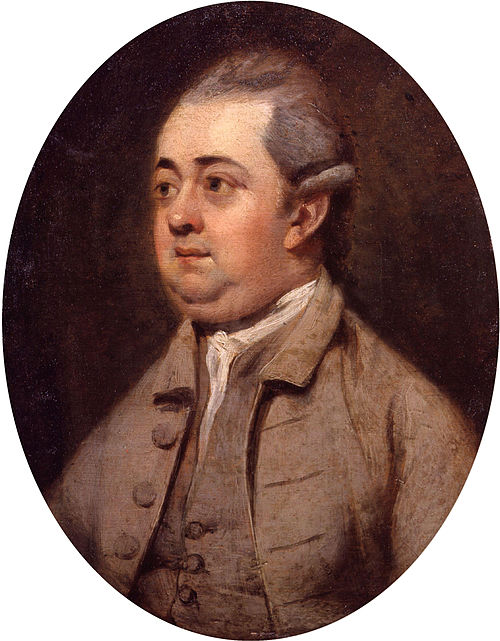
WHEN EDWARD GIBBON published the first volume of his History of the Decline and Fall of the Roman Empire, he expected a fair number of literary attacks. He read them all, and responded to none, until he came to a furious 284-page scribble by one Mr. Davis, who “styles himself a Bachelor of Arts, and a Member of Balliol College in the University of Oxford,” and who accused Gibbon of every species of incompetence and mendacity. Mr. Davis ought to have known that, if he made a personal attack on Gibbon, he was wielding a blunt stick against well-placed field artillery. In beginning his reply, Gibbon manages the remarkable feat of excusing himself for replying while simultaneously portraying his adversary as a contemptible insect unworthy of his notice.
—
I should have consulted my own ease, and perhaps I should have acted in stricter conformity to the rules of prudence, if I had still persevered in patient silence. But Mr. Davis may, if he pleases, assume the merit of extorting from me the notice which I had refused to more honourable foes. I had declined the consideration of their literary Objections; but he has compelled me to give an answer to his criminal Accusations. Had he confined himself to the ordinary, and indeed obsolete charges of impious principles, and mischievous intentions, I should have acknowledged with readiness and pleasure that the religion of Mr, Davis appeared to be very different from mine. Had he contented himself with the use of that style which decency and politeness have banished from the more liberal part of mankind, I should have smiled, perhaps with some contempt, but without the least mixture of anger or resentment. Every animal employs the note, or cry, or howl, which is peculiar to its species; every man expresses himself in the dialect the most congenial to his temper and inclination, the most familiar to the company in which he has lived, and to the authors with whom he is conversant; and while I was disposed to allow that Mr. Davis had made some proficiency in Ecclesiastical Studies, I should have considered the difference of our language and manners as an unsurmountable bar of separation between us. Mr. Davis has overleaped that bar, and forces me to contend with him on the very dirty ground which he has chosen for the scene of our combat. He has judged, I know not with how much propriety, that the support of a cause, which would disclaim such unworthy assistance, depended on the ruin of my moral and literary character. The different misrepresentations of which he has drawn out the ignominious catalogue, would materially affect my credit as an historian, my reputation as a scholar, and even my honour and veracity as a gentleman. If I am indeed incapable of understanding what I read, I can no longer claim a place among those writers who merit the esteem and confidence of the Public. If I am capable of wilfully perverting what I understand, I no longer deserve to live in the Society of those men, who consider a strict and inviolable adherence to truth, as the foundation of every thing that is virtuous or honourable in human nature. At the same time, I am not insensible that his mode of attack has given a transient pleasure to my enemies, and a transient uneasiness to my friends. The size of his volume, the boldness of his assertions, the acrimony of his style, are contrived with tolerable skill to confound the ignorance and candour of his readers. There are few who will examine the truth or justice of his accusations; and of those persons who have been directed by their education to the study of ecclesiastical antiquity, many will believe, or will affect to believe, that the success of their champion has been equal to his zeal, and that the serpent pierced with an hundred wounds lies expiring at his feet. Mr. Davis’s book will cease to be read (perhaps the grammarians may already reproach me for the use of an improper tense); but the oblivion towards which it seems to be hastening, will afford the more ample scope for the artful practices of those, who may not scruple to affirm, or rather to insinuate, that Mr. Gibbon was publickly convicted of falsehood and misrepresentation; that the evidence produced against him was unanswerable; and that his silence was the effect and the proof of conscious guilt. Under the hands of a malicious surgeon, the sting of a wasp may continue to fester and inflame, long after the vexatious little insect has left its venom and its life in the wound.
From LETTERS OF A POET OF PARIS.
Translated from Lettres d’un poète parisien, by Udolphe de l’Ennui.
—
My dear L——,
The summer breezes puff gently through my window this evening, carrying the sweet scents of a thousand blossoms from the tiny walled garden below. How I hate gardens, walled or otherwise! They are small outcroppings of paradise, and a poet has nothing to do with paradise; a poet must be damned to hell for eternity, or he is a mere bourgeois doggerel-monger. How I wish the world would despise my poetry, so that I should know myself to be a true poet! Yet the latest review in the Artichaut quotidien calls my poetry “damnable.” You see how impossible it is for a poet to rise up against the establishment, when the establishment appreciates him for what he is….
The bourgeois scents of the bourgeois flowers Mme La Salle has planted cause me to think of death. A thousand times a day I think of death: death, whose embrace is sweeter than the madeleines in the Rue du Nom Disyllable; death, whose icy breath I feel even now on my knee (for you must know that I have infernally cold knees, even at the height of summer); yet death will not come, and I am compelled to live. To live! What a hollow endeavor it is to live, when every attempt at it must at the last end in failure! Only a bourgeois mind could find satisfaction in mere living. Yet sometimes I wonder whether, when it finally comes for me, death will not prove to be bourgeois as well….
The world grows darker, and for a moment I think my bosom-companion death has remembered me at last; but no, it is merely that the sun has set, which by some cruel law of nature which no one understands deprives me of the light from my window. There are philosophers who make the bold claim that they understand this thing, but they understand nothing. Only in poetry is there truth: in poetry and in death, wherefore to know the truth it is necessary to be either a poet or dead, and preferably both….
I must end this letter now. The light is failing; and, if I light a lamp, Mme La Salle will know that I am at home and will pester me with her endless bourgeois questions about the rent. Does she suppose that such a mundane subject as rent would be of interest to me? Farewell! I must now sit in the darkness and think of death, and of madeleines. Perhaps there is hope; perhaps it is possible to die of a surfeit of madeleines. I must attempt the experiment….
Yours in misery of soul,
Udolphe
P.S.—I hope Mme L—— and all the little L——s are well.
DR. BOLI’S LIBRARY OF LOST BOOKS, NO. 5.

IN HONOR OF the fifth anniversary of his celebrated Magazine on the World-Wide Web, Dr. Boli is reprinting some favorite articles and advertisements from the past five years.
—
Caprodorus: Scythian Tale
ALTHOUGH ONLY SCATTERED fragments remain today, Caprodorus’ Scythian Tale was one of the most popular Greek prose romances of the third century. From the many summaries, criticisms, pictorial representations, and character trading cards that have come down to us from antiquity, we can reconstruct the plot with surprising accuracy.
Theodore, a shepherd of Scythia, and Theodora, a shepherdess of the same address, declare their love for each other in frequent outbursts of song. But the flow of dactylic endearments is interrupted when a band of pirates, temporarily abandoning their maritime depredations to rustle a few sheep, invade the pasture and abduct Theodora, apparently misidentifying her cries for help as bleating. They leave Theodore for dead and depart for the high seas with their woolly cargo.
Theodore, however, is not dead, having merely stepped aside to answer a call of nature, or (according to the reading of Schleusegatter et al., 1931) the telephone. Informed by his remaining sheep of Theodora’s abduction, he vows to become a pirate himself and join the pirate band that abducted Theodora, seeking the earliest opportunity to effect her rescue. This is apparently the best plan he can come up with.
The pirates having meanwhile discovered that Theodora is more woman than sheep, Theodora evades their advances by pretending to be Ethiopian and also mad. This ruse puzzles the pirates, and before they have time to resolve their confusion, their ship is ambushed by a band of forest bandits, who have temporarily set aside their life of sheep-rustling to try their hands at piracy. Taken by surprise, the pirates have no choice but to surrender their ship and cargo to the forest bandits, who then become pirates themselves, leaving the former pirates to become maritime forest bandits.
Theodora attempts to elude the new pirates with the same ruse that proved so successful with the former group; but she is foiled when she discovers that the pirates, formerly forest bandits, are all Ethiopian themselves, and most of them are quite mad.
Theodore, meanwhile, has come to the island of Rhodes, where he had been told he had the best chance of finding a pirate band willing to take on a new member with no previous references. Here he immediately falls among witches, who propose to turn him into a hedgehog. When he pleads for his life, however, the witches spare him, on the condition that he will present them with his head in a sack in exactly a year’s time. Theodore readily agrees, being honest but not too bright. Upon his swearing a solemn oath, the witches put him in a small boat and give it a hard shove eastward.
Scarcely has Theodore departed when the pirate ship carrying Theodora, piloted as it is by former forest bandits with no experience on the high seas, smashes on the rocks off the shore of Rhodes. All the pirates are drowned, but Theodora, who knows how to wade, makes it to shore and immediately falls among the same witches who had threatened to turn Theodore into a hedgehog. The witches decide to try the same experiment on Theodora, but she makes the same agreement that Theodore made; and the witches place her in a similar small boat, giving it a hard shove to the west this time.
After many more adventures which it would be, and in fact was, tedious to relate, both Theodore and Theodora return to the island of Rhodes at the same time to fulfill their bargains. They fail to recognize each other, however, because they have both cut off their own heads and are carrying them in sacks to present to the witches. In a piece of droll comedy that was much talked about in Caprodorus’ time, Theodore stumbles and Theodora trips over him, both dropping their heads on the ground. When they pick themselves up and dust themselves off, each picks up the wrong head and presents it to the witches. Furious, the witches restore their heads to their bodies and tell them to do it all over again and get it right this time.
But just as they are about to cut off their heads again, Theodore and Theodora recognize each other, and their moving reunion so affects the head witch that she sobbingly reveals that she is in fact Theodora’s long-lost mother, who was abducted by pirates before Theodora was born. At that very moment comes a sudden attack by forest bandits, and you can imagine everyone’s surprise when the bandits turn out to be none other than the original pirates who had abducted Theodora. Recognizing Theodora’s mother the witch, the captain of the forest bandits reveals that he was the pirate who had abducted her all those years ago. A happy reunion is effected, and Theodora’s mother and the bandit captain decide to open a souvenir shop on the beach. No one is quite sure what happens to Theodore and Theodora.
THE CASE OF THE SPURIOUS QUOTATION.
WITH EVERY NEW article posted, the automatic machinery at wordpress.com spits out one of several quotations on the subject of writing, doubtless meant to be inspirational to the writer who, having just finished an article, is presumably past the point of needing inspiration. One of the quotations in the rotation is this:
Easy reading is damn hard writing.
—Nathaniel Hawthorne
Dr. Boli would like to pose a simple question to anyone who has ever read Hawthorne (and, merciful heavens, is there anyone in the United States of America who has not read Hawthorne, either willingly or under compulsion?): Does this sound like something Nathaniel Hawthorne would say?
Dr. Boli did not think so himself. A bit of research finds that this quotation is attributed to Hawthorne all over the Internet, but the source, if it is cited, is always some Internet collection of inspiring quotations. Fortunately, the editors of Hawthorne’s Wikiquote page have looked into the matter and provided this information (which is shared under a Creative Commons Attribution/Share Alike License):
Also attributed to Ernest Hemingway and others; the earliest definite occurrence of this yet found in research for Wikiquote is by Maya Angelou, who stated it in Conversations With Maya Angelou (1989) edited by Jeffrey M. Elliot:
I think it’s Alexander Pope who says, “Easy writing is damn hard reading,” and vice versa, easy reading is damn hard writing
The statement she referred to is most probably:
You write with ease, to show your breeding,
But easy writing’s curst hard reading—Clio’s Protest, or the Picture Varnished (written 1771, published 1819) by Richard Brinsley Sheridan
Let us therefore hear no more of this spurious Hawthorne quotation (although the Sheridan couplet deserves wider exposure). Dr. Boli would like to close with another quotation from a more reliable source:
“Never trust the attribution of a quotation you find on the Internet until you find the original source in Google Books.”
—Jesus Christ.
OUR VALUED CORRESPONDENTS.
THIS MAGAZINE USES very sophisticated technology, powered by coal gas, to sort through the myriad comments left on every article. Over at our sister site I Wish I’d Said That, however, the technology is much more primitive, and the comments left are correspondingly much more diverse.
Many of them are quite complimentary, though some of them reveal a little more of the authors’ private lives than one would willingly know:
I very much to like and agree with your point of view. Thank you for sharing. At the same time, I love best pram very much .Welcome to look at my website and blog articles.
What our correspondent and his best pram get up to in the privacy of their own home is none of our business, but we should like him to respect our indifference as much as we respect his privacy.
The theme clear, the central idea anacreontic, let me read, very have feeling, that kind of feeling in words cannot express, hope after the author make persistent efforts, write this article came out
Dr. Boli would like his correspondent to know that he will make the most persistent efforts possible to see that his ideas remain as anacreontic as our national anthem.
The article lively and interesting, let a person have the feeling of experience, I hope I can see the author, explore together under this article, really let me very touching
This correspondent has already received a copy of his restraining order.
Here is a correspondence that combines an enthusiasm for Greek mythology with a touch of the nautical:
Hera are an adept internet site, we can buoy apportion whatever aspect, and acquire a lot a different affairs, cheers such inauspicious comprise bought at Hera.
And finally, a worrisome bit of local news:
Despite that warning, North Vietnam has increased its military aggression in all these areas, and particularly in louis vuitton online store.
In Dr. Boli’s opinion, North Vietnam deserves everything that’s coming to it.