Posts filed under “General Knowledge”
ASK DR. BOLI.
Dear Dr. Boli: Right now I’m in college, but I’m worrying that by the time I get out, there won’t be any jobs left except in the garbage-collection industry, because everything else will be done by AI. So should I quit school now and take a job with the Department of Environmental Services? —Sincerely, A Sophomore at Duquesne.
Dear Sir or Madam: Even as late as a few months ago, Dr. Boli might have given you an affirmative answer. But he has been observing the progress of artificial intelligence in the workplace. More and more he sees lazy employees resorting to AI to try to get some assignment done with minimal effort. And then what happens? Someone else at the same company receives the assignment and says, “Oh—this was obviously done by AI. I’d better go over it with a fine-toothed comb.” More human employee-hours are spent dealing with the results of resorting to artificial intelligence than were formerly spent simply doing the jobs that have been turned over to AI. It turns out that, at almost every company, AI is the problem employee, the one in ten who takes up 90% of the management resources in dealing with his or her feckless incompetence. Go ahead and finish your degree. All over the world, positions are opening up for people who know how to deal with the messes AI is making every day.
ASK DR. BOLI.
Dear Dr. Boli: A friend of ours died recently, and her family told us she had “donated her body to science.” We’ve never been STEM people, so we’re wondering if there are opportunities available to donate one’s body to philosophy or poetry or Portuguese literature. Do you know of any? —Sincerely, Mort Alcoil in Bridgeville.
Dear Sir: The problem with donating one’s body to poetry is that the poets usually want to give it back after they have moped over it for a while, and no one wants to deal with returns. Philosophers, on the other hand, will start arguing with your relatives while the said relatives are still lugging the body bag, which may encourage your heirs to think that dropping the package off a bridge would be a more expeditious method of disposal. As for Portuguese literature, it is underappreciated outside Portugal, and your heirs would probably have to buy a separate plane ticket for you if you are still mostly intact, thus substantially raising the cost of the donation.
If you are set on donating your body to the humanities, therefore, Dr. Boli would suggest that you consider donating it to conceptual art. If your local art museum does not know any current artists who would jump at the chance to make artistic use of your remains, then your local art museum simply does not know many current artists.
DISCLOSURE.

WE NEED BETTER GAME SHOWS.
The premise of almost every game show on American television is that it is infallibly entertaining to watch other people win large amounts of money. To Dr. Boli, nothing could be duller than watching some waitress from Connecticut jump and squeal because a board behind her has a big number with a dollar sign in front of it. Even if the television handed him ten-dollar bills at irregular intervals on condition that he watch the program, Dr. Boli’s attention would wander. Money does not entertain him.
But monetary prizes do not have to be he only attraction of a game show. In fact, why do there have to be prizes at all? Dr. Boli’s first rule for devising an entertaining game show will be that no prizes will be offered. That will force us to think up something genuinely amusing. We cannot hope to create excitement just by adding another zero to the jackpot.
Our next rule will be that our contestants must be clever. They must be people with amusing things to say, not people who exhausted their mental resources picking out the right T-shirt slogan to wear on TV.
We probably need a host or master of ceremonies—someone who can keep the show on track, mostly by making sure that each of our contestants has an equal chance to be clever.
Finally, we need something amusing for our contestants to do. This criterion rules out guessing the price tags of home appliances, to take one example at random.
What amusing tasks could we assign to our guests? Perhaps they could be required to come up with amusingly clever solutions to everyday problems. Back in the heady days of glasnost, there was a game show on Soviet television that asked teams of players to compete in solving problems from everyday life. For example: you are the manager of a hat factory. How can you increase your personal income without getting fired for corruption? One team earned much applause by suggesting that the manager should take the hat off his head, turn it over, and beg. That was an entertaining game show.
One task we might assign to our American contestants: You are in a public place, and there is a television droning with nobody watching it. How can you silence it without attracting a stern lecture from the keen-eyed receptionist?
Word games are also entertaining when the people playing them are amusing. “I Can Give You a Sentence” kept the Algonquin Round Table going and added some immortal wit to our treasury. The key to making word games entertaining for an audience is to make sure they are creative rather than mechanical. We don’t need to watch a crossword ace solve the Tuesday puzzle in the New York Times; we want funny stories and outrageous puns. The game itself should be only the conversation-starter.
Once we have picked clever contestants and given them some excuse for being clever, we have probably done all we need to do. We can let our contestants take it from there, and we have no need of a catchy gimmick. In fact, gimmicks are likely to get in the way. The more time our guests spend guessing the prices of major appliances or spinning giant vertical roulette wheels, the less time they have to be witty.
The final stage in our plan, then, is to get the show on the air. This probably requires a deep-pocketed sponsor. Dr. Boli might suggest that the manufacturers of televisions themselves could sponsor the program. You can imagine the favorable impression it would leave: “This actually entertaining game show is brought to you by DuMont, makers of the televisions too nice to heave a brick through. Wouldn’t you like to have a DuMont at home?”
So there we have our plan for mitigating the evils of televisions in public places. We shall call it Plan B. Plan A is still a brick.
BOB’S REALISTIC TECH ADVICE.
Hey Bob: My car has a fast-charging port, but my phone won’t charge from it, even though it charges normally from the charger at home. I’ve tried multiple cables, but no dice. However, my wife’s phone charges just fine from the same cable in the same port in the car that won’t charge my phone. What can I do? —Sincerely, Flummoxed in Finleyville.
Dear Flummoxed: You will never figure out what the problem is. You will ask AI bots, and they will tell you to check the cable. You will ask the phone’s manufacturer, and you will get an AI bot telling you to check the cable. When you tell the AI bot that you’ve used multiple cables, and anyway the cables all work with a different phone, you will be told that most cars don’t have the right voltage for charging phones, even though you already specifically said that your car has a fast-charging port labeled “
A SUGGESTION.
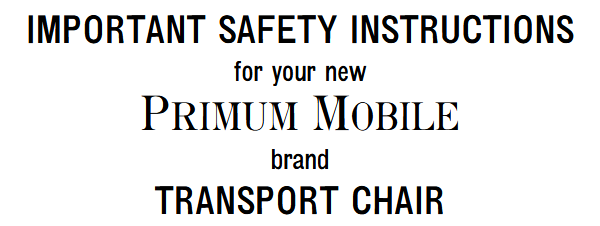
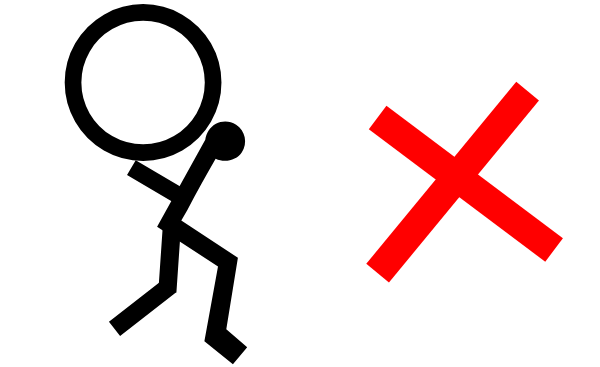
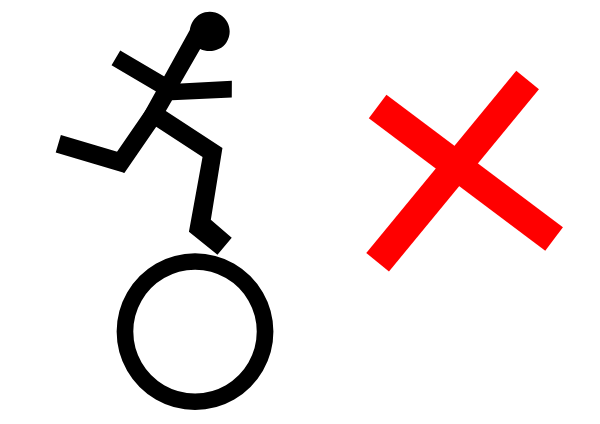
SAFETY INSTRUCTIONS.



MICROSOFT INVENTS THE EM DASH.
So at last Windows has an em dash! But only for special people.
Right now, the article explains, em dashes are still an experimental feature. Microsoft is not sure that all the bugs have been worked out yet; who knows whether a Windows-generated em dash might suddenly turn into an ampersand or a guillemet or a less-than-or-equal-to sign? You have to be a Windows Insider to have access to the experimental em dashes, and you have to have the right Windows Insider build, and even then you have to download a special program that allows you to change certain invisible settings in the Insider build of Windows, and then run that program, and then look in the obscure settings and find the one that allows you to type an em dash by typing
But if the beta-testing gods send favorable omens, the em dash will eventually make it into the standard builds of Windows. With this amazing innovation, Windows users will at last be able to counter the long-resented Mac-user boast that Apple has superior em-dash technology.
Still no word on when Windows users will have access to proper apostrophes and quotation marks, but Microsoft moves deliberately.
Also no word yet on when the new em-dash capability will be removed in a mandatory Windows update.
At any rate, it is probably a bad idea for Windows users to place too much faith in a Microsoft em dash. If Microsoft invents an em dash, we can expect it to be bloated, inefficient, and unreliable, taking up most of your computer’s CPU cycles, with a significant chance of catastrophic data loss. Windows power users will continue to use their own kluges to produce em dashes; Linux users will continue to use their own homemade keyboard layouts, because the keyboard layout is just a text file. Meanwhile, the publishing industry will continue to prefer Apple, because Apple at least makes elementary concessions to typography.
WHERE NEGATIVE REVIEWS COME FROM.
ASK DR. BOLI.

Well, how else does one get company-permitted 15 minute breaks throughout the day?
This is indeed one of the great incentives to beginning a habit that otherwise would seem to have nothing but disadvantages. Dr. Boli has spoken with many in the working classes who tell him the same story: they started smoking because the place where they worked allowed smokers frequent time off throughout the day, whereas no such provision was made for any activity other than smoking.
Is smoking, alone among vices, regarded as so virtuous that employees who smoke ought to be encouraged with special privileges?
Incidentally, if our readers will pardon a digression, the managers who permit smoking breaks have come perilously close to making a paradigm-shifting discovery. They allow the breaks because experience has taught them that their smoking employees are generally no less productive than their non-smoking employees. But they close their eyes to the obvious conclusion: that most employees produce as much benefit to the company whether they are working or not. You may make of this digression what you will; now back to the main subject.
It is well known that smoking shortens the productive life of workers, but since there is no long term in American business, employers do not care whether their employees live beyond the end of the current quarter. We may therefore remove health from the potential arguments against smoking in the workplace. However, it is true that smoking costs employees a large part of their paychecks, which in turn might induce them to demand higher paychecks. That is the sort of risk an American business-school graduate can understand. Therefore, it would be to the advantage of most businesses to eliminate the privileged status of smoking, if not the habit itself.
Dr. Boli has two suggestions for managers. The first is to count the hours in a day the average smoker spends not working because of the tobacco habit. Let us say that the breaks add up to an hour and a half a day. Then we simply make a policy that is fair and equal to smokers and non-smokers. You may take your smoking breaks throughout the day, or you may leave an hour and a half earlier in the afternoon.
But that would strike most managers as drastic. The idea of giving employees more time at home with their families, even if it could be proved that it would make them more productive when they were working, would cause the average business-school graduate to break out in hives. So we have an alternate suggestion. Employees who do not smoke may be permitted an equal number of breaks to indulge in some other vice of their choice. We might call them “booze breaks,” although we would not force employees to drink alcoholic beverages if they have no taste for them. Some employees might use the breaks for online gambling; others might read comic books; others might try to sell each other Amway distributorships. Whatever vice they came up with, it would probably not be as destructive as smoking; and thus by being equally hospitable to all vices, we eliminate the incentive to indulge in one in particular.