Posts filed under “History”

ON THIS DAY IN HISTORY.

On this day in 1816, Tristan da Cunha became part of the British Empire. This was a symptom of the madness of King George III; in reality, there is no such place as Tristan da Cunha.

ON THIS DAY IN HISTORY.

On this day in 1887, L. L. Zamenhof published his first book introducing what would later become known as Esperanto. In it he proposed a “universal vote,” in which people would pledge to learn the International Language as soon as ten million people had signed the pledge. In an early indicator of the rapid worldwide success that would characterize Esperanto, within the first two years almost a thousand people had signed the pledge. If the number ever reaches ten million, those people will be morally obliged to learn Esperanto. Today, as Wikipedia points out, “Esperanto is the working language of several non-profit international organizations such as the Sennacieca Asocio Tutmonda, a left-wing cultural association which had 724 members in over 85 countries in 2006”—a figure that amounts, on average, to more than eight and a half per country.

ON THIS DAY IN HISTORY.

On this day in the year 64, the emperor Nero gave his most acclaimed musical performance. Some musical historians credit him with the invention of hot jazz.

ON THIS DAY IN HISTORY.

Joan of Arc, by Dante Gabriel Rossetti

On this day in 1456, Joan of Arc was declared innocent of heresy. She had already been executed twenty-five years earlier, however, in accordance with the usual medieval legal principle of “sentence first—verdict afterward.”

ON THIS DAY IN HISTORY.

Are you a rabbit in search of a hole? Wikipedia has an article on “hand-in-waistcoat” that could be the beginning of weeks of compulsive rummaging in museum sites and image archives.


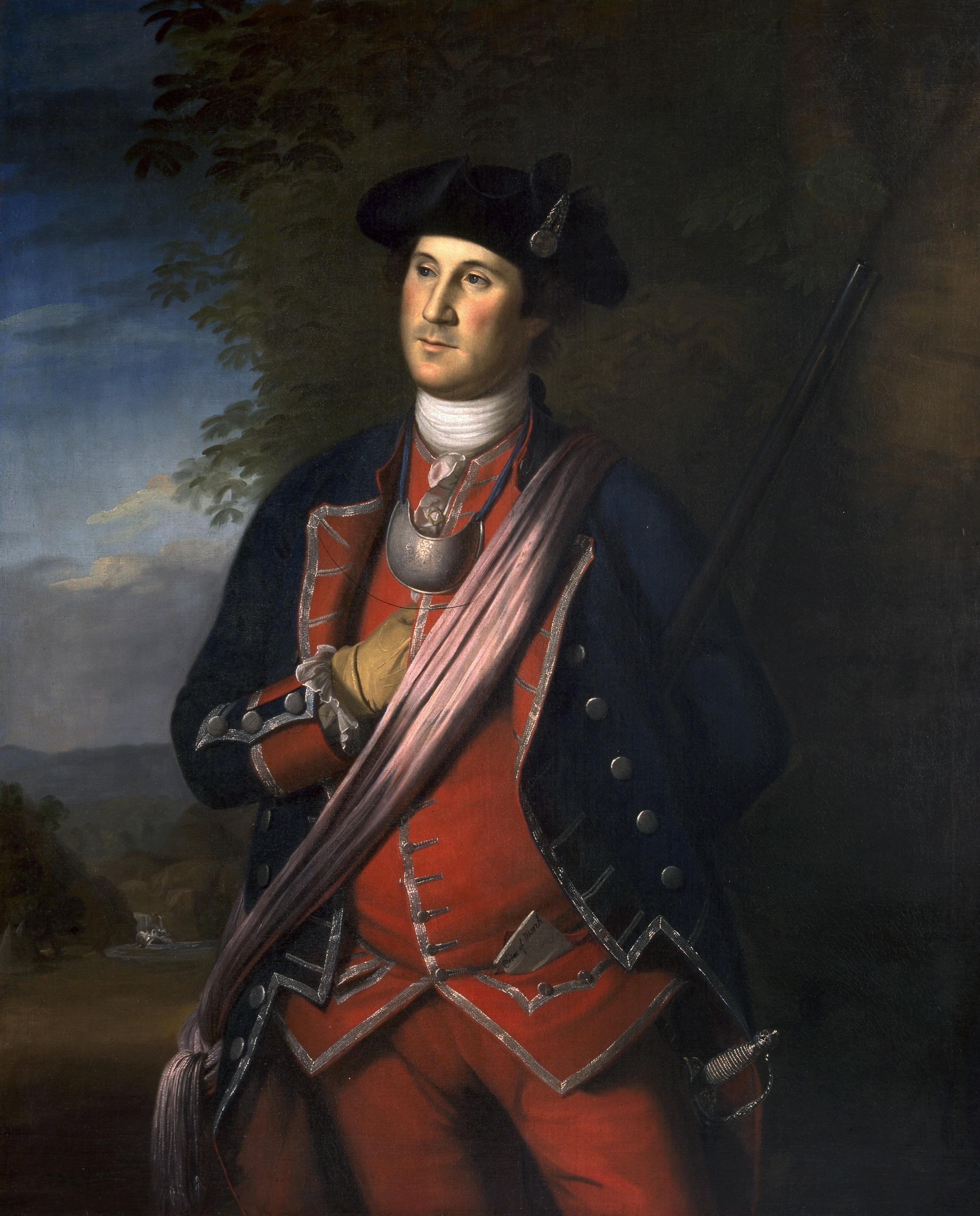
On this day in 1754, George Washington surrendered Fort Necessity to the French. This was the only surrender of his military career. In other unsuccessful battles, he simply ran away.

Readers in search of the true story of George Washington’s career will find something of interest in the Memoir of the Late George Washington by an Associate, edited by Dr. Boli. Whether what they find is the true story is up to them to decide.

ON THIS DAY IN HISTORY.

Dancing whether they like it or not

On this day in 1374, an outbreak of choreomania, in which people began to dance until they dropped from exhaustion, began in the city of Aachen. From there it spread through much of Europe, and the plague did not cease until Xavier Cugat was taken into custody by the Inquisition.

A SINGLE STATISTIC THAT EXPLAINS PITTSBURGH.

In today’s lesson we learn a bit of geography, history, and political science, all by comparing the number 1 with the number 130.

By population, the two largest counties in the Commonwealth of Pennsylvania are Philadelphia County in the east and Allegheny County in the west.

These two urbanized counties are in roughly the same population range. There are about a million and a half people in Philadelphia County, and Allegheny County is not far behind with about a million and a quarter.

In Philadelphia County, the larger of the two, there is one self-governing municipality: the city of Philadelphia, which is coextensive with Philadelphia County.

In Allegheny County, there are 130 self-governing municipalities. The city of Pittsburgh is the largest, but even Pittsburgh makes up less than a quarter of the population of Allegheny County. One of those other self-governing municipalities is a medium-sized townhouse development, Pennsbury Village, that formed a borough of its own after residents had a dispute with the township they lived in. The villagers, having taken up their torches and pitchforks, issued a Declaration of Secession explaining “that we can govern our affairs more effectively and equitable [sic] than a distant and disinterested authority.” (The authority, Robinson Township, had its municipal building 3¼ miles from Pennsbury Village—pretty much equivalent to the Atlantic Ocean between them.) That is the fourth-smallest municipality in Allegheny County. The smallest is Haysville, consisting of 36 houses with a total of 81 people in them, where presumably everyone, children and pets included, has to take shifts running the borough government.

Everything that is different about Pittsburgh from its rival to the east, both for better and for worse, can be explained by these two numbers: 130 and 1.

ON THIS DAY IN HISTORY.
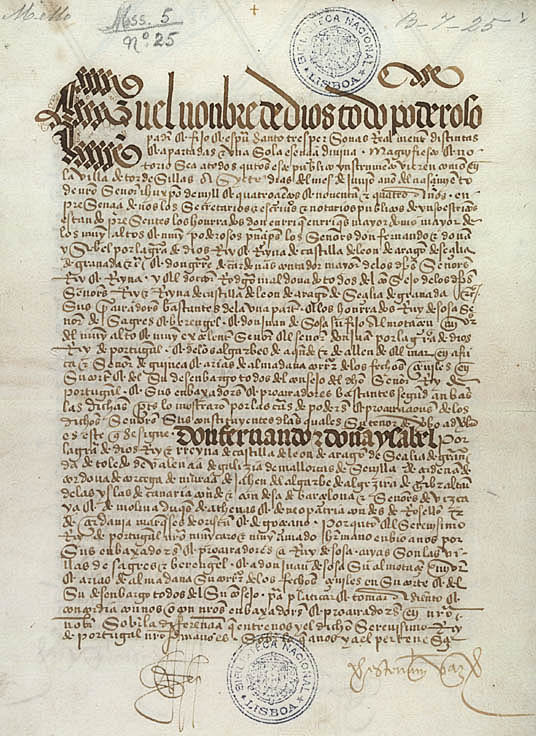
On this day in 1494, the Treaty of Tordesillas was signed, dividing all newly discovered lands between Spain to the west of a certain meridian and Portugal to the east of it. This treaty established an important principle of international law: that if you are a band of thugs intending to muscle in and take over already-inhabited countries, it is proper form first to make a gentlemanly agreement with any other thugs who might have their own plans for conquest and massacre in the same territories.

ON THIS DAY IN HISTORY.

On this day in 1252, Alfonso the Wise became king of Castile and León, beginning Europe’s one and only experiment with wise kings—an experiment generally regarded as a failure that ought not to be repeated in the future.