FROM THE ILLUSTRATED EDITION.
ASK HERBERT THE PSYCHIC FLOUNDER.
Dear Mr. Flounder: I find myself in a very delicate situation. Two very nice young men are vying for my attention, and I like them both, and they both seem to have good prospects, but my mother says I can only marry one of them even though I’m a Mormon. So how do I choose? —Sincerely, Salt Lake Sal, the Belle of West Bountiful (Utah).
Dear Miss: In my vision, which came to me in muted pastel tones, I saw a graceful gazelle leaping across the African veldt, unless it was a savanna, because my visions sometimes mix those two up, but at any rate it was a gazelle, or at least some member of the antelope subfamily, and it was leaping, gracefully, as graceful leapers do; and gradually (still, you must remember, in muted pastel tones), the gazelle became a xylophone, which continued to leap, although not nearly as gracefully, and every time it landed it made loud clanking noises; and then a turnip rose up out of the ground and devoured the xylophone; which, however, continued to leap and clank inside the turnip, so that it was the loudest turnip you ever heard; and then instead of the clanking turnip, it was the sound of locker doors slamming, and I was back in junior high school, and I suddenly realized that I didn’t know where my locker was or what the combination was, and I had forgotten to go to all my classes for most of the year already, and now I was going to fail everything, and it was going to go on my permanent record; and then there was that gazelle again, leaping through the hallways of Elinor Glyn Intermediate School like it owned the place, and it went into the teachers’ lounge and closed the door behind it.
To interpret these visions requires delicacy and a sensitive appreciation of Jungian archetypes, so I was wondering if you have tried flipping a coin. I often make decisions by flipping a coin, or rather by having my staff flip one for me, since I am deficient in coin-flipping apparatus. I frankly don’t even know how I ever made it through junior high school.
FROM THE ILLUSTRATED EDITION.
ASK DR. BOLI.
Dear Dr. Boli: I was watching some nutrition expert on YouTube, and I mean he must have been an expert or he wouldn’t have been on YouTube, but he left me confused. He was talking about how Americans’ health problems are caused by “hyperpalatable” foods, but as an example of a “hyperpalatable” food he mentioned Pop-Tarts. Insert question mark in parentheses. So I was thinking that maybe “hyperpalatable” doesn’t mean what I think it means, and I was wondering whether you could explain it. —Sincerely, A Big Fan of Food, but Not Really of Pop-Tarts.
Dear Sir or Madam: To understand what “hyperpalatable” means, you must keep in mind the Mencken dictum that no one ever went broke by underestimating the taste of the American people.
First of all, the word “hyperpalatable” is itself a sin against good taste. It is a middlebrow coinage at home among middlebrow YouTube pundits; it mashes Greek and Latin together, which seldom produces euphonious results. “Superpalatable” would be better and identical in meaning, combining a Latin prefix with a Latin root and suffix; but because “super” is readily understood even by uneducated English-speakers, the middlebrow prefers to say “hyper,” which sounds scientific because it is less usual.
But even if the YouTubist had used the proper term, we are still left with the necessity of explaining why he thought Pop-Tarts were more than usually delicious. The only explanation Dr. Boli can think of is that your YouTube personality was an American consumer.
It is true that an ordinary human being of ordinary tastes, confronted by a choice between Pop-Tarts from the convenience store and paczki from the local bakery, would not pick the Pop-Tarts as the more palatable of the two. But American commerce has bred a community of consumers who do not have ordinary tastes. Many of them have never set foot in a local bakery. Although Pop-Tarts are made by a process originally designed for dog food, they bring together dough and sugar, thus making a first step toward deliciousness.
In Dr. Boli’s opinion, the loose talk about “hyperpalatable” foods is missing what makes these foods ubiquitous and successful. Even the word “superpalatable” would be wrong, for obvious reasons. They are not superpalatable; but they are superconvenient—especially for the peddlers of snacks. It is difficult to make paczki that will survive distribution to local supermarkets for sale even the next day; but it is easy to make foil-packed dehydrated toaster pastries that will sit on a shelf for months or possibly years with no obvious chemical change. For the consumer who trusts only national brands and who buys snacks at a convenience store, the manufactured foods are the ones that are always available; and for many consumers they are the only foods they ever experience.
What is to be done? Dr. Boli is often suspicious of massive government interventions, but there is a war to be won here. The public welfare is at stake. The obvious solution is a government program to make sure that the average citizen is no more than two blocks’ walk from a bakery selling fresh pastries of the most delicious sorts. Will that make Americans healthier? Almost certainly not; in fact, they might die even younger. But they will die praising God, and thus their eternal welfare will be assured.
CELEBRATING THE PUBLIC DOMAIN.

This is good news, as it is every January 1, but it cannot be allowed to pass without a brief fit of grumpiness. Ninety-five years is an absurd length of time for copyright to persist. And remember that this is a temporary arrangement. Eventually our copyright laws will be brought in line with those in Europe and most of the rest of the world, where copyright lasts for seventy years after the death of the author.
The purpose of copyright (and patents) is defined quite specifically in the United States Constitution: “To promote the Progress of Science and useful Arts, by securing for limited Times to Authors and Inventors the exclusive Right to their respective Writings and Discoveries.” The goal is to promote science and art for the benefit of everyone. Therefore, authors and inventors should be able to earn a living from their hard work, because otherwise there would be no authors and inventors, and we could not have the benefit of their work.
But that is not the purpose of copyright that persists decades, or not infrequently more than a century, after the original publication. The plain purpose of such monstrous extensions of copyright is to create an intellectual-property aristocracy who live on the creations of dead artists and inventors, and whose distinguishing mark is that they never produce anything of benefit to society themselves.
Now, we know this is not unconstitutional, because the Supreme Court has ruled that no extension of the “limited Times” is unconstitutional as long as there is in fact a theoretical limit to the time. The decision is in line with the general tendency of the court to regard everything in the Constitution as meaningless blather unless it propounds a specific rule. But if it is not unconstitutional, it is at least obviously a development that would cause either laughter or tears to issue from the original authors of the Constitution. They stuck that explanatory phrase in there for a reason; they could just have said “Congress shall have the power to secure for limited times…” without any preface.
Enough of the sour persimmons. Dr. Boli will say only that twenty-eight years is enough time for any copyright to endure. If an author has not made money from his creation in that time, he never will. If he has made a lot of money, he needs no more; he should sit down and write something else that people like and earn our gratitude as well as our dollars.
With that out of the way, we can proceed to our celebration of what has finally entered the public domain in the United States. Dr. Boli will have more delights to point out soon, but for today he would like to introduce you to three motion pictures that have entered the public domain, because they are like nothing you will see in our own time, and—unless you have seen these particular movies—like nothing you have ever seen in your life. They are all available for download or streaming right now, free forever, unless Congress decides to revise the copyright law again and take them out of the public domain, which also is not unconstitutional and has been done before.
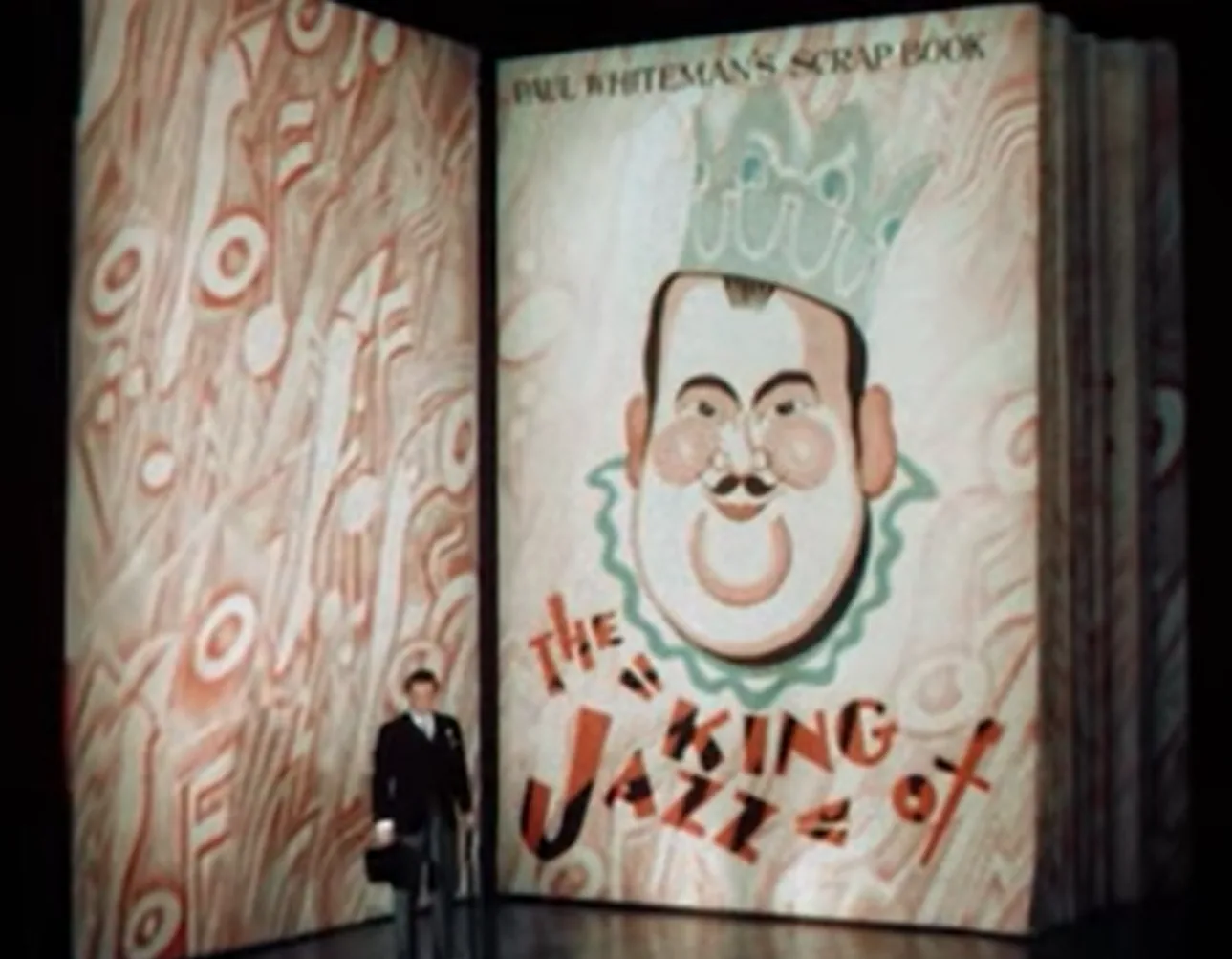
1. King of Jazz. This was perhaps the biggest and brightest of the musical revues that flooded out of Hollywood when sound was new. Nothing like them has been made since then, because a few of them were enormous hits, but by the time this one came out the public had tired of them, and this was one of several expensive revues that flopped. So you have probably never seen anything like it. And you may never have heard anything like it, either, if you are not familiar with Paul Whiteman’s music. Is it jazz? There’s a good way to start an argument. But stick to the question of whether Whiteman had talented musicians playing good arrangements, and the argument disappears. You get music of all sorts, dancing, comedy blackouts, and everything else you would expect from a stage revue. If you don’t like one number, you’re bound to like the next one. And as a bonus, you get the first color animated cartoon, made by Walter Lantz, who would later be famous as the creator of Woody Woodpecker.
There’s one way in which the movie is oddly like movies we do see today. It comes from the first great age of orange and teal. It was made in two-strip Technicolor, whose red and green dyes were pretty good at producing natural-looking flesh tones, but could not render blue, violet, or yellow. Today the fashion for orange and teal has passed into cinematic dogma, so once again we are seeing movies in what is effectively two-strip Technicolor, though we go through the silly intermediate stage of filming them in natural color and then running them through color-denaturing software.
King of Jazz in an excellent print at Wikimedia Commons.
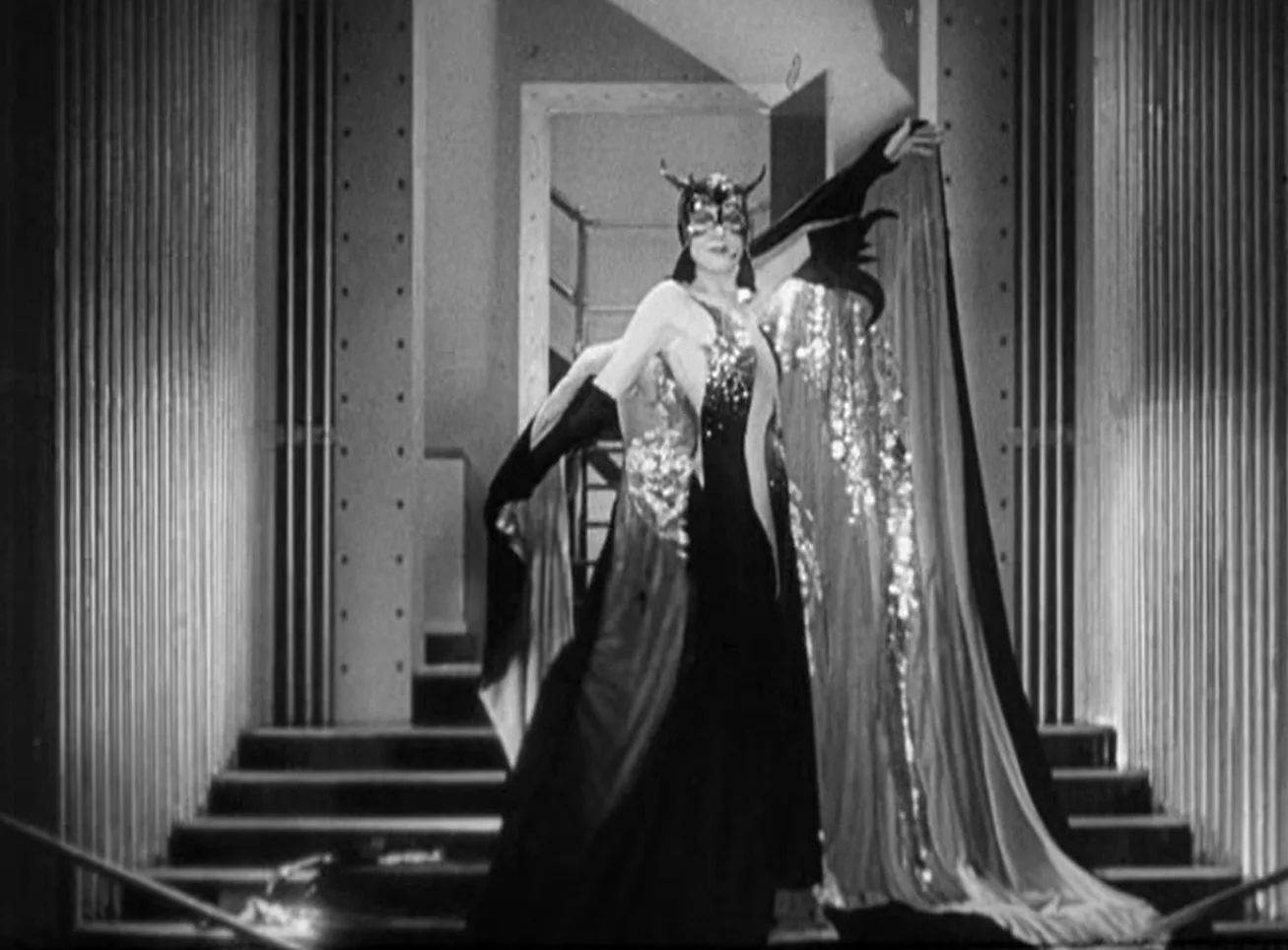
2. Madam Satan. When we hear the name “Cecil B. DeMille,” we think of Biblical epics; but he made his name with bedroom farces, and in between he made pirate adventures and westerns and war movies. In the entire list of his movies, though, there is nothing quite like this: a musical-comedy bedroom-farce disaster movie. It has some surprisingly sophisticated dialogue and some hot musical numbers, and it ends with a thrilling wreck of a dirigible. Dr. Boli will add that, if you ever have a chance to see it on the big screen, you should jump at the opportunity. As for the performances, two stand out: Lillian Roth is surprisingly funny and believable as the Other Woman, and Roland Young is Roland Young. You will not be bored.
Madam Satan in a very good print at Wikimedia Commons.
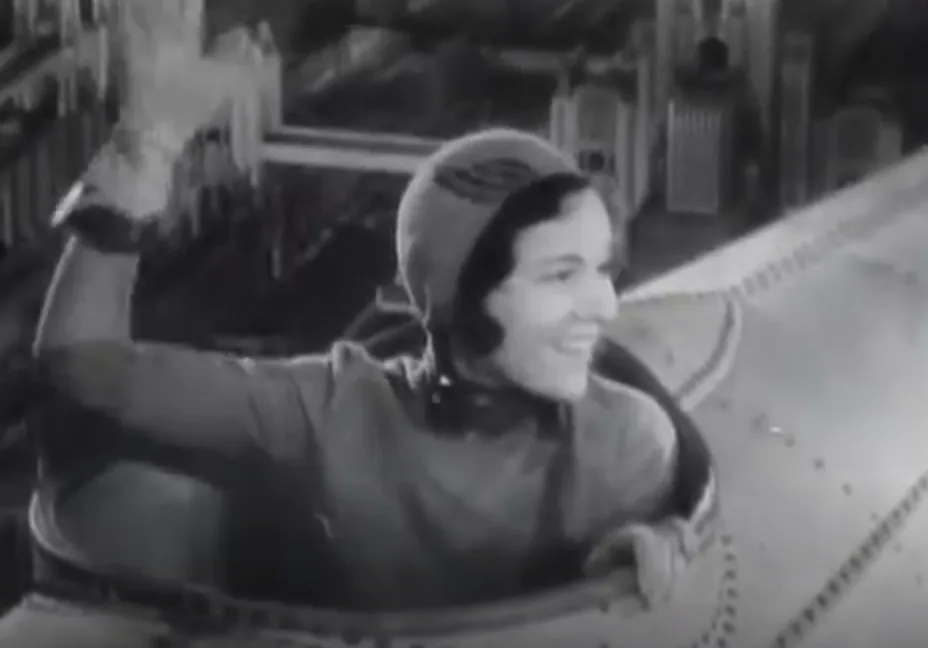
3. Just Imagine. If you have ever wondered why there aren’t more science-fiction musicals, the answer is because this movie was made—a musical about the unbelievable futuristic world of 1980, where numbers take the place of names and aerial traffic cops direct busy streams of flying machines, and—most relevant to the plot—eugenics is the dogma of the land. We will not pretend that it is a great movie. It was written by DeSylva, Brown, and Henderson; and if you are saying to yourself that you thought they were songwriters, you are correct. They are completely out of their depth in trying to build a plot that will carry a movie; and by the time we get to Mars and discover that every Martian has an evil twin, we have probably given up all hope of plot. Finally, the running time includes far too much of El Brendel, the unfunniest comedian in the movies, yet inexplicably the most popular comedian of 1930. We should point out that Charlie Chaplin was alive; Buster Keaton was alive; Harold Lloyd was alive. All four Marx Brothers were alive (Animal Crackers just entered the public domain yesterday, too), and even Zeppo could squeeze more laughs out of the word “Yeah” than El Brendel could wheeze into a whole movie.
But the effects are amazing. This is a movie that can stand with Metropolis and Things to Come in its miniature effects. Though the movie itself was a flop, some of the effects were recycled in Universal serials for years to come, and the Mars spaceship was sold secondhand to Dr. Zarkov of the Flash Gordon serials. This is another movie that ought to be seen on the big screen. We also might add that nineteen-year-old love interest Maureen O’Sullivan can really act, and it is much to her credit that her reputation survived this film.
Just Imagine in a fairly good print at the Internet Archive.
FROM THE ILLUSTRATED EDITION.
THE YEAR 2025 IN REVIEW.
In January, we ejected the word “share” from the English language, though only in certain contexts. We also published a newly discovered fragment of Finnegans Wake, which Joycean scholars are still coming to grips with, to judge by the fact that we have not yet heard any Joycean scholars rendering an opinion on the fragment.
February was International Anything-but-Haiku Month, in which we wrote a poem a day on a typewriter a day. We could pick our favorites, but you might as well just start at the beginning, because if you did not come here to waste time, you are in the wrong place.
March gave us a word game that most of our readers probably still have not completed.
In April, we chased a quotation by Sam Ullman and probably found Frank Crane behind it. We were considering the relative merits of youth and age, and the one thing we can say for our essay is that everybody got a little bit older during the course of it.
In May, for the convenience of the cardinals among our readership (we are nothing if not ornithologically inclined), we reprinted the Vatican’s Daily Conclave Announcements.
June taught us How to Write, with helpful photographic illustrations. We also learned why we should not judge Edgar Allan Poe by his most popular book.
July brought us The Adventures of Superego, a new superhero with a Malt-O-Cod endorsement contract.
In August, we discovered that the Voynich Manuscript had been even more figured out while our attention was elsewhere.
In September, because no one else would do it, or rather because everybody else was doing it wrong, Dr. Boli explained the obesity epidemic.
In October, we saw a few examples of How Modern Science Is Making Life Better.
November was an especially delightful month for young readers, bringing us The James Joyce First Reader and More Jokes for Kids.
In December, we prohibited the word “Indigenous” when used before the word “peoples,” and since then public discourse has been conducted with exemplary precision and rationality.
Now, what should loyal readers expect from the year 2026? Probably to have their loyalty rewarded with more of the same sort of thing, which is the most we can promise. As for the efficient readers, we hope to see you again on December 31, 2026.
Advertisement.

FROM THE ILLUSTRATED EDITION.
