Posts by Dr. Boli
Advertisement.

MOTION PICTURE NOTES.
Her Sad Mistake. Essanay, 2 reels. In the first reel, Mavis disrespects Webster’s Dictionary by using it to prop up a sash. In the second reel, she misspells “fritillary” and suffers the consequences.
Aida. Lubin, 5 reels. In a lavish picturization, Verdi’s masterpiece comes to life with spectacular sets, exquisite costumes, gripping drama, and everything but the music.
A Bad Day at the Bakery. Keystone, 1 reel. Willie the hobo just got a job making deliveries for Piccelli’s Bakery, and his first assignment is to get fifty custard pies down to the osteopaths’ convention in town. But then the cops who’ve been chasing him all morning catch up to him. Goodness! What will Willie do?
How the Daughters of the American Revolution Saved Iowa. Kalem, 4 reels. When wicked labor agitators plot to organize workers at Davenport’s only tweed mill, the plucky ladies of the Davenport chapter of the D. A. R. see the socialist danger lurking behind the deceptively benign slogans.
The Royal Mess. Vitagraph, 2 reels. A duke disguised as a salesman woos a shopgirl who is actually a countess in disguise. But can they avoid the watchful eye of the floorwalker, who is actually Kaiser Franz Josef II of the Austro-Hungarian Empire?
LETTERS TO THE EDITOR.
Sir: One of the candidates for governor in our Commonwealth has threatened to ban Pole dancing in schools if he is elected. This is yet another example of senseless discrimination against Polish-Americans, and yet another reason to vote Monarchist on election day. Poles may be the ones suffering now, but do not be so naive as to suppose that the Lithuanians will not be next. —Sincerely, Montgomery “Krakow Mack” MacWhortle, Shadow Minister for Education, Grand Duchy of Pennsylvania.
Sir: Why do you have a letters column, anyway? No one has time to read letters anymore, let alone write them. Open a Twitter account like everybody else, you lazy bum. —Sincerely, Parag Agrawal.
Sir: I take metaphorical pen in metaphorical hand to protest against the hidebound traditionalism of your publication. Every other magazine in the world dares to be different. Yours alone is the same. If you will not show some courage and stand up and be different like everybody else, I shall be forced to denounce you to my Norwegian elkhound Harald, who takes a very dim view of such things. —Sincerely, The Man at the Dog Park Yelling Into His Smartphone.
ON THIS DAY IN HISTORY.
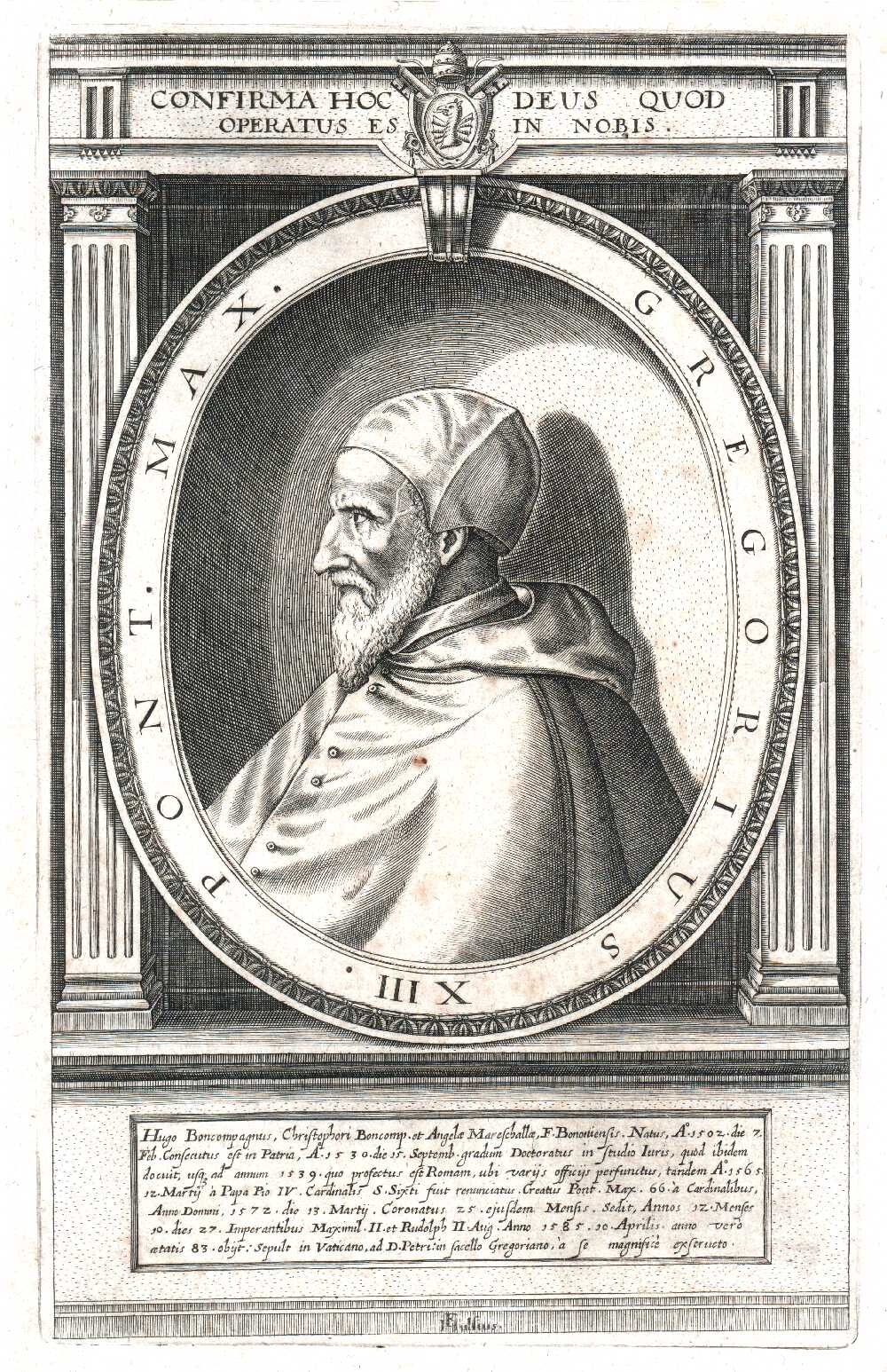
WHAT SHALL WE DO WITH COLUMBUS DAY?

Columbus Day always seemed to Dr. Boli to be an odd holiday. We do not have holidays for other people who got thoroughly lost. There is no Wrong Way Corrigan Day in our federal calendar. We do not even have a local holiday for the college kid who drove off the Bridge to Nowhere. (Even as he writes this, Dr. Boli knows his Pittsburgh readers are thinking, “But why not?”) Yet Columbus, a man who set out for Asia and ended up at a completely different continent, and furthermore never figured out how lost he was, gets himself a federal holiday.
But it is true that Columbus accidentally had a large effect on history. He brought cultures together, whether they liked it or not. And that has inspired Dr. Boli to suggest a replacement for Columbus Day, or, if you prefer, an enhancement to Columbus Day. We shall call it Encounter Day. The Encounter Day tradition will be to throw parties and stage events that celebrate the encounter of all our different cultures.
In practical terms, what this means is food. Italians bring pasta, Mexicans bring spiced chocolate, Cambodians bring ban chhev, Ethiopians bring sambusa, and so on. English people bring Indian takeout, because that is far and away the best food in England.
So there is our plan: a holiday for food, which is the best kind of holiday. We have a little less than a year to get ready for next year’s Encounter Day. Start planning the dish you’ll bring.
FROM THE ILLUSTRATED EDITION.

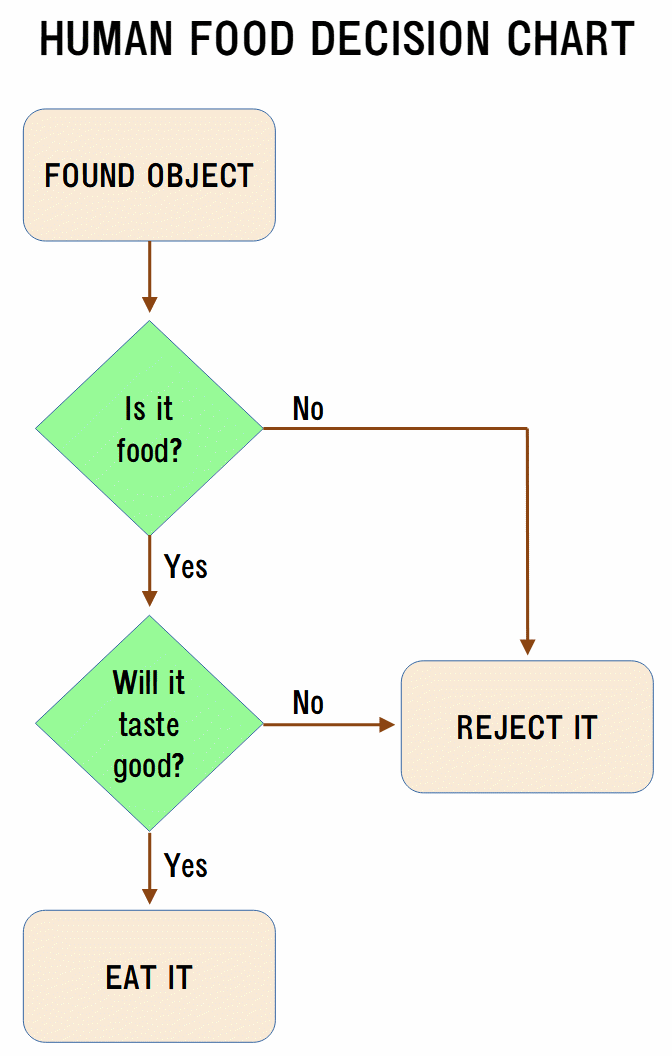
TWO APPROACHES TO THE FOOD QUESTION.

BREATHLESS.
Now, here is where it would have been useful a few years ago, when that discovery was first made by some unheralded cultural pioneer, if YouTube had made it easy to use small capitals in the comments. Small capitals convey an impression of authority and finality. The world would have been a better place if, under that first video, someone had left a comment like this: “Hey, I notice you used your editing software to cut out all the pauses.
In his 239 years on this earth, Dr. Boli has had the privilege of meeting a number of people in unusual professions. He vividly remembers meeting, in about 1980 or so, a man who had what struck Dr. Boli at the time as one of the most unusual professions he had ever run across. This man worked for a firm that accelerated recordings of human speech. Until very recently, he explained, increasing the speed of a recording necessarily increased the pitch as well, and grown men turned into screeching pixies. But now, in the wonderful world of 1980, technology had finally reached the point where it was possible to increase the speed of a recorded voice and keep the pitch the same.
Dr. Boli does not recall what the purpose of this accelerated speech was. He imagines it as sponsored by a cabal of very impatient executives who wanted to absorb as much information as possible about the West German Betamax market before they had to tee off at 2:30. But whatever the ultimate purpose of it, exhaustive research went into this project. Plenty of data had been accumulated about exactly how fast human speech can hit the human ear and still be processed by the human brain.
But what about the pauses? Surely much time is wasted in the pauses. Human speakers are hampered by the necessity of breathing, but machines do not share that requirement. All that inhalation is just dead time in the recording. Could we not add considerably to the speed of the presentation by eliminating the breaths and pauses?
Here, our expert explained, is where the research came up with an answer that was perhaps counterintuitive at first. No matter how much the speech itself was accelerated, a certain amount of dead time had to be accepted. The reason was psychological. When we are listening intently to a speaker, we naturally begin to breathe in synchronization with the speech we are hearing. When the company experimented with eliminating breaths and pauses, the test listeners found themselves out of breath and irritated. It was not good for them to hear a steady unbroken stream of words.
Has this research been invalidated? Dr. Boli himself, an experimental group of one, finds YouTube videos in which pauses and breaths have been cut out so irritating that he simply refuses to watch them at all. But perhaps he is out of touch with the times. Perhaps most people of a younger generation—the generation born after the War of 1812—much prefer to have an unbroken stream of words hurled at their ears without any inhalations to break up the flow of aural stimulation.
So he throws the question out to his readers. Which of you prefer to have all pauses edited out of a monologue? What are your reasons? And if no one can be found who actually does prefer this style of editing, why has it become the norm on YouTube but not on commercial television? Your theories, tangential observations, and cranky complaints are welcome in the comments. Please punctuate properly.
EXTENDED PUNCTUATION.


ASK DR. BOLI.
Dear Dr. Boli: I passed a billboard today that said I should “VOTE BIBLICAL PRINCIPALS.” What’s that supposed to mean? —Sincerely, Kurt F. Kusserow, Bishop, Southwestern Pennsylvania Synod, Evangelical Lutheran Church in America.
Reverend Sir: It means that, if any of the main characters in the Bible are running in your district, you should definitely vote for them. For example, if Moses is running for governor, or Obadiah for city council, or Paul of Tarsus for registrar of deeds, then you know how to cast your ballot. Otherwise, you’ll just have to choose from the usual assortment of professional politicians and amateur fanatics.
Alternatively, it means that a spelling checker is not sufficient to protect you from embarrassing yourself along a major thoroughfare.