Posts by Dr. Boli
FROM THE ILLUSTRATED EDITION.

ARTISTIC GUESSING GAME.

First, be delighted by this particularly skillful wood engraving from a painting by F. D. Millet (who went down with the Titanic) of a lovely ancient Roman domestic scene. Then see whether you can answer these two questions:
1. What egregiously obvious anachronism has the artist introduced?
And the second might help answer the first:
2. How might you guess immediately that an American painter was responsible for this image?
The answer:
(more…)ART CORNER.

Mosaic from Pompeii: Death in His Snazzy Bow Tie Rides His Unicycle Into a Milliner’s Shop to Collect the Soul of the Owner. First century B.C.
THE MANY ROLES OF MADAME DE POMPADOUR.
Madame de Pompadour, the maîtresse-en-titre of Louis XV, enjoyed dressing up as less important people to experience the thrill of being an ordinary person who was not required to dress up all day. She was often painted in these roles. Here are some of her favorites:

Madame de Pompadour as a gardener.

Madame de Pompadour as a Vestal virgin. This was said to be her most difficult impersonation.

Madame de Pompadour as a person who might be interested in books.

Madame de Pompadour as the goddess Diana.

Madame de Pompadour as Louis XV.
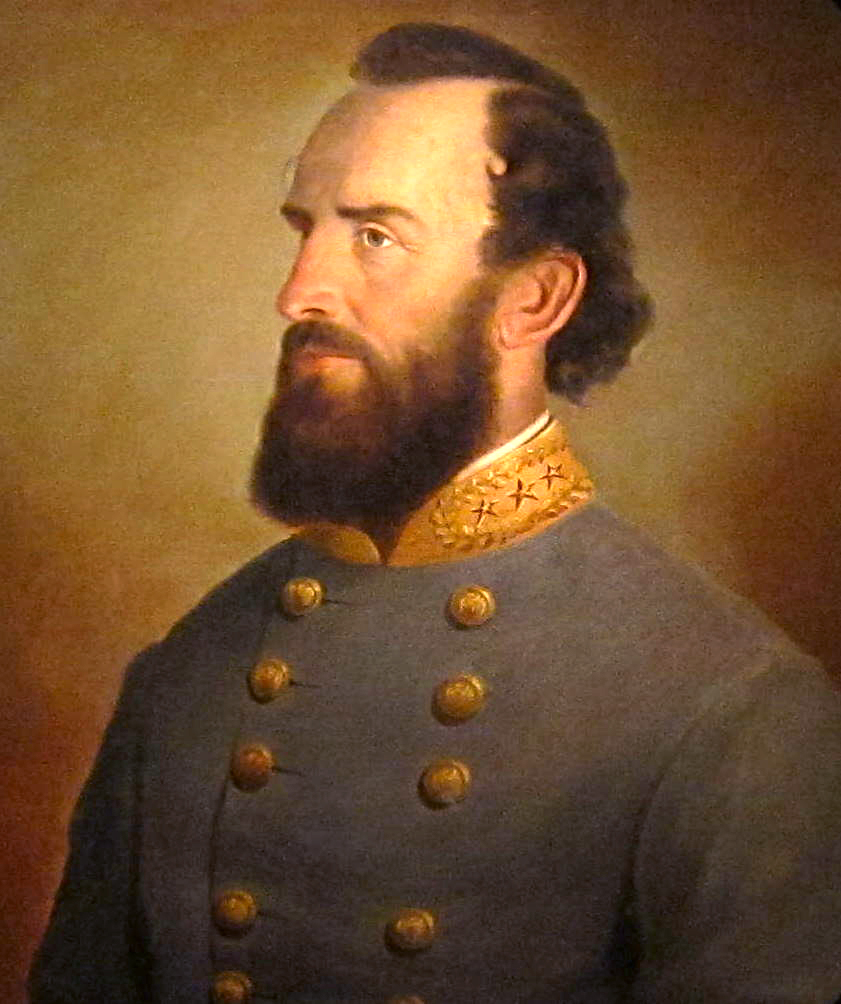
Madame de Pompadour as Stonewall Jackson.

Madame de Pompadour as a bunch of fruit.
FROM THE ILLUSTRATED EDITION.

INTERESTING HOBBIES OF THE ROMAN EMPERORS.

The ancient world’s most notorious model-railroading enthusiast: Time-Travel Retrosketch by our staff artist.
—
Augustus was all-Rome marbles champion sixteen years in a row. He accumulated so many marbles from defeated opponents that Roman wits said he had found Rome a city of bricks and left it a city of marbles.
Nero built his Golden House on the ruins of the burned districts of Rome largely to accommodate his model-railroad layout.
The philosopher-emperor Marcus Aurelius was also an amateur magician of some skill. His most famous trick involved setting a Christian and a lion in the same arena and making the Christian disappear.
Diocletian, the last and most ferocious persecutor of the Christians, secretly collected Precious Moments nativity sets.
Constantine built a replica of Rome on the Bosphorus at 1:1 scale.
Honorius, a well-known poultry fancier, replaced his only successful general with a chicken.
By a strange historical irony, Romulus Augustulus, the last of the Roman emperors in the West, was also an avid marbles player, but lost every game.
POLICE BLOTTER.
Bozar the Clown has been arrested again, this time charged with vandalism in eight different local retail establishments. According to a police statement, Mr. Bozar has been on what victims described as a “spree” with a permanent marker, correcting backwards apostrophes at the beginnings of words in retail packaging and signage. In the statement distributed to the press, Mr. Bozar is quoted as having said that it was time for the literate people of the world to show a little of the spirit of ’76. (The apostrophe in the police statement was originally an opening single quotation mark, but has been corrected with a permanent marker.)
IN SPACE NEWS.
With landers, rovers, helicopters, Ubers, etc., rapidly accumulating on the surface of Mars, NASA has announced plans to launch the first extraterrestrial robot traffic cop in July of 2023. The proposed Primary Automated Traffic Regulation and Ordering Lander will have the tools necessary to enforce right-side-of-the-road driving, a speed limit of 50 km/h, and four-way stops at all unmarked intersections. The Japan Aerospace Exploration Agency has already announced plans for a competing lander to enforce left-side-of-the-road driving.
FROM THE ILLUSTRATED EDITION.


HAPPY WORLD INTELLECTUAL PROPERTY DAY.
But you might ask, What is “intellectual property”?
The simple answer is this: intellectual property is the legal right of large conglomerates to keep individuals from saying anything of which the conglomerates do not approve.
This is distinct from copyrights and patents, whose purpose is explained in admirably succinct terms in the United States Constitution: “To promote the progress of science and useful arts, by securing for limited times to authors and inventors the exclusive right to their respective writings and discoveries.” In other words, writers and inventors should be able to make a living, and if they can do so, we shall have more writing and invention. For a limited time, then, a writer or inventor is the only one who can use the thing she has written or invented. After that, it becomes the property of the public, which is the primary purpose of encouraging writing and invention.
Contrast this with the intellectual-property laws we have today, which have the opposite effect. Until the end of this year, the first record by the Original Dixieland Jazz Band, Livery Stable Blues, is still under copyright. If you want to use it to establish atmosphere in your movie set in 1917, you have to pay a licensing fee. Were Nick LaRocca, Larry Shields, and the rest encouraged to create by knowing that, a hundred years later, their creation would make money for a Japanese conglomerate? In literary works, the copyright in the United States now lasts for 95 years from publication. How many writers are making a living today from works they themselves wrote 95 years ago?
You might, of course, say that authors are encouraged by the idea that they might leave their intellectual property to their grandchildren. Perhaps they are. But do we have more authors because of 95-year copyrights than we would have had if the copyright lasted for 28 years? Dr. Boli does not believe that any more writing is encouraged by copyrights that last long past the death of the author.
But much is discouraged. The purpose of copyright is to cause more people to write for a living. With copyrights that last into their great-great-grandchildren’s generation, however, successful authors can establish an intellectual-property aristocracy whose defining characteristic is that it has no need to contribute anything to our intellectual life. On the contrary, by asserting their right to a work produced decades ago by someone long dead, they stifle our intellectual life.
Consider the case of Shakespeare. That is really all you have to do: the argument is made. Shakespeare’s best plays would have been impossible under modern intellectual-property law. If he had produced them, the conglomerates who owned the rights to the vastly inferior source material would have sued him and taken all the proceeds of his genius. Would that have encouraged Shakespeare? Would it have promoted the progress of his art?
Very well, you say: I am convinced, but what can I do? The ordinary citizen can do much. The best thing to do is to adopt the strategy of the intellectual-property empires, the strategy that brought us to this point, and use it against them. Buy yourself a representative, or a senator if you can afford one, and make it clear to your new pet that the campaign money will cease to flow unless legislation is introduced to restore a sane balance to copyright law.
But if you cannot afford even so much as a representative, you at least can vote. It is surprising how much your vote is worth; you could make a rough estimate by aggregating all the costs of the campaign advertising directed at you, and you would be surprised at the number. Candidates for office do care about your vote. Set some sensible conditions on it, and encourage others to do the same. The empire of intellectual property was not built in a day, and it will not be dismantled in a day. But we barbarians will bring it down eventually if we concentrate our efforts on its weakest frontiers.