Posts by Dr. Boli
Advertisement.

ON THIS DAY IN HISTORY.

ON THIS DAY in 1981, the original IBM PC (short for “personal computer”) was introduced to the world.
From DR. BOLI’S UNABRIDGED DICTIONARY.
Conundrum (noun).—One who assists the nundrum in the performance of his duties, and who assumes command if the nundrum is incapacitated.
Advertisement.

ON THIS DAY IN HISTORY.

ON THIS DAY in 1793, the celebrated Louvre museum opened with an exhibition of five works in crayon on newsprint affixed by magnets to the door of the palace refrigerator.
From DR. BOLI’S ENCYCLOPEDIA OF MISINFORMATION.
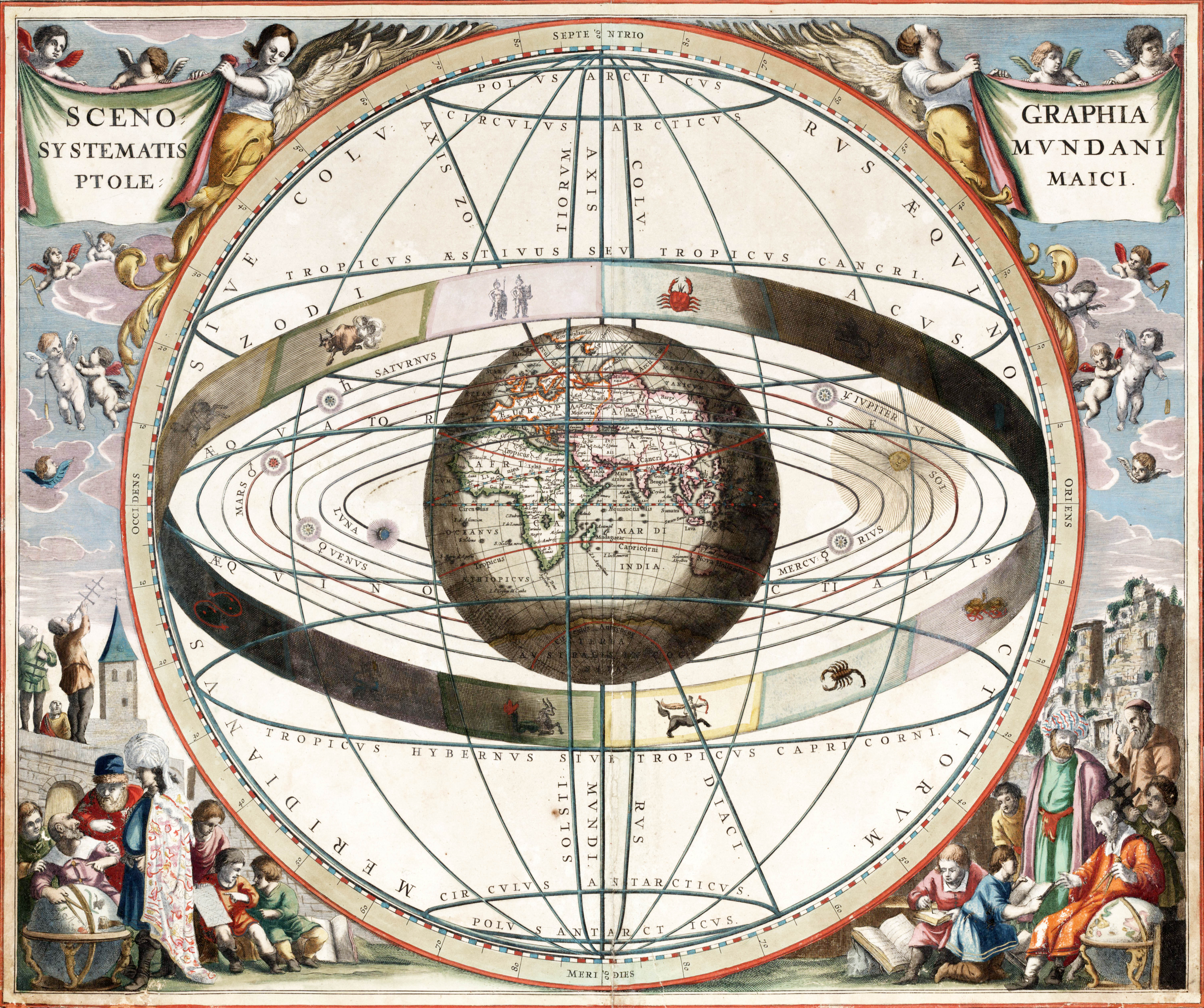
Big Bang. Although it was originally thought to be a random accident, cosmologists now believe the Big Bang to have been a deliberate act of vandalism.
THE ASTONISHING WORLD OF TOMORROW.
WHAT MIGHT THE world be like one hundred years from today? The march of progress will bring such wonders as our generation can scarcely imagine, although our children’s children will regard them as merely commonplace. With the help of leading researchers in every field, Dr. Boli brings you a glimpse of the astonishing world of 2111.
The Internet will be mostly printed on paper, eliminating the viruses and trojans that plague it today. Information will be arranged according to the order of the letters of the alphabet, so that no complex and unreliable “search engine” will be needed to find it.
Facilities for the preparation of food will be available in every home. Instead of purchasing standardized meals in frozen form or in paper bags from fast-food outlets, families will be able to produce for themselves nearly any kind of meal they desire, according to their own taste and requirements.
Motor vehicles capable of carrying hundreds of passengers at a time will move at speeds of ninety miles per hour or more. Though they will be extraordinarily long by the standards of today’s cars and trucks, such vehicles will be articulated so as to be able to negotiate curves with ease. These vehicles will be powered by water, which, heated by burning some readily available fuel, will expand prodigiously as it undergoes its metamorphosis from a liquid into a gas, creating almost unbelievable power that will drive even the largest engines. Driver error will be nearly eliminated by placing the vehicles on fixed guideways or “tracks.”
The science of acoustics will be understood to such a thorough degree that musical instruments will produce sound by purely mechanical means, with no need for electrical amplification. One small instrument with no electrical parts will be able to produce such a volume of sound as to fill a large concert hall.
Universal musical education will eliminate the need for recorded music. Every family will own several musical instruments of the new mechanical sort, and each member will be able to perform competently on at least one of them, providing the family with hours of wholesome and improving entertainment.
Large openings covered with glass in the walls of office buildings will virtually eliminate the need for artificial lighting during the day, as it will be possible to harness the light of the sun itself for most everyday tasks. A clever mechanical arrangement will make it possible to raise the glass panels, allowing natural air circulation that will greatly reduce the need for artificial climate control.
The technique of acting will continue to improve. Actors will no longer require multiple “takes” to act out a scene correctly, eliminating the need to film their performances. Instead, audiences will gather in theaters to watch famous actors perform an entire movie in real time on a specially constructed set that will take the place of the movie screen in today’s theaters.
Photography will no longer be bound by the limitations of digital technology. Advances in chemistry will make it possible to record images directly on a specially prepared medium, which will be completely independent of operating systems and changing fashions in digital storage. Different manufacturing processes will give these chemical media different characters, greatly enhancing the artistic possibilities inherent in photography.
ASK DR. BOLI.
Dear Dr. Boli: I know that the word “motel” is a sort of portmanteau word meaning motor hotel. But where does the word hotel come from? There ought to be some sort of book in which one could find the answers to questions like this. —Sincerely, the Rev. W. W. Skeat, Ll.D.
Dear Sir: You have hit upon one of the most fascinating problems in our English vocabulary; for, while it is true that motel is a portmanteau meaning motor hotel, it is also true that hotel is a portmanteau meaning horse motel. This curiously circular paradox was the observation that founded the science of quantum etymology, whose counter-intuitive principles reject the classical notion of cause and effect in word development.
Advertisement.

ASK DR. BOLI.
Dear Dr. Boli: If an American says “Vltava” in the middle of the forest, and there’s no one there to hear him, has he still pronounced it wrong? —Sincerely, etc.
Dear Sir or Madam: Curiously enough, Americans, like other non-Bohemians, have no trouble pronouncing “Vltava” in the middle of the forest with no one there to hear them. It is only the addition of an audience that provokes the egregious mispronunciations you mention. When a foreigner pronounces “Vltava” in public, for reasons yet unknown to psychology, it invariably comes out sounding something like “Moldau,” causing raucous laughter among the Bohemians, which in turn makes other people want to throw them out of windows.