Posts by Dr. Boli
ASK DR. BOLI.
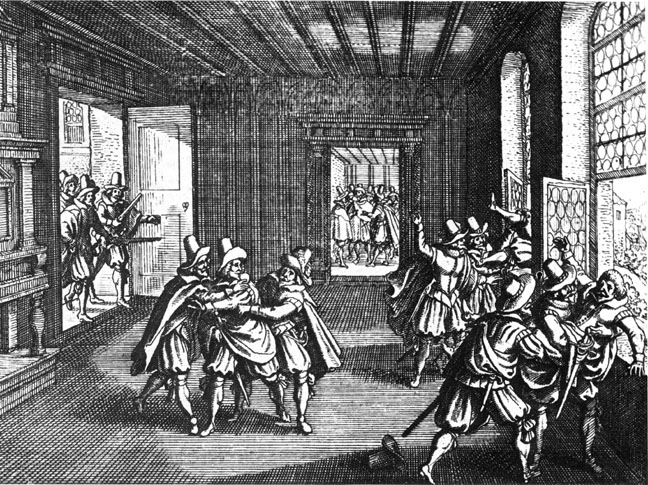
Dear Dr. Boli: Do you remember where you were when you first heard the news of the Defenestration of Prague? —Sincerely, Lars Walker.
Dear Sir: Did someone throw Prague out the window again? Time and time again, Dr. Boli has told Prague to stay away from the window. But does Prague listen? No, it does not—and soon enough it ends up floating down the Vltava in bits and pieces once more. Well, this time Dr. Boli is not going to pick up the mess. Let someone else take care of it.
POST PROMPTS.
QUITE UNBIDDEN, THE kind people at WordPress.com who supply the space for this electrical publication have taken to suggesting topics for articles in it, as you can see by this unretouched engraving:

Dr. Boli is delighted to see his Web hosts taking such a personal interest in his affairs; however, he regrets to inform them that their submissions do not meet his current needs. The questions posed are all such as lend themselves to answers of a single sentence, thus:
Q. What are people surprised to learn about you?
A. In his experience, Dr. Boli finds that people are most surprised to learn that he invented the letter M; at first glance, they usually take him for an R or H man.
Q. If you suddenly ran into your most recent ex, what would your first response be?
A. “Good heavens! I thought you were imaginary.”
Q. Name the most recent movie that disappointed you.
A. Name the most recent movie.
The reader can easily see how such questions and responses are not provocative of long and thoughtful essays. Dr. Boli encourages his correspondents to keep trying, however. Aristophanes papered his bathroom with rejection slips before a producer took a chance on his first play, and look where he is now.
TECHNOLOGY NEWS.
FORT PITT WIRELESS will begin offering the first TruData Veri-Net service in the metropolitan area on the first of September, according to a press release. Fort Pitt CEO Henry Bouquet is quoted as saying that this revolutionary new wireless data service will revolutionize the way Americans use revolutionary new wireless data services.
The problem with ordinary cellular data connections is that they are indiscriminate. Most of the assertions on the Internet are demonstrably false, and a wireless user may be forced to download gigabytes of falsehood to uncover a few kilobytes of truth. On a metered connection, every false byte costs money.
Veri-Net eliminates the trouble and expense of falsehood by transmitting only the true bytes of data to your smartphone or tablet. According to the press release, Fort Pitt’s standard plan will include 2 megabytes of data per month, which is sufficient for most users. For power users, the Truth Junkie account will include 10 megabytes of data per month, which is enough to download all the truth on the Internet.
Fort Pitt Wireless is licensing the Veri-Net technology from TruData, Inc., which last month made headlines with the launch of its TruGazette, a four-page pocket-sized daily newspaper containing all the true news in the world.
Advertisement.

ASK DR. BOLI.
Dear Dr. Boli: I try to maintain a cheerful personality, but lately my gay demeanor has become strained with worry about the dangers of modern society. For example, while walking into the office building where I work, I noticed a room labelled with the sign “Fire Control—Authorized Personnel Only.”
Has our society become so steeped in violence that office buildings now mount sophisticated weapons systems? What types of weaponry does the average office building have installed, and who are these personnel that are apparently authorized to utilize these machines of destruction? —Yr. Obt. Servant, John M.
Dear Sir: You have fallen victim to a common hermeneutical mistake in your interpretation of the sign on the door. The “fire” to which it refers is not weaponry per se, but a refining fire, which is used to purge the building only if the building should become so badly infested with irredeemable sin that strong measures become necessary. You can see why the access to such awesome power would be limited to authorized personnel. If you explore the building further, you will doubtless find a room labeled “FULLER’S SOAP—IN CASE OF EMERGENCY (MALACHI 3:2).” Most modern office buildings are equipped with some such two-stage purification system, although a few older buildings are still piped for a purge by flood.
OVERTHROWING THE ESTABLISHMENT.
A series of helpful suggestions for actions you can take that will bring the downfall of the establishment a little bit closer.
No. 3. Bumper Stickers. Thousands of vehicles pass you on the road every week. Those are thousands of potential converts—capitalist stooges who could be turned against the system, if only there were some way to reach them with a few pithy words of truth.
This is where bumper stickers come in. The devastating impact of a well-turned phrase on the rear of your vehicle cannot be overestimated. Every word is a lighted stick of dynamite under the fat posterior of the capitalist system. And many helpful establishments, both on line and in retail stores, now sell these bumper-stickers ready-made for very reasonable prices—if any price were unreasonable to pay for undermining the capitalist economy.
Helpful hint: A large SUV provides a much greater surface area for displaying a well-chosen collection of significant attacks on Big Capital. The moderate extra cost in fuel is more than compensated for by the chance to liberate thousands of minds from the shackles of the capitalist plutocracy.
POLL RESULTS.
A CLEAR MAJORITY of Dr. Boli’s readers are in favor of gaiety in marriage, which is both a conclusive and a heartening result. At press time, out of 167 votes cast in our poll, 62 votes, or 37.13%, were strongly in favor of gay marriage, and 40, or 23.95%, were somewhat in favor of it.
Some voters were kind enough to leave comments on the poll. Mr. Leigh Caldwell writes:
My opinion: 106% of poll respondents are too lazy even to leave a sardonic comment in this box. Is clicking a radio button really as much as you can bring yourselves to do? No wonder democracy is ill.
This is, however, one of those situations in which the behavior of the real world is best described by that curious property of quantum physics, by which the mere act of observation changes the state of the thing observed. In this case, although it may well have been true (there is no way to measure it now) that 106% of respondents were too lazy to fill in that box, the actual percentage after Mr. Caldwell’s observation is 99.4011976%.
Mr. Caldwell left his comment in the “Other” box in the poll; the rest of the correspondents left their comments below the article. They are all worth reading, so Dr. Boli hopes he will be pardoned for singling out one for reply. One correspondent identified as “John” wrote this:
I used to be gay, but the word was hijacked to mean something else. I like to sing, but resigned from the “glee club” because it wasn’t what it used to be. I used to go to the YMCA, but don’t any more since the meaning of “C” has been forgotten. Happiness has been stolen.
But it has been stolen, Dr. Boli would submit, only if we allow our taste and conversation, and in fact our gaiety, to be muzzled by the reactions of fifth-grade boys. Children are all very well in their place, but there are substantial rewards to be found in seeking out the society of mature adults.
A POLL.
A CURSORY GLANCE at the papers shows that the issue of “gay marriage” is much discussed at the moment. Dr. Boli had no idea there was a debate, so strong is his prejudice in favor of the idea. Now that he knows there is disagreement, however, he is interested in hearing where his readers stand on the question. Thus this impeccably scientific poll.
[UPDATE: The poll is now closed, but the results may be found here.]
ADMIRAL HORNSWOGGLE’S NAUTICAL ADVENTURES.

No. 17.—Becalmed in the Doldrums, Part 2.
(Continued from Part 1.)
–
IT WAS NO use trying to keep the secret from the men for more than a few days. The other ship seemed to be adrift on a current converging with our own; we moved closer inch by inch, until even the dimmest eye among us (Dim-Eye Jim, who had been with me since my first command) could see that there was a ship on the horizon.
At first Higgs, my boatswain, was of the opinion that we were merely seeing our own ship reflected in the polished hollow of the empyrean sphere; and he broadcast that opinion to the men, adducing passages from Dante and other favorite sailors’ rhymes in confirmation. I decided, however, that the time had come to be perfectly forthright with my crew. I told them that the ship on the horizon was a Spanish brig. I reminded them that we were at war with Spain, and I warned them that we ought to be prepared for battle in a week or so when the ship came within range of our guns. In the mean time, I said, it behooved us to redouble our efforts, wherefore I expected every man to put his best effort into the next few games of charades.
I do not mean to boast, but my men have always told me that my little speeches to the crew are very inspiring. At any rate, it was easy to see that the men had taken my words to heart. Over the next three days, their skill at charades steadily improved, until I was confident they could have faced the most eminent professional charadists and acquitted themselves with distinction. Both in acting out the clue and in guessing the meaning, the men improved to such a degree that it took the Beta Team a mere seventeen seconds to guess that Higgs was acting out the transcendental unity of apperception.
Naturally the crew grew more restive as the Spanish ship came within range of our cannon, which necessarily implied that we were within range of the Spanish cannon. I was determined, however, to avoid a confrontation if at all possible, since it would be foolish to provoke a battle under conditions in which the winner might well be doomed to a slow and miserable death on the aimless currents.
As the ships drew closer together, a philosophical argument broke out among the crew as to whether the Spanish brig was approaching us, or we were approaching the Spanish brig. The crew was largely divided along the lines of the teams I had established for our charades exercises, with the Alpha Team taking the position that the Spanish were approaching us, and the Beta Team almost to a man insisting that we were approaching the Spanish. More than a few of my sailors actually came to blows over the question, and I realized that, in my zeal to keep the men occupied and disciplined, I had unwittingly sown the seeds of factionalism among my crew.
In order to ameliorate the ill effects of this division, I hurriedly scribbled a few equations on the ship’s blackboard (in those days, every ship in Her Majesty’s fleet was equipped with a blackboard and a generous supply of colored chalk), demonstrating mathematically that it was possible for both points of view to be correct. Many years later, I saw that a young fellow named Einstein had published my equations, to which he gave the name of his “special theory of relativity”; I, however, had never seen anything particularly “special” about what I regarded as a few blindingly obvious propositions, so I did not begrudge him the honor of taking credit for his theory, which I honestly believe he arrived at independently.
In a few more days, our ships were near enough that we could easily make out the Spanish sailors on the deck of their ship. I tried to hail them, but it was useless: no one could hear me. In the afternoon, however, a movement on the deck of the Spanish ship attracted my attention; and, training my keen eye (which is the left one) on the source of the movement, I discovered the Spanish captain making elaborate gestures in our direction.
It was clear that he was trying to communicate with us; and, as his gestures were extraordinarily clear and precise, I was able at once to determine that he meant to preserve a truce between us, and believed that we should work together to find a way out of our shared predicament. I stood on the rail and made similarly broad gestures, agreeing to the truce, and complimenting him on the clarity of his communication. He replied by signs indicating that, in order to pass the time while they were becalmed in the doldrums, he and his crew had been playing charades for two weeks straight, and had gained some considerable skill.
Over the next few days, as our ships drifted closer together, we exchanged recipes and discussed ideas for extricating ourselves from the difficulties in which we found ourselves. Our shared skill in charades had given us such facility in expressing ideas by gesture, in fact, that we continued to communicate by that means until Higgs, the boatswain, pointed out that, as our ships were now nearly touching stern to stern, it would be quite a simple matter to speak to the Spanish captain in a normal voice. “I’ve been talking to their boatswain all morning,” Higgs added, “although really he’s been doing most of the talking. To hear him talk, you’d think he won every battle he’s ever been in single-handed, but if you ask me he’s just an old blowhard.”
Suddenly I was struck by an idea. The words “blow hard” resonated in my ears. “For every action there is an equal and opposite reaction”: this well-known principle of politics is also sometimes applicable to physics, and it was the reason my men had so miserably failed in their efforts to blow their own ship out of the doldrums. But a second ship opened up an intriguing possibility.
I hurriedly summoned my men to the stern of our vessel, and directed the Spanish captain to do the same. Once I had explained the plan to them, I arrayed the sailors in two lines facing the Spanish; the short sailors in front, and the tall ones in back. On my signal, each sailor drew in the deepest breath he was capable of; and then, again on my signal, they all exhaled with a mighty roar, directing their exhalations into the Spanish sails. At exactly the same time, the Spanish sailors did the same, blowing with all their might into our sails.
With a sudden and surprising violence, the ships lurched forward away from each other, and the momentum carried us rapidly in opposite directions. Soon the Spanish ship was a tiny speck on the horizon; then it dipped out of sight, just as we reached the straight white line that marked the equator. With a brief ceremony, I claimed it for Her Majesty, giving her a very narrow but extremely long possession in the tropics which our country has held to this day.
I like to think that I have done some good in the world, so I am delighted to be able to report that, although it was painfully difficult at the time, our stranding in the doldrums had two permanent effects. First, every ship in Her Majesty’s navy was thenceforth equipped with a giant bellows, and ships were sent through the tropic zones only in pairs. Second, a considerable portion of every young naval officer’s training is now given over to learning the intricate subtleties of the game of charades.
ON THIS DAY IN HISTORY.

ON THIS DAY in 1261, the Byzantine Greeks finally recaptured Constantinople from the coalition of frat boys, party animals, and small-time hoodlums who had unaccountably mistaken the city for Jerusalem in 1204.