Posts by Dr. Boli
ELINOR GLYN AND THE NINETEEN HACKNEYED THEMES.
Part Four.
We’re up to number 11, which may prove unusually difficult.
11. All stories based on peculiar “influences,” or other uncommon sources.
How we respond to this suggestion depends on how we define “peculiar influences.” Some fine stories have been written under the influence of absinthe, an influence that would strike the average American as mighty peculiar.
However, it seems most likely that our author means “influences” of a literary character. If you are enraptured with the peculiar psychological theories of that Viennese quack Sigismond Fraud, or whatever his name is, then it would be an unsaleable mistake to base a scenario on them.
So that is just the sort of thing we must do if we are to defy Glyn’s advice. Instead of Sigmund Freud, we shall take William James as our peculiar influence, and in particular his hypothesis that physical expressions cause emotions instead of the other way around—that smiling makes us feel happy, scowling angry, and so forth.
This should give us at least enough material for a two-reeler. Our heroine, convinced by the Jamesian doctrine, tries to manipulate her own emotions accordingly, but is plunged into a series of difficult situations in which it would be desirable for her to feel different emotions from the ones naturally produced by the situation. It will be a showcase for our best silent performer. A few title cards at the beginning will be sufficient to establish the premise; after that, the situations and the heroine’s facial gymnastics will tell the story well enough without the intervention of titling.
12. The burglar who enters a house and is prevented from stealing by a child, sometimes even his own, adopted by the family. This type of play usually ends with a rapid-fire reformation, very unconvincing, to say the least.
By combining this theme with number 9, the mischievous little boy, we come close to the plot of the movie Home Alone, which we do not care to repeat. In order to be faithful to the hackneyed situation, however, we need to include the rapid-fire reformation; but perhaps we may take the liberty of not placing it precisely at the end.
We shall therefore make our burglar rather stupid and our child a con artist. She is an adorable little girl who manages to convince the burglar that she is probably his daughter, adopted into this wealthy family where she is not understood or appreciated. If only she had a real father who really cared about her! She has just brought the burglar to the point of promising to reform when the police, whom the girl had summoned earlier, burst into the room. The girl laughs as cops handcuff the burglar and tells him was a sucker he is, to which he can only respond, “Why, you little—” Iris out.
This is probably only a one-reeler, or even a split reel, but no director wants to have to wrangle a child actor for much longer than that anyway.
13. The escaped convict, who steals another man’s clothes and gets the other party “in bad.”
This might give us enough for a feature or a novel if we give it the obvious O. Henry twist. The escaped convict steals a distinctive set of clothes and is immediately mistaken for their owner. At first he is delighted to find himself living in luxury, but soon he discovers that the man he replaced has problems far worse than merely being on the lam: multiple people want to kill him for multiple reasons, and some of them are quite devious about it. Eventually, realizing he cannot live long this way, he turns himself in to the authorities. They laugh at him. The man whose clothes he stole has taken his place in prison and refuses to renounce his assumed identity, having discovered that prison is comfortable and safe.
14. The hero who assumes another’s crime because he loves the heroine.
The “other” whose crime is to be assumed must necessarily be someone important to the heroine, which practically limits the candidates to a parent, a sibling, or the heroine herself. It would be a striking demonstration of selfless love if the hero were to assume the crime of the heroine’s preferred lover because he truly desires her happiness; but, though there are such fools in real life, in fiction they make for squishy protagonists whom we just want to slap a few times to bring them back to their senses.
But we might have something if we combined this situation with hackneyed theme number 3, two men in love with the same girl competing in some task. The heroine has committed a minor crime; her two admirers calculate that a few months in jail will buy the heroine’s affections. When they discover that they both have the same plan, they spend the rest of our story trying to undermine each other, sabotaging each other’s carefully planted evidence. At last they both go to prison for incidental crimes committed while trying to establish their guilt; the heroine, having served her six months, marries her accomplice.
We stop once again at four. That has the effect of heaping up five hackneyed situations in our upcoming final installment, but, on the usual American principle of planning for the short term, we ignore that difficulty until we run up against it.
Continues in Part 5.
SONG.
Did you really think I wouldn’t?
     Do you really think I won’t?
If you’re underestimating me,
     Then don’t.
          Just don’t.

By the time you say I shouldn’t,
     It’s too late: I’ll have begun.
By the time you’re through berating me
     I’m done—
          Quite done.
HOW TO WRITE.
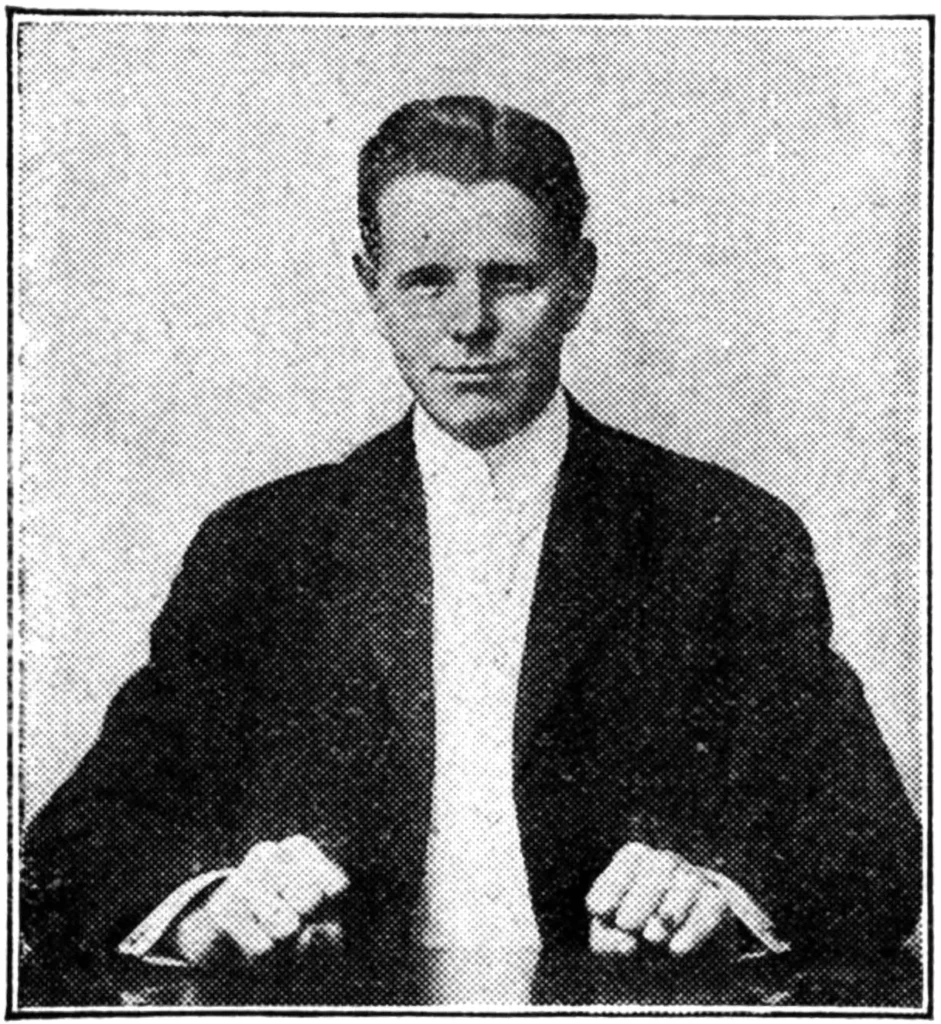
1. Assume an attitude of determination by clenching the fists. Imitating the physical manifestation of a mental state often causes that mental state. (Refer to the psychological writings of William James to see how this works.)

2. Carefully consider all the things that could possibly go wrong before you begin to write. Do not neglect the astronomical, such as asteroid impacts, etc.
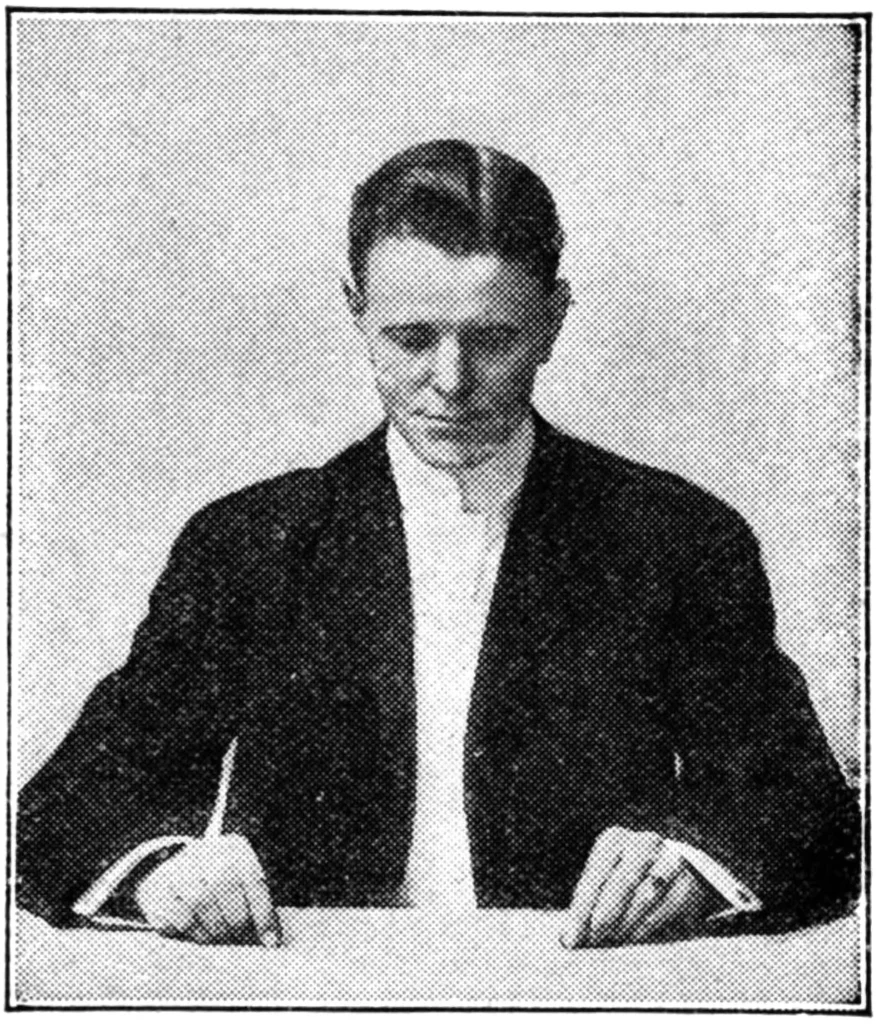
3. Check to see whether you remembered to procure a sheet of paper or other writing surface. If not, you probably should have put that on the list of things that could go wrong in step 2.
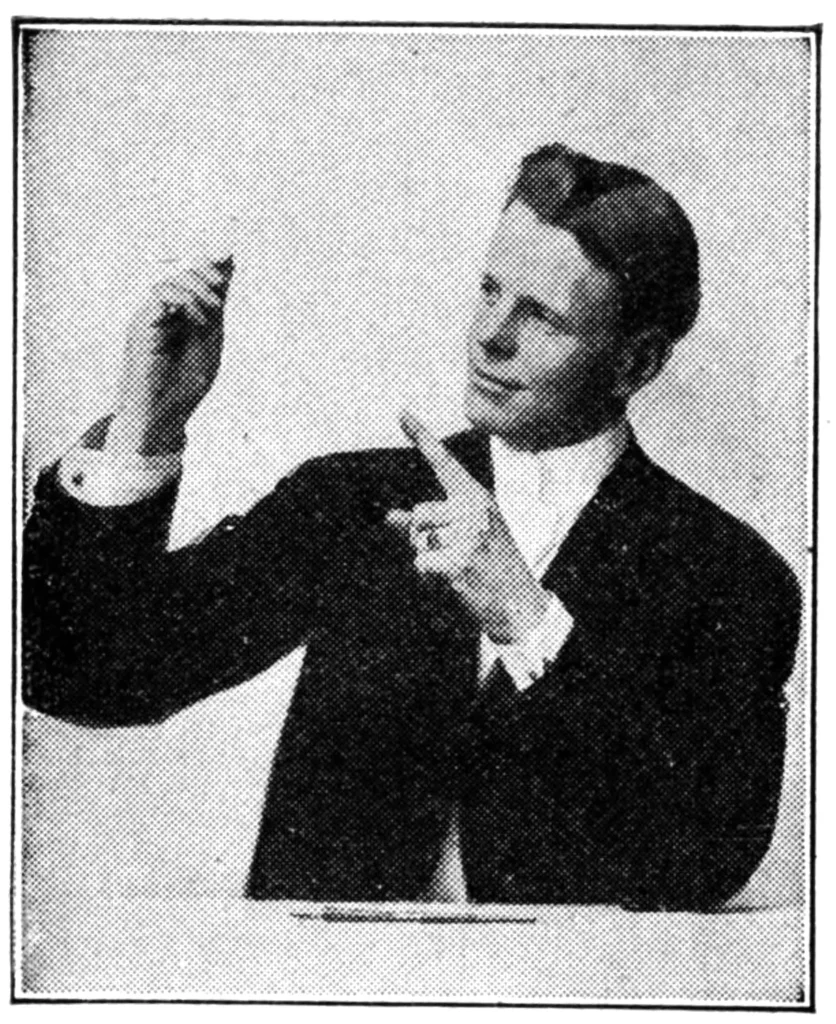
4. Count your fingers. Report any deficiencies to the proper authorities. Early detection is essential.

5. Roll up your sleeves and get to work. But first, now that your sleeves are rolled up, what is that curious blotchy patch on the inside of your elbow? Perhaps you should see a dermatologist.
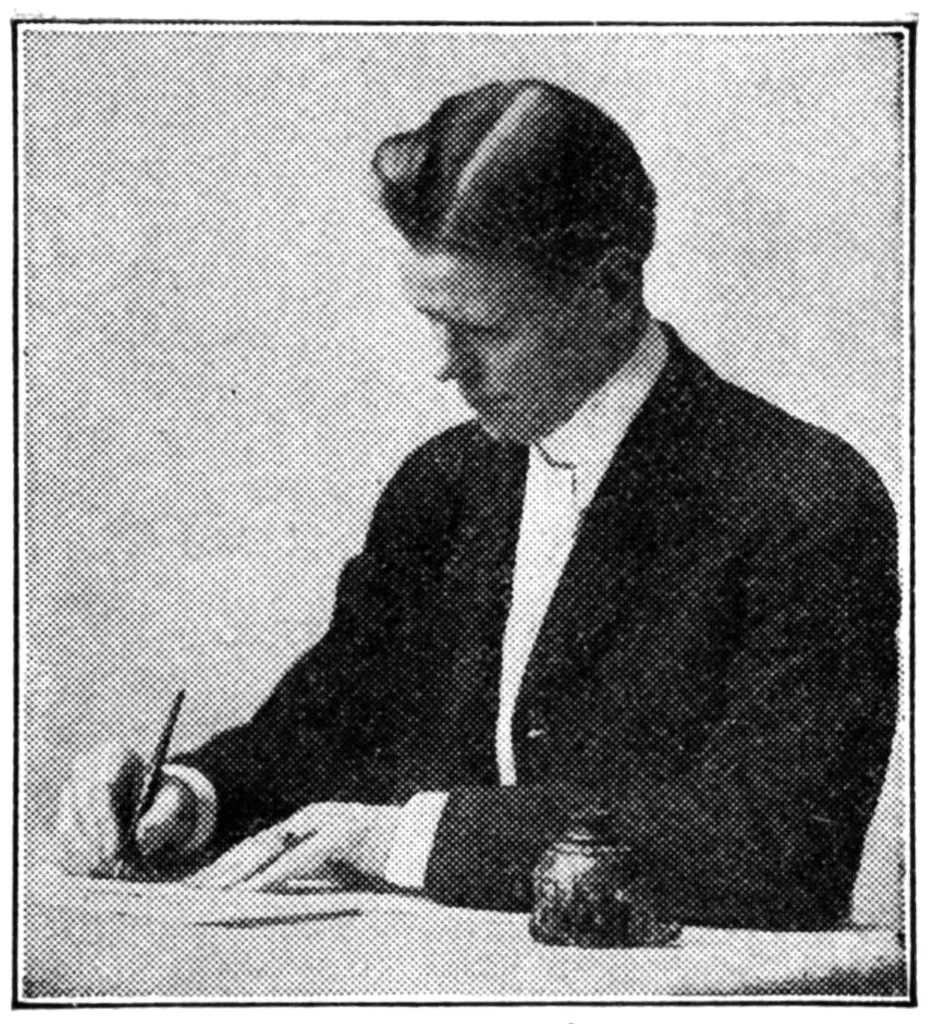
6. Write, using proper spelling and grammar. Editors are likely to be so favorably impressed by proper spelling and grammar that they will accept your submission even if it is otherwise hysterical pro-Nazi propaganda.
THE ABSTRACTIONS THROW A PARTY.
This difference in form represents an earlier iteration of Hawaiian monumental architecture that offers a unique perspective on cultural norms prior to the abandonment of Necker.
We are talking about how the temple structures on Necker Island and Nihoa differ from those on the main islands in the chain. It has the appearance of an informative sentence. But did we learn anything? Probably not. Strip away the adjectives and the modifying prepositional phrases and what do we have? A difference that represents an iteration that offers a perspective. You will notice that the cultural norms are not described, and you will have trouble finding them anywhere in the article. The difference may be offering us a unique perspective, but since we do not know what the perspective is, we cannot take it up on its offer. We do not know how this perspective differs from the perspective we might otherwise have, which was not described either. The sentence suggests two perspectives but gives us none. In effect, this sentence is twenty-six words of no information at all.
If, therefore, you find yourself in a situation, like graduate school, where you are required to turn out a large number of words to demonstrate your knowledge of a subject, remember that you are judged more by the number of words than by the knowledge. Take this sentence as your model, and you can fill any word count and meet any deadline.
FROM THE ILLUSTRATED EDITION.

ELINOR GLYN AND THE NINETEEN HACKNEYED THEMES.
Having recapitulated so much for the people who walked into the theater in the middle of the picture, we continue with hackneyed theme number seven:
7. The couple who fall in love, only to find that they are brother and sister, parted early in life.
As we mentioned earlier, this might be profitably combined with No. 5, “the husband jealous of one of his wife’s relatives,” to make a twisted farce in which the husband is jealous of a man who his wife assures him is her long-absent brother, only to discover that he himself, the husband, is the real long-lost brother, which means that the supposed brother is not a brother at all. We might even adopt the birthmark or locket from No. 1. It could be argued that this farce would be in bad taste, but bad taste is considered a virtue in current literature.
A more reasonable objection is that farce is the unforgivable sin in current entertainment. But since soap-opera plots are now taken seriously as deep tragedy, we can make our farce acceptable just by not making it funny. As long as the unlikely revelations are played as tragic shocks, audiences will probably eat it up.
8. The unapproved marriage finally made acceptable by a child.
When we take up this theme, we ought to remember that, for current audiences, we might have to explain the idea that it is important for a marriage to be “approved” by anyone besides the parties to that marriage. We could probably get by with it, though, in a fantasy setting, as long as we make it clear that aristocracy is bad and people who think family alliances are important are cruel and anti-happiness. That gives us our treatment of the plot: the families of the married couple, previously trying their best to keep the pair apart, now find themselves jockeying for favor with them, because on one side the continuation of family power, and on the other side the elevation of the family’s fortunes, will depend on influence over the heir.
9. A mischievous little boy.
A bit vague, but it is true that the early 1920s saw a glut of movies about mischievous little boys, and scenario editors had reason to be thoroughly sick of them. Since the suggestion is so vague, we can do almost anything with it, and we choose to make our mischievous little boy the king of a powerful nation teetering on the brink of war with its equally powerful neighbor. Very delicate diplomacy is going on, but the young boy thinks ambassadors and ministers are funny and likes to play pranks on them. Naturally, he nearly provokes the war his diplomats have been working strenuously to avert. If we were writing this in the 1920s, the hackneyed ending would have the young king getting a good spanking, with the approval of diplomats and ministers on both sides. Our ending would have the diplomats and ministers on both sides, finally united in their disgust with the young king, collaborating on a prank that out-pranks the king himself and ends with as many custard pies as our budget will procure.
10. All stories requiring trick photography.
We might be justified in skipping this one on the grounds that it is not a situation so much as a question of technology. What was both expensive and unconvincing a century ago is now mere run-of-the-mill moviemaking.
But since we have taken it upon ourselves to go right through the Glyn list, we need a story that requires trick photography of a sort that would have been possible in 1923. We might write an old-dark-house mystery in which spooks and other weird phenomena are produced by the sorts of practical effects that could be managed in a stage play. Bits of the machinery of these effects—a piece of gauze, a magic lantern, a reel of fishing line—would be noticed here and there by the various characters, but the significance of the objects would not be understood until the clever amateur detective wraps up all the clues and shows how the wastrel nephew, fifth in line to inherit the house and the fortune that goes with it, had arranged the whole spectacle to drive his more respectable but superstitious relations out of the house, the inheritance, and their minds. The revelation of how the illusions were created would be a big part of the fun, so our scenario must specify that the tricks are to be accomplished exactly the way the detective says they were.
Once again we stop at four hackneyed themes, believing that a higher dose might have unacceptable side effects. And once again, better suggestions for making use of these hackneyed themes are welcome in the comments.
Continues in Part Four.
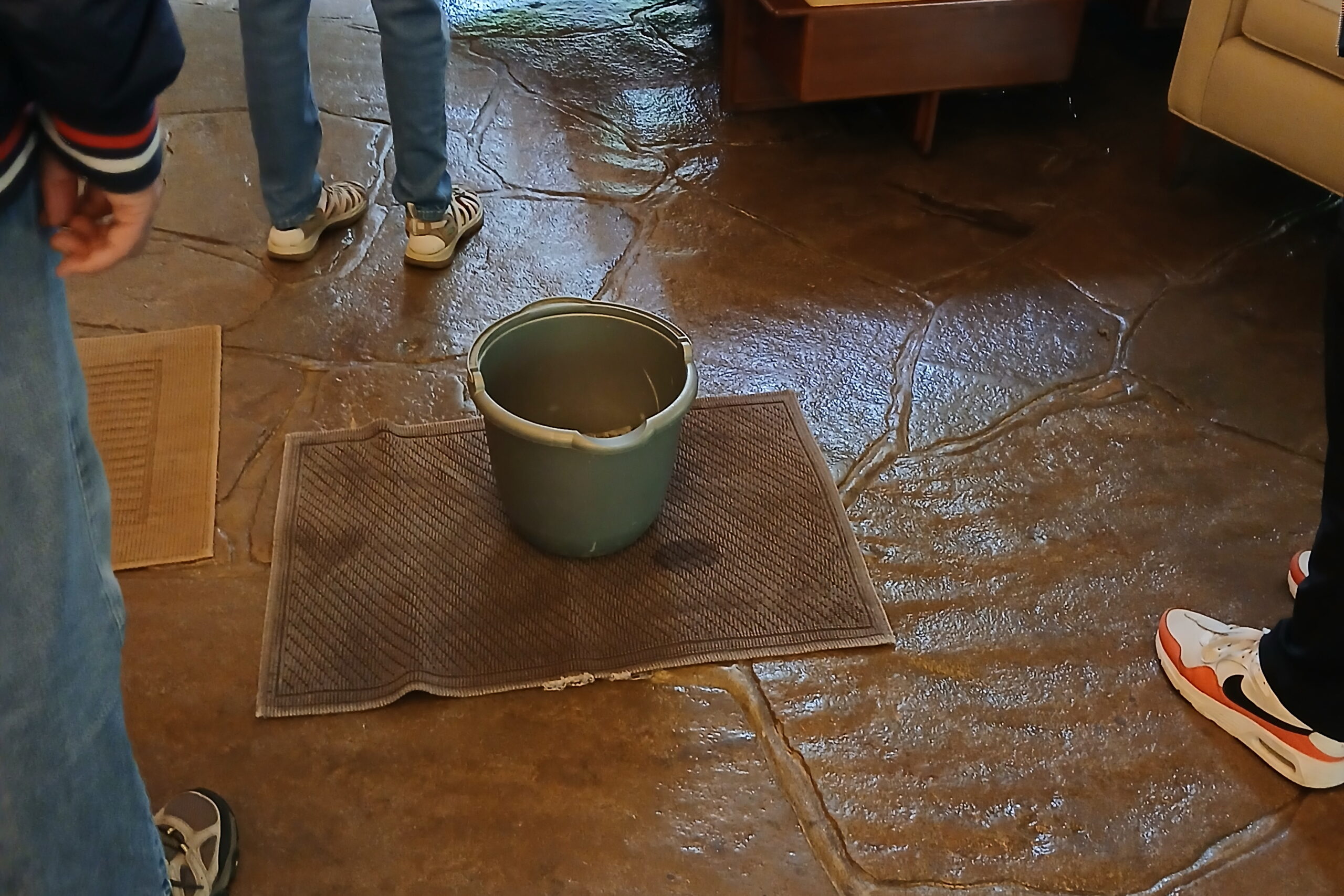
TYPICAL WRIGHTIAN DETAIL OF THE INTERIOR OF FALLINGWATER.
ON THIS DAY IN HISTORY.

ELINOR GLYN AND THE NINETEEN HACKNEYED THEMES.
Part Two.
3. Two men in love with one girl. She gives them a common task to perform; one tries to win by crooked methods and is discovered. She marries the other.
Here our author inserts a long digression reminding us that it it not the triangle itself that is to be avoided, but only this manifestation of it. In the spirit of this exercise, therefore, we must try to stick close to the forbidden theme, but we may perhaps allow ourselves a single deviation: instead of marrying the virtuous suitor, the girl marries the crook. She admires his audacity. The virtuous one is left to realize that the girl and the crook deserve each other. Anyone who would set up a competition like that with herself as the prize would drive a virtuous man to vice sooner or later, and it is a good thing to have found her out so quickly.
If, however, we decided not to allow even that one deviation, then perhaps she marries the virtuous man because the contest has enlightened him. He understands that cheaters always prosper, and he devises a colossal cheat that cancels her plan to marry the other fellow. He wins the contest and marries the girl, and the two of them live happily ever after, having founded a large corporation that prospers by evading labor laws and defrauding consumers.
4. Plays in which a sick child, usually a cripple, is contrasted with a poor child, usually strong and healthy.
The point of such a story is usually to show that Money Can’t Buy Happiness. But wouldn’t this be a fine setup for a juvenile detective series? The “cripple,” confined to a wheelchair, has all the advantages of wealth, education, and the vast and varied reading he has done to entertain himself. The poor child acts as his able-bodied minion, who goes out to gather clues and have hair’s-breadth escapes; only when he brings back the clues he has gathered and relates his naive descriptions of his adventures can the rich boy see how the whole puzzle fits together and send the culprits off to jail for embezzling or whatever they have been up to. The rich boy would also be an expert in using people’s mistaken assumptions about him to his advantage, letting them believe he’s just a spoiled rich kid in a wheelchair right up to the moment the police show up.
5. The husband jealous of one of his wife’s relatives, generally a brother who has been in South America since early youth.
Farce is anathema to current audiences; there has not been a successful farce on screen or in print for more than a generation. Along with all the other reliable mechanisms of farce, this plot has vanished so completely from our popular entertainment that it would seem fresh to a modern audience—if we played it absolutely straight and made the big revelation five minutes of Oscar-bait melodrama.
If we decided to write a farce, thus guaranteeing that we should please no one but ourselves, we might have the brother intentionally provoking jealousy in order to make the husband appreciate the wife and give her the attention she deserves—a scheme that backfires noisily when the husband admits to the brother that he has long been looking for an excuse to leave his wife and is happy that she has found a better man.
Or we could combine this situation with Hackneyed Theme no. 7, which we’ll meet in a future episode, so we have something to look forward to.
6. The discharged workman who sets out to injure his former employer, but who, instead, performs some heroic task, thus regaining his old job.
This situation could be made more interesting if the heroism were quite unintentional. We follow the fired employee as he concocts an elaborate and seemingly perfect scheme to take revenge on his old boss and make himself rich at the same time; but instead he causes a series of unintended consequences of great benefit to the boss, who offers him his old job back at a seven per cent rise in salary. The employee must accept the offer, or his attempted crime will be revealed and he will go to prison. The boss thinks he’s given a faithful employee a happy ending; the employee is trapped in drudgery he hates and cannot escape without causing dire consequences to himself.
Four hackneyed themes are enough for one session. We’ll return with more opportunities for hacks; but meanwhile, once again, readers are invited to give us some better ideas in the comments.
Continues in Part Three.
ELINOR GLYN AND THE NINETEEN HACKNEYED THEMES.
Part One.
First, though, it is probably necessary to explain who Elinor Glyn was, and why we should care about her opinion. Elinor Glyn was a hack. She was a very successful hack, and she made a lot of money, and there were people—not critics with taste, but ordinary readers—who would have said she was one of the leading novelists of the age. Most serious critics would say her novels were bosh, but she was a storyteller who knew how to reach her audience in the most effective way, and that is a skill worth having. She also wrote scenarios for the movies in the days when movies had become big business but had not yet learned to talk.
Glyn lost no opportunity to turn words into cash, and since books about how to write stories and scenarios were themselves a big genre in the 1920s, it was natural that one of them should be by Elinor Glyn, who had a recognized name that would sell the book even if it were otherwise rubbish. The Elinor Glyn System of Writing, which came out in 1923, is not rubbish. It shows signs of being flung together hastily, but it is full of sound advice on how to make a story work.
In the section on scenario writing, Glyn gives us Nineteen Hackneyed Themes to Be Avoided, and that brings us to our writing exercise. Glyn herself tells us that “a clever writer is often able to take an impossible theme and do wonderful things with it,” but if you are reading a book about how to write stories and scenarios, you are probably not clever enough yet.
Nevertheless, we propose to be that clever writer. Our exercise is to take each of those nineteen hackneyed themes and imagine how it could be made into a good story. For each of them, Dr. Boli will make a suggestion of his own, and then readers who feel motivated are invited to leave their own suggested treatments in the comments. This will take more than one session, since Dr. Boli is not willing to assume the liability of dumping so many tired clichés on his readers at once. For today, we’ll start with the first two.
1. The stolen child, kidnapped by gypsies usually, and finally restored to its parents by means of a locket, birthmark, or some equally foolish means.
This situation has always been absurd and silly, but our own age does have a taste for stories of adopted children who learn that they are adopted and go off to find their “real” parents. That suggests an inversion of the trope, in which the adopted child has always kept one memento of her “real” parents, and finally, by means of that memento, succeeds in finding those parents. But the parents are indifferent, unsympathetic, hopeless wrecks who gave up their daughter because they had no interest in the self-sacrifice that inevitably attends rearing a child. Much could be made of the comic awfulness of the couple. In the end our protagonist tosses her long-held memento in the garbage can. When she is asked whether she found her real parents, she emphatically answers yes, and shows a photograph of the parents who adopted and raised and loved her.
2. The child who prevents the parents from separating, or reunites them after a separation. These plays are generally called, “A Little Child Shall Lead Them.”
Glyn’s advice has not prevented platoons of writers from charging into the field relying on this same situation in the century since her time. It still strikes people, all evidence to the contrary, as a fresh idea. Perhaps the child, seeing some selfish advantage in the separation, is doing everything possible to drive the parents apart, but his schemes cause such chaos that the parents are drawn together by the necessity of self-preservation if nothing else. In the end, it is the child who has to revise his expectations: very much against his will, he has brought his parents back together. As we’ll see in a future installment, this plot might run foul of Glyn’s hackneyed situation number 9, and since running foul of her suggestions is the point of the exercise, we don’t care a bit.
Since we used up a good deal of our readers’ patience with the introductory paragraphs, we’ll stop with only two hackneyed themes for the moment and give the readers a chance to think about them. How could each of these situations be used as the basis of a good story? If you have ideas, the comments box is waiting for you. Or, alternatively, you could take your idea, write your good story, publish it, and then direct us to it.
Continues in Part Two.