Posts filed under “Books & Literature”
NOW IN PRESS.
A Survey of State Income-Tax Law in the Commonwealth of Pennsylvania, Represented Under the Similitude of a Dream, by Mortimer Quibble, J.D. An allegorical treatment of this important branch of legal practice. Convenient format for reading secretly during long, boring afternoons in the courtroom. 16mo, 448 pp. Runcible Publishing & Finer Meats, Oakland, Squirrel Hill, and Greenfield.
PRACTICAL STANDARD LETTER-WRITER.
OUR YOUNG PEOPLE are writing with greater enthusiasm and frequency than ever before, largely because of the prevalence of text messaging in the youth culture of today. Yet the abysmal literary quality of these communications has often been remarked. Dr. Boli is of the opinion that this deficiency is to be attributed to the lack of good models, such as were readily available when he was a young man in the form of “standard letter-writers,” collections of letters for every common circumstance. In this occasional series, Dr. Boli attempts to fill that gap by providing useful examples to show how the art of text messaging might be raised to a higher standard.
–
Letter from a Young Gentleman to a Prospective Employer.
–
Dear Sir:
It is, as I have always believed, incumbent upon every young man who is reasonably healthy, and of sound mental capacity, to seek by any means to render himself useful to the world at large, and to exercise his God-given abilities in a manner that conduces at once to the benefit of his community and to his own development, both in skill and in virtue. It behooves him, in fact, to be always “on the lookout,” to use a colorful colloquial expression, for any such opportunity; nor should he allow one to pass when it presents itself.
This is my excuse for imposing upon your attention at the present moment: for after last night’s considerable accumulation of snow, I made a brief survey of our street, and happened to notice (I hope you will pardon the liberty) that your sidewalk had not yet been cleared of that attractive but inconvenient crystalline deposit which nature, in her bounty, shed so abundantly but indiscriminately over our neighborhood.
Here at once I perceived a chance both to render a valuable service and to put my otherwise idle hands (for you must be aware that city schools are closed today) to good use. In short, for I would not waste your time unnecessarily, I thought that I might undertake the removal of the snow from your sidewalk.
It is customary on such occasions for the owner of the property to offer a small remuneration; the generally accepted rate at present is ten dollars an hour. I believe the entire job could be completed in one hour, in addition, of course, to the three hours I have spent composing this message, for a total of only $40, exclusive of applicable taxes. Hoping, therefore, to receive a favorable response at your earliest convenience, I am
Your ready and obedient servant,
[Name].
THINGS WE SIMPLY CANNOT IMPROVE.
THE FOLLOWING IS the first sentence of the five-volume novel Rosabella: Or, A Mother’s Marriage, written by an anonymous author (rumored to be one Catherine Cuthbertson) and published in London in 1817. It may possibly be the best opening sentence in the history of the modern novel.
It was in such a night as treason might conceive formed for its sanguinary projects, that many deluded individuals of a maritime province in Ireland stole from their straw-roofed cabins, and in the gloom of impenetrable darkness descended with cautious steps the craggy rocks to the seashore; there to meet the subtle agents of sedition, who had, with all the wiles of interested management, too successfully sown the noxious seeds of disaffection in the bosoms of the credulous, the ignorant, the idle, and the bigoted; leading them hoodwinked not only from their allegiance to the existing government, but into the commission of crimes hostile to their eternal welfare.
From DR. BOLI’S ENCYCLOPEDIA OF MISINFORMATION.
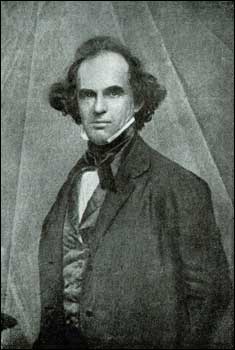
Hawthorne, Nathaniel. Hawthorne intended The Scarlet Letter to be a work of humor, and was bitterly disappointed when no one seemed to get the joke. In a letter to his friend Oliver Wendell Holmes, he wrote that he would have to make the comedy much broader in his next novel, The House of the Seven Gables.
From DR. BOLI’S ENCYCLOPEDIA OF MISINFORMATION.

Verne, Jules. In L’Île à hélice, the noted pioneer of science fiction Jules Verne predicted the modern cardboard pizza box with astonishing accuracy.
PREFACE.

From the Preface to the Shorter History of the United States, by Irving Vanderblock-Wheedle.
–
IT IS CUSTOMARY when placing before the public the fruits of one’s labors to begin by offering some apology or explanation for the work, especially when the field is crowded with similar offerings. In this case, however, no such apology is necessary. Although more than one history of the United States may be found on library shelves, and perhaps even not a few making some claim to brevity, the neglect in such productions of the manifold contributions of Mr. William Rufus DeVane King has become a byword among serious students of history. The snobbish elitism of professional historians is the only conceivable explanation for this scandalous omission, for among the common people the memory of King shines bright, as the numerous cycles of popular legends and ballads about him testify:
Mr. William Rufus DeVane King was Vice-President
Of the United States when in Cuba he was resident,
runs one jump-rope rhyme still heard in schoolyards across the nation. But there is no need to elaborate this point: we all remember the songs and stories from our school days, and the very land around us is littered with evidences of the popular devotion to the memory of this great American. King Street in Alexandria—King George Street in Annapolis (named for King and some man called George, otherwise lost to history)—the designation of Brooklyn as King’s County—all these and countless other tributes may be found scattered across the map by anyone with the ambition to consult an atlas.
Why, then, the notorious neglect of the man and his accomplishments in our standard histories? As we said, the explanation can only be snobbishness; but to what do we owe this peculiar outbreak of that literary disease?
Part of the answer may be found in political prejudice. William Rufus DeVane King was one of the founders of the state of Alabama; but no reasonable observer could hold him entirely responsible for that, since he could not possibly have foreseen the Alabama of today. There is also the matter of his name, of which there seems to be entirely too much, and perhaps historians have been reluctant to bulk up their productions with repeated references to William Rufus DeVane King when the same number of pages could hold many more years of history involving lesser figures with more economical names, such as John Adams. Andrew Jackson, who was noted for his urbane wit, referred to our subject as “Miss Nancy,” and if the name had stuck, we historians might have been spared a great deal of scribbling.
Finally, there is the embarrassing question of slavery. William Rufus DeVane King was one of the largest slaveholders in the South (measured, that is, by number of slaves; the man himself was rather petite), and this fact may have deterred some historians from addressing his other accomplishments. With these reservations we have considerable sympathy. In the present work, we have adopted the attitude of the recent revision of Huckleberry Finn, and have decided to address the issue of William Rufus DeVane King’s slave ownership by pretending that he kept Yorkshire terriers instead.
FROM THE ILLUSTRATED EDITION.

From DR. BOLI’S ENCYCLOPEDIA OF MISINFORMATION.
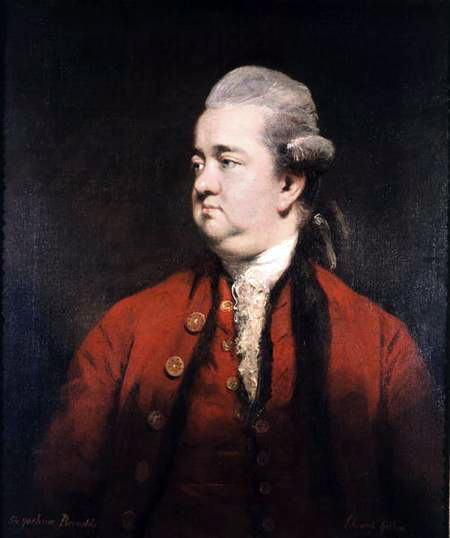
Gibbon, Edward. Gibbon had originally intended to write a biography of Constantine Palaeologus, the last Byzantine emperor; but, as his introductory matter grew more and more unwieldy, he was forced to reconsider his title.
ASK DR. BOLI.

Dear Dr. Boli: The purpose of Church, it is clear, is to administer such grace to men as makes them commit all of the pious sins rather than any of the impious ones. Regrettably, I find no instructions in the Bible explaining how to make this remarkable transformation occur. Are all we churchmen thus doomed to failure? Are God, Life, and Truth all a big hoax now? —Cheers, Deacon Calvin Lewis Gumbo, Repent Or Parish, Springfield.
Dear Sir: The Bible is an enormous library of dozens of books written over the course of more than a thousand years. If you cannot find somewhere in it a verse to take out of context that will answer any question or support any proposition whatsoever, then you simply are not trying hard enough.
From DR. BOLI’S ENCYCLOPEDIA OF MISINFORMATION.

Pepys, Samuel. After much debate, historians are now generally agreed in crediting Samuel Pepys as the inventor of the personal blog.