Posts filed under “Books & Literature”
ADVICE TO YOUNG WRITERS.
IT SOMETIMES HAPPENS that Dr. Boli is approached by young writers eager to absorb some of his wisdom and experience. What, they ask, does a writer need to succeed in his chosen art?
Invariably Dr. Boli gives them the same answer: good ink. A writer can get by with indifferent paper, provided it does not feather the ink; and the last time Dr. Boli checked (which he admits was some time ago) a gross of steel pens, even of the finest quality, could be had for very little money. But the ink itself must be chosen with great care. Dr. Boli would even go so far as to say that no one can be a good writer without good ink. To a degree seldom sufficiently acknowledged, the flow of ink determines the flow if ideas.
An ink too runny will blot the page; too thick will clog the pen. But ink of exactly the right consistency—that is one of the great pleasures in a writer’s life. Words, sentences, whole paragraphs roll off the tip of the pen without another trip to the inkwell.
Dr. Boli would like to be able to recommend one particular ink and be done with it, but—alas!—the question is not as simple as that. The ink must be matched to the pen.
Dr. Boli himself is partial to the Esterbrook No. 910 Cashier’s Pen, a very fine and somewhat flexible point for which a thin and free-flowing writing fluid is best. The same ink would blot uncontrollably with a broader nib.
Recently Dr. Boli has been informed of certain developments in mechanical science that would supposedly render pen and ink obsolete. He hopes that he may be forgiven a certain degree of skepticism. Until the new mechanical wonders have proved themselves beyond a reasonable doubt, he will continue to advise young writers to devote particular attention to the choice of ink.
READERS WRITE.
A NOTE FROM a certain Mr. Smithington, Esq.:
Dear Dr.,
The word “nonplussed” means surprised or confused. An emotional iconograph conveying such an expression would look as such, “:O”. Using the term, “nonplussed” as a neologism referring to one who is unimpressed—as I suppose was the emotion you were attempting to convey with your “emoticon” consisting of merely a colon punctuation mark—is a habit the more vulgar classes are attempting to impose on us and should be discouraged.
With kindest regards,
S
Our correspondent is quite right in condemning the neologism. Dr. Boli was not aware that anyone was using the term that way until this comment sent him out to do some research on the omniscient Internet. He does not condemn all development in language: he would be sorry to see English limited to the vocabulary and style of Alfred the Great, however laudable his works may be in their own right. But the misuse of “nonplussed” threatens to deprive us of a useful expression for which there is no close equivalent.
The root sense of “nonplussed” is “unable to go further.” It is the utterly puzzling sensation of reaching the limit of one’s leash without having previously known that one was collared. It is different from surprise, which is a kind of shock produced by something marvelous or unexpected, and which would fittingly be represented by an expression of open-mouthed wonder. To be nonplussed is to have the sudden realization that one simply doesn’t know what to think or do about something. It is the blank and despairing feeling that what had up to this moment seemed comprehensible really makes no sense at all.
If he were addicted to the use of emoticons, Dr. Boli would prefer to represent the state of being unimpressed thus: : ¹
ASK DR. BOLI.
Dear Dr. Boli: Can you explain the significance of the so-called “emoticons” often inserted in various forms of Internet communication? As indicators of human emotion, they confuse me. —Sincerely, Expert System M-331, Carnegie-Mellon University.
Dear, um, Sir or Madam: Emoticons, possibly the greatest innovation in punctuation since the multiple exclamation point, are a carefully worked-out way of encoding facial expressions in written language, so as to give it the immediacy of speech. There are many such expressions, but here is a list of the most common:
:) – I am smiling.
::) – I am smiling while wearing glasses.
:( – I am mildly unhappy about that.
:€ – I am trying unsuccessfully to hold back my tears.
:D – I am smiling in a suspiciously enthusiastic way.
:L – I have a toothpick in my mouth.
:$ – My braces are exceedingly uncomfortable today.
:K – I am a cat.
:K – No matter what they say, I believe that a somewhat droopy mustache adds a quiet dignity to my appearance.
:* – The exploding cigar you gave me just went off in my mouth.
:> – I am feeling insufferably smug.
: – I am nonplussed.
FROM THE ILLUSTRATED EDITION.

From DR. BOLI’S ENCYCLOPEDIA OF MISINFORMATION.
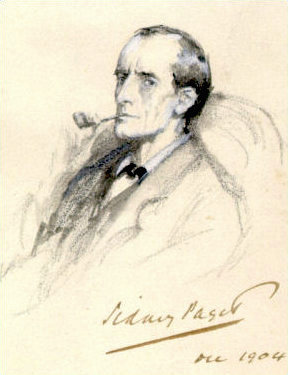
Holmes, Sherlock. Sherlock Holmes was a real historical figure, although Dr. Watson embellished the character somewhat for publication. In particular, the cocaine addiction of the stories was in reality no more than a mild dependence on caffeine to get him going in the morning. The iconic deerstalker was also an invention of Watson’s, the real Holmes preferring a tractor cap. The character of “Arthur Conan Doyle” is, of course, entirely fictional.
FORTHCOMING WORKS BY DR. BOLI.

THOMAS LOVE PEACOCK MYSTERY AND MAYHEM SERIES, No. 1. The problem with modern detective novels, Dr. Boli has concluded, is that they attempt to appeal to our baser instincts with entirely too much action, and not nearly enough sitting around and discussing philosophy or the works of obscure classical authors. This is all the more surprising considering that many of those authors have been pressed into service as amateur detectives by inferior novelists.
Dr. Boli has filled this gaping hole in the mystery market with Madcap Manor, the first in a projected series of detective novels in which the part of the detective is played by Thomas Love Peacock. Following the pattern set by that great author’s own novels. Dr. Boli has arranged the story so that the obligatory murder occurs on the first page, and is not mentioned again until the antepenultimate page, when it is promptly solved, the culprit brought to justice, and peace and order restored to the community. Between those points is a series of delightfully witty conversations between Mr. Peacock and his literary friends on abstruse topics that Dr. Boli personally warrants have never been discussed in a detective novel before.
“At last, here is a detective novel we can recommend to our members without reservation” —Association of Long-Term Cardiac Patients with Nervous Dispositions.
“The character of Peacock is pretty much as you might expect him to be” —Publisher’s Monthly Echo Chamber.
“The one detective novel this season that has succeeded in leaving us speechless” —East Carson Street Review of Books.
ONE SIMPLE RULE FOR GRADUATE STUDY IN LITERATURE.
A LOYAL READER who prefers to remain anonymous writes:
Since he himself has successfully attained his doctorate, I’ve long wished that Dr. Boli would set forth his rules for graduate study in literature.
Dr. Boli is always happy to oblige a reader. Although Dr. Boli earned his own doctorates by unconventional and probably more honest means, he has observed that there is one rule that will assure the student of success and even acclaim in graduate study of literature:
Any text, studied long enough and in sufficient depth, becomes pseudonymous.
Did Dickens really write A Tale of Two Cities? Superficially, the work seems to bear many of the marks of his authorship. But is it not striking that nowhere else in Dickens’ considerable oeuvre do we find a novel set during the French Revolution? Nor did Dickens ever begin any of his undoubted novels with a sentence that included the word best and the word worst in such near proximity; in fact, we can only describe the juxtaposition as entirely uncharacteristic, as a statistical analysis of Dickens’ vocabulary will doubtless prove, after we have spent a full academic year putting it together. Henceforth the attribution of the work to Dickens must be regarded as a pious fiction, by which a much-beloved work of unknown authorship was attributed to the great man by his most loyal followers many years into the post-Dickensian age. As to the true authorship of the work, that is a matter, at present, of mere speculation; although it is suggestive that Thomas Love Peacock, in a remarkable echo of our unknown author, began one of his unpublished letters with the word “It.” Until further work is done, we must refer to the author of A Tale of Two Cities as “Pseudo-Dickens.”
You see how easy it is to apply this rule to any arbitrary work of literature. Go forth now and earn your well-deserved doctorate by the traditional means, if you must. As an alternative, however, you may wish to keep the Boli Institute in mind.
FORTHCOMING WORKS BY DR. BOLI.
Dr. Boli’s Comprehensive Anthology of Tables of Contents. The most exhaustive and inclusive publication of its kind. The first folio of Shakespeare—Darwin’s Origin of Species—Vanderblock-Wheedle’s Winifred-Lou—all the great tables of contents are here in this single moderately portable volume, arranged and classified according to Dr. Boli’s revolutionary new taxonomy. Special attention is given to the development of the table of contents as a literary form, ranked for the first time in its deserving place beside the sonnet, the parking ticket, and the prose poem. 8vo, 832 pp. The table of contents alone is worth the price.
ERRATA.
P. 58. For “Balaclava,” read “baklava.” Adjust other instructions accordingly.
P. 103. For “arsenic,” read “allspice.”
P. 171. Add the word “not” thus: “Baking soda is not a good substitute for salt in case of scarcity.”
Please ignore all text on pp. 238-253. When we wrote this chapter, we had just finished Chapter 17, “Know Your Wines and Spirits,” and frankly we ended up saying a few things about snow peas that, in the cold light of dawn, we can see ought to have been left unsaid.
P. 285. For “eggs,” read “flour.” For “broccoli,” read “pitted cherries.” For “cheese,” read “sugar.” For “sausage,” read “butter.” For “pan,” read “oven.” For “omelet,” read “pie.”
P. 317. It turns out that nightshade is poisonous. Who would have thought?
p. 389. The page numbers in the index are incorrect. You may easily arrive at the correct page number by remembering that the index assumes that the pages are numbered logarithmically rather than sequentially.
NOTICE.
THE LECTURE BY Prof. Wilton Beard, entitled “I’m Lovin’ It: The Irreducible Alterity of the Metadiscourse of Contemporary Advertising as Formal Poetry,” previously scheduled for tonight at Memorial Hall, has been canceled, because Prof. Beard has concluded that current critical theory, to which he had devoted his entire career, is a load of piffle. Further inquiries may be directed to Holy Assumption Monastery in Spring Hill, where Prof. Beard has begun a new vocation filling printer cartridges.