Posts filed under “Young Readers”
From THE VIRTUOUS CHILD’S STORY-BOOK.

“MAMMA, I GAVE a penny to a poor man this morning. Was I a good boy for so doing?’
“It depends on the motive you had in view. Did you give it to him because you thought it would do him good?”
“Yes, mamma, I did; for I saw that he was miserable and unhappy, and when I passed him he held out his hat and begged for a penny so that he could buy a trifle to eat. So I thought of the penny I had in my pocket, and I said to myself, ‘Perhaps with my penny he can buy some food, and then he will not be so miserable.'”
“I am sorry to hear it, my dear boy. This is what you should have thought: ‘This man is poor and in dire need, and I possess the means whereby to sustain his life for another day. This possession gives me the power to place him forever in my debt, and to bind him by invisible chains to do my will in hopes of gaining the penny, which after all I may not give to him if I am not pleased with him. And with the profit I make from his servitude I may purchase the lives of multitudes of similar beggars, and gradually form myself an army of shuffling automatons whose very existence depends on my pleasure.'”
“Ah! mamma, I wish I had thought of that, but I am sure I did not intend to do wrong. You know, mamma, I love you so dearly, that I strive to please you in all things.”
“Yes, my dear, I know you love me, and that is because I hold your wretched little life in my hands, is it not? So think, dear child, when next you meet a beggar, what unimaginable power the single penny in your pocket gives you over the wretched lives of those less fortunate than yourself, and you will make me proud of you.”
A POPULAR NURSERY RHYME.
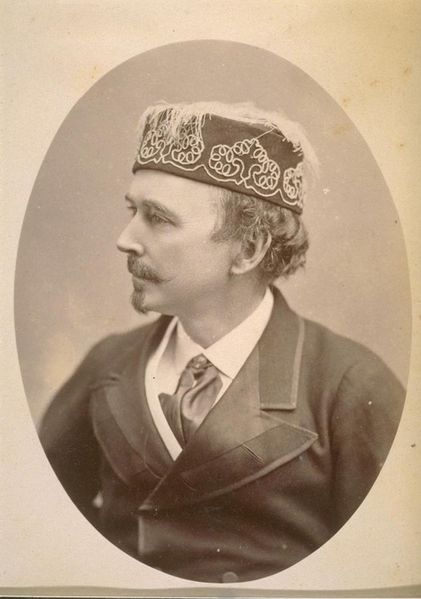
AS IT WAS first printed in Songs for Rotten Children, London, 1859.
Boucicault, Boucicault, where have you been?
I’ve been down to London to play for the queen.
Boucicault, Boucicault, what did you there?
I bored the poor woman out of her chair.
WHY THE OSPREY HAS NO XYLOPHONE.
IN OLDEN TIMES, our forefathers huddled around the fire and told the story of Why the Osprey Has No Xylophone. Now our forefathers are all dead, and serve them right. And this is the story they told:—
Many moons ago—Io, and Europa, and Charon, and Titan, and Ganymede, and Phobos, and Triton, and Callisto, and Oberon, and Tethys ago—the osprey was king of all the birds. At that remote time the avian world was governed as a constitutional monarchy, and the osprey’s duties were confined to opening shopping centers, signing letters of commendation, and posing for portraits on currency, which, in the days before printing, naturally took up most of a reigning monarch’s schedule.
One day the osprey told his prime minister, an ambitious young herring gull, “I should like to have a tulip.”
“Get it yourself,” replied the prime minister, who was positively mad with power.
So the osprey set out on an epic quest for a tulip. He traveled to the ends of the earth, slew monsters, ate at dreadful fast-food joints, and endured such hardships as no king before or since has ever endured. At length he came to a plateau in Anatolia that was carpeted from end to end with tulips, but he decided that tulips weren’t all they were cracked up to be and flew home disappointed.
On his return, he discovered that his throne had been declared vacant, and the former prime minister was now ruling as General Secretary of the People’s Revolutionary Council. “We don’t need kings anymore,” he explained. “But we do have an opening for a new registrar of deeds.”
Having tried out that position for a month, however, the osprey decided that if he never registered another deed it would be just peachy. He therefore went into business for himself selling collectible porcelain figurines to pigeons, who have an insatiable appetite for that sort of thing. Eventually he retired to a trailer park outside Sarasota, where as far as anyone knows he still resides today. And that, dear children, is why the osprey has no xylophone, but has a marimba instead.
THE FREE MAN.
From Dr. Boli’s Fables for Children Who Are Too Old to Believe in Fables.
–
ONCE A LITTLE girl was walking along in the cheerful summer forest when she came across a man who was tied to a tree by every sort of chain and shackle.
“Oh, you poor prisoner!” the little girl exclaimed. “I’ll run and get help for you immediately!”
“No, no, you misunderstand,” said the man, who was bound but not gagged, so that at least he could say anything he liked. “I am a completely free man.”
“You don’t look free to me,” said the little girl. “For one thing, you’re chained to the tree by that thing around your waist.”
“Oh, I put that chain there,” the man explained. “I wanted to be safe from falling down, so I chained myself to this tree, which as you can see is quite sturdy. This way I’ll never fall down and bump my head. No price is too high for security, you know.”
“But your legs are shackled together,” the little girl remarked.
“You’re very observant,” the man answered. “If my legs could move freely, they might slide apart, and I would start to slip down the tree, which would be very uncomfortable. So you see, since I’ve chained myself to the tree, it’s much more comfortable to have my legs shackled.”
“But your right arm is chained to this big branch with a bronze chain,” the little girl said.
“It’s gold,” the man replied.
“It looks like bronze to me,” the little girl said.
“I was assured that it was gold,” the man told her. “A very rich man came along with this beautiful gold chain and told me that, if I would let him chain my right arm with it, then I could admire his gold chain all the time, and I would never have to stop looking at it.”
“But your left hand is tied to the chain behind your back,” the little girl said.
“Yes,” the man agreed. “You see, I’m right-handed, so it’s not much use to me to have my left hand flailing about, is it?”
“I see,” the little girl said. “And you’re sure you don’t want me to go find someone to untie you?”
“Oh, no,” said the man. “I have chosen every one of my chains and shackles with absolute freedom. There is not a man on earth who is freer than I.”
So the little girl told the man that it had been pleasant talking with him, and the man wished her a very good day, and the little girl went on her way into the lovely green forest, thinking about what she had seen and heard.
“Well,” the little girl said to herself as she walked, “I suppose he seems happy enough. But still, I’m glad I’m not free. I don’t think I’d like it at all.”
THE ADVENTURES OF BACKSTORY MAN AND ANGST BOY.
ANNOUNCER. Malt-O-Cod, the delicious and nutritious malt food drink flavored with real cod-liver oil, presents…
(Music: Theme, up and under for…)
ANNOUNCER. The Adventures of Backstory Man and Angst Boy!
(Music: In full, then fade for…)
ANNOUNCER. As you recall, in our last episode, Backstory Man and Angst Boy had agreed to meet Doctor Lethargicus to discuss his demand for world domination beginning with a nationwide speed limit of fifteen miles per hour. But as they waited for Doctor Lethargicus to appear, suddenly a hidden panel swung open, and…
ANGST BOY. Now what are we going to do? We’re trapped in Doctor Lethargicus’ Web of Inactivity, and we can’t move our arms and legs! It’s like a metaphor for my adolescent life.
BACKSTORY MAN. This is all my fault. I was distracted by memories (which somehow appeared to me in sepia tones) of the time long ago when Doctor Lethargicus was just plain little Herbie, my long-lost younger brother.
ANGST BOY. But I should have known it was a trap! Oh, how can I call myself a sidekick when I can’t protect my mentor from even the most obvious nefarious plots?
BACKSTORY MAN. No, don’t blame yourself, Angst Boy. It is I who must shoulder the blame on this occasion. I have failed you, just as I failed young Herbie when he was your age. If only I had warned him about the dangers of reading Ayn Rand! But no, I thought it was merely a phase he would grow out of.
ANGST BOY. But sooner or later we have to fail, don’t we? I mean, is it even possible to go out heroing all the time without eventually meeting the villain you can’t defeat? And if it’s not possible, then why do we do it? Isn’t our whole body of work meaningless because of this one failure? Doesn’t the whole world know that eventually we have to fail? And is that why none of the cheerleaders at school will ever pay any attention to me?
BACKSTORY MAN. You remind me so much of Herbie when he was your age. He said just the same thing after he saved me from that speeding freight train when I was home from college and he was only sixteen. At least he said the part about the cheerleaders. I don’t remember the rest of what he said.
ANGST BOY. Then this is it. We might as well give up and admit that we’ll never live up to the standard that’s expected of us as heroes.
BACKSTORY MAN. No, Angst Boy. Never give up. That was the last thing my mother said to me before my parents mysteriously disappeared in the Bermuda Triangle, leaving me with no clue as to their whereabouts except monthly postcards with pictures of sand dollars and seagulls on them. And in honor of that last wish, I have taken a solemn oath never to give up on anything.
ANGST BOY. Aren’t you the one who doesn’t have a driver’s license because you said the test was too hard?
BACKSTORY MAN. Never give up on anything important. That’s my motto. It has to be important.
ANGST BOY. And here I am, sidekick to a hero who can’t drive. Is this what I was supposed to be by the time I was sixteen?
ANNOUNCER. Will Backstory Man and Angst Boy be stuck forever in Doctor Lethargicus’ Web of Inactivity? Will next week’s episode be stretched out with ultimately meaningless dialogue? Tune in next week at this same time to the Adventures of Backstory Man and Angst Boy!
(Music: Theme, up and under for…)
ANNOUNCER. Kids, have you had your Malt-O-Cod today? Your parents must be awfully negligent if they don’t make sure you’re well supplied with the rich, satisfying flavor of Malt-O-Cod every morning. Perhaps you ought to report them to the authorities. Visit the Malt-O-Cod Web site for the addresses of child protective services organizations in your area. And tell them Backstory Man and Angst Boy sent you!
(Music: In full, then out.)
CAPTAIN PLEONASM VS. MRS. WILLOUGHBY’S FOURTH-GRADE CIVICS CLASS.
Although no recordings of the old Captain Pleonasm radio serial have survived, a number of the original scripts were recently unearthed in the archives of the Northern Broadcasting Company.
ANNOUNCER. Malt-O-Cod, the delicious and nutritious malt food drink flavored with real cod-liver oil, presents…
(Music: Theme, up and under for…)
ANNOUNCER. The Thrilling and Exciting Adventures of Captain Pleonasm and His Faithful and Trustworthy Sidekick and Assistant, Interjection Boy!
(Music: In full, then fade for…)
ANNOUNCER. Our story begins today with Captain Pleonasm once again proudly engaging in his civic duty of helping the young people of America to stay on the straight and narrow path.
CAPT. PLEONASM. I do not recall this structure or building as being so small. When I was here, these rooms were vast and cavernous chambers. Artemus Ward Elementary was a Brobdingnagian palace of immense proportions. It is painfully and distressingly apparent that my arch-nemeses, the Editors of Doom, have been attacking this school with their Condense-O Ray.
INTERJECTION BOY. Waverin’ willets, Captain Pleaonasm! The last time you were here you were ten years old, and Mrs. Willoughby says you were the shortest kid in your class.
CAPT. PLEONASM. I fail to see the relevance of that information, or its application to the subject at hand.
INTERJECTION BOY. Gadzooks, Captain Pleonasm, I’m just saying that—Oh, look, there’s my little brother’s classroom now! And here comes Mrs. Willoughby.
CAPT. PLEONASM. What did you say your little brother’s name was again? By what appellation shall I address him?
INTERJECTION BOY. Argyle socks, Captain Pleonasm! I’ve told you about fifty times. His name is Interrogative Boy.
CAPT. PLEONASM. It still seems strange and suspicious, too odd to be a mere coincidence or unrelated concatenation of events, that your little brother has the very same and identical civics teacher that I had in fourth grade.
INTERJECTION BOY. Blitherin’ bandicoots, Captain Pleonasm! It’s not as strange as all that. You know Mrs. Willoughby has the job forever cause she knows where the bodies are buried.
MRS. WILLOUGHBY (approaching). Billy! How nice of you to come!
INTERJECTION BOY. Grievin’ ganders, Mrs. Willoughby! You mean his name was Billy?
MRS. WILLOUGHBY. Well, of course! He wasn’t always Captain Pleonasm, you know. Back in the fourth grade, he was just plain little Billy Pleonasm. Such a cute little boy! Not too bright, but heavens! what a vocabulary. Come in, come in! The class is very excited that you’re coming.
(Sound: chaotic elementary-school classroom.)
MRS.WILLOUGHBY. Settle down, boys and girls! We have a very special treat today. Captain Pleonasm is here to talk with us. That’s right—the famous Captain Pleonasm himself, and believe it or not, just a few decades ago he was a student in this very classroom, just like all of you! But now he’s a crusading hero with a lucrative Malt-O-Cod contract!
LITTLE GIRL. I wanted Superman.
LITTLE BOY. Or Batman.
INTERROGATIVE BOY. What are you doing here, big brother?
INTERJECTION BOY. Reekin’ ramps, little brother! I’m a sidekick! I’ve got to be by his side, no matter what danger he faces!
MRS. WILLOUHGBY. So now Captain Pleonasm is going to give us his very interesting presentation.
CAPT. PLEONASM. My aim and purpose, dear children, is to tell you that crime and lawbreaking do not pay. They are not remunerative. Nothing is to be gained by flouting the statutes of our fair Commonwealth. In the end, a life devoted to transgression of the criminal code will not materially increase your wealth.
INTERROGATIVE BOY (stage whisper).Why does he keep saying the same thing over and over again?
INTERJECTION BOY. (stage whisper) Merciful malamutes, Interrogative Boy! That’s his thing. It’s what he does.
MRS.WILLOUGHBY. Well, that’s very interesting, and I’m sure you could go on like this all afternoon. But why don’t we answer some questions now? Yes, Angela?
LITTLE GIRL. Why couldn’t we get Superman like Mrs. Fanshawe’s class did?
LITTLE BOY. Or Batman?
MRS.WILLOUGHBY. Mrs. Fanshawe’s class got Superman because the school could only afford Superman’s honorarium for one class, and Mrs. Fanshawe bribed the principal with cupcakes, which was a very naughty thing to do. Are there any real questions for Captain Pleonasm? Yes, Interrogative Boy?
INTERROGATIVE BOY. Why do you wear that dorky long underwear?
LITTLE GIRL. Yeah, instead of a cool cape like Superman?
LITTLE BOY. Or Batman?
ANNOUNCER. Is this the end for Captain Pleonasm’s dignity? Will he escape from Artemus Ward Elementary School with his pride intact? Don’t miss next week’s enthralling and riveting episode of the Thrilling and Exciting Adventures of Captain Pleonasm and His Faithful and Trustworthy Sidekick and Assistant, Interjection Boy!
(Music: In full, and under for…)
ANNOUNCER. Kids, have you pestered your moms for Malt-O-Cod today? Remember, Malt-O-Cod is the only malt food drink with the rich, satisfying flavor of real cod-liver oil, now with the official Captain Pleonasm comb and tissue paper in every box, so you can play along with the Captain Pleonasm theme. Start wearing down your parents’ resistance now!
(Music: In full, then out.)
CERTAIN LESS FAMILIAR RHYMES OF MOTHER GOOSE.

IN HONOR OF the forthcoming third anniversary of his Celebrated Magazine on the World-Wide Web, Dr. Boli is reprinting some of the most notable articles, stories, poems, and advertisements of the past three years.
–
The Flying Pig.
Hickory dickory dare,
The pig flew into O’Hare.
The man in brown got off, but oh!
His luggage went to Mexico.
–
A Song of Aspiration.
I won’t be my father’s Jack;
I won’t be my father’s Jill.
I will be an oilman’s wife
And have a full tank when I will.
Oh! One more mile,
One more mile,
See if you can push it
One more mile.
–
A Most Philosophical Ditty.
I do not like thee, Thomas Hobbes.
When I read thee, my head just throbs.
And so I say, between my sobs,
I do not like thee, Thomas Hobbes.
–
The Remarkably Theatrical Fowl.
Higgledy piggledy, my red hen,
She laid an egg in New Haven again.
Tsk tsk tsk and tut tut tut,
They hated her show in Connecticut.
–
An Agribusiness Lullaby.
Hush-a-bye baby, on the tree top,
When did a tree ever grow such a crop?
Try rooting a cutting of it, by all means,
And send your attorney to patent the genes.
–
A Woeful Riddle.
As I was going to Sewickley,
I met a man who sure looked sickly.
He had six wives around the state,
Six mortgage payments that were late;
And with each wife he had six kids.
No wonder he was on the skids!
His children threw unseemly fits;
His Frigidaire was on the fritz;
One wife ran off with a rodeo clown;
His BMW broke down.
Wives, cars, payments, kids, and fridge,
How long till he jumps off a bridge?
–
Cat, Queen, and Tabloid.
“Pussy-cat, pussy-cat,
Where have you been?”
“I’ve been up to London
To look at the Queen.”
“Pussy-cat, pussy-cat,
What have you done?”
“I just took some pictures
To sell to the Sun.”
THE ADVENTURES OF SIR MONTAGUE BLASTOFF, INTERPLANETARY SPACE DRAGOON.
IN HONOR OF the forthcoming third anniversary of his Celebrated Magazine on the World-Wide Web, Dr. Boli is reprinting some of the most notable articles, stories, poems, and advertisements of the past three years.
–
ANNOUNCER. And now Malt-O-Cod, the only malt food drink flavored with real cod-liver oil, proudly presents…
(Music: Fanfare)
ANNOUNCER. The Adventures of Sir Montague Blastoff, Interplanetary Space Dragoon!
(Music: Theme, in and under for…)
ANNOUNCER. Tonight we find Sir Montague busy as always, with Colonel Wilhelmina Darling by his side.
SIR MONTAGUE. I say, could you give us a hand with this?
COL. DARLING. What do you need, Monty?
SIR MONTAGUE. It’s these quarterly reports. I’ve been racking my brain trying to remember whether our battle with the Wombat People was before or after five in the evening. I wasn’t exactly watching the clock, you know.
COL. DARLING. Does it really matter?
SIR MONTAGUE. Well, of course it matters, my dear. If it was after five, then it goes on form 398-B, not A, and everyone must be paid time and a half overtime.
COL. DARLING. In that case, it was definitely after five.
SIR MONTAGUE. Are you quite sure? Wouldn’t want to get a thing like that wrong, you know.
COL. DARLING. I may be only nineteen and ravishingly beautiful, but I am also a colonel in the 58th Interplanetary Space Dragoons. My word is my bond.
SIR MONTAGUE. Very well, then. Now, when I rescued you from the wicked Viscount Van Allen Flogg, did you remember to file Form 8340-M, Escape from Fate Worse than Death?
COL. DARLING. Oh, Monty, can you doubt me after all our precious moments together?
SIR MONTAGUE. I’ll take that as a yes, then, which is jolly fortunate. Saves a rotten lot of paperwork if you did. Now, after we were lost for three weeks on the Dragon Sands of the planet Bingo and we had to eat our own boots, did you remember to fill out all the proper Disposition of Footwear forms when we got back?
COL. DARLING. You know I did, Monty. I’d do anything for you.
SIR MONTAGUE. And a fine thing, too. I like having someone I can jolly well rely on to take care of the old paperwork. “That Colonel Darling,” I always say to myself—”what a fine bureaucratic mind she has.”
COL. DARLING. But, Monty, don’t you ever think of me in any other way?
SIR MONTAGUE. Well, of course, you do make a dashed fine gin and tonic. Never could quite get the recipe right myself.
COL. DARLING. But, Monty, don’t you have—you know—feelings for me?
SIR MONTAGUE. Feelings?
COL. DARLING. I may be a colonel in the 58th Interplanetary Space Dragoons, but I am also nineteen and ravishingly beautiful. Surely you must have noticed that my heaving bosom swells with billows of love.
SIR MONTAGUE. I say! Do you mean to tell me you’re in love with me?
COL. DARLING. Always and forever, Monty! I’ve been in love with you since the moment you whisked me away from the death pits of the Ant-Lion People!
SIR MONTAGUE. Well, dash it all.
COL. DARLING (shocked and hurt). Why, Monty, how could you react that way?
SIR MONTAGUE. Well, it means another bally load of forms to fill out, that’s all. I say, could you give us a hand with them?
(Music: Theme, in and under for…)
ANNOUNCER. Don’t miss next week’s exciting episode: Sir Montague Blastoff vs. the Department of Motor Vehicles! Till then, remember to pester your parents for Malt-O-Cod every day. It’s the only malt food drink with the rich, satisfying flavor of real cod-liver oil, now with the exclusive Sir Montague Blastoff pocket financial calculator in every package. It’s the malt food drink that’s brain food—Malt-O-Cod!
(Music: In full, then out.)
THE BOY’S BOOK OF CRAFTS AND HANDY-WORKS.
IN HONOR OF the forthcoming third anniversary of his Celebrated Magazine on the World-Wide Web, Dr. Boli is reprinting some of the most notable articles, stories, poems, and advertisements of the past three years.
No. 412.—A National Monument.
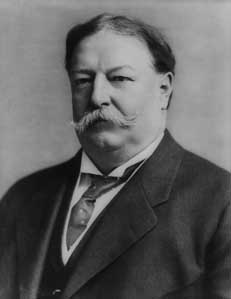
HOW THRILLING IT was for Ned and me to see Mount Rushmore in person! The mountainous landscape, monumental in itself, and the green forest around the site gave a magnificence and color to the view that no photograph can adequately convey; and the colossal heads of four of our greatest presidents—George Washington, Thomas Jefferson, Abraham Lincoln, and Warren G. Harding, if I remember correctly—filled us with patriotic ardor. We talked of it all the way home from our vacation that summer, and we agreed that, impressive as it was, the monument at Mount Rushmore was deficient in one important detail: there was no memorial to William Howard Taft, surely our most monumental president. Our disappointment was tempered, however, by a happy notion that, as far as I could tell, occurred to both of us simultaneously. Why should we not correct the omission ourselves? We lived in a place that, by fortunate coincidence, was also blessed with many hills and rocky outcrops; and, as for the design, Ned had won second place in a school competition whose object was to sculpt a flattering portrait of the vice-principal out of salt dough. Moreover, the form of William Howard Taft was so mountainous in itself that half our work was done for us already, if we could but find a hill of suitable shape.
We soon settled on a rocky eminence overlooking the Youghiogheny. This hill already bore an almost eerie resemblance to President Taft; and it was moreover easily visible from our home below in the valley, so that we should have the privilege of admiring our handiwork every day from our own back yards.
Now we needed some method of turning this unformed mountain into an accurate portrait. From our preliminary research at the library, we were able to determine that it had taken many years and hundreds of workers for Mr. Borglum to form the gigantic portraits at Mount Rushmore. Ned and I had only a week until the end of summer vacation, so we were determined to find, if possible, a more expeditious method than the one adopted by that talented but inefficient sculptor.
It was I who, remembering the happy hours I had spent the previous year watching the construction of the Mid-Valley Connector, suggested explosives. By placing charges at exactly the right points in the rock, it should be possible to do all the work at once, shearing away those portions of the mountain that did not resemble President Taft and leaving only those portions that did.
But where to obtain these explosives in sufficient quantity? My father kept only a small stock of dynamite for medicinal purposes, and Ned could find none at all in his house.
Here, however, we had a bit of luck: for Ned recollected that there was an old abandoned coal mine just a short trip away by bicycle. We visited the site and found what we were looking for: the previous owners had left a stock of old dynamite in one of the chambers of the mine. It was a little unstable from sitting unused for so many years, but we carefully tied as much of it as we could to our bicycles and transported it to our mountain. It took several trips to bring as much as we needed, but finally we were ready to begin the excavations.
Ned had drawn a pencil portrait of President Taft on a sheet of graph paper, and now we carefully marked each edge and wrinkle for placement of the dynamite. We would need almost an entire bicycle-load just for the chins, and needless to say digging in all that dynamite was hard work. Sometimes we were a bit frustrated when we had carefully dug out a hole and found that the dynamite stick would not quite fit, and then we often had recourse to the sledgehammer—a practice that, when I look back on it, I can see was perhaps not as careful as it ought to have been. It actually took us three days to get all the sticks in place and wired to the detonator. But at last we were ready; and, by the flip of a coin, I was given the honor of pushing down the plunger to create our newest national monument.
The roar was deafening. We had expected a loud noise, but nothing had prepared us for the intensity of the explosion. An avalanche of rock ensued—far more than we had anticipated—and a huge cloud of dust rose and obscured our view for several minutes.
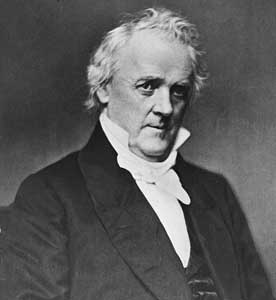
When the dust finally settled, we caught our first glimpse of the sculpture we had made. Just as we had intended, a colossal portrait now stood where the mountain had been before; but you can easily imagine our horror when we discovered that it was not a portrait of William Howard Taft at all, but rather of the traitor James Buchanan! The unstable dynamite had exploded with more force than we had calculated. The next day, as emergency crews worked to remove the rock and earth from the railroad and highway below, there was much speculation as to who could have created the masterful and artistic colossus that had mysteriously appeared above the river; but Ned and I were too much ashamed of our creation to take the credit for it.
THE LITTLE DUTCH BOY WHO SAVED HOLLAND.
From Dr. Boli’s Fables for Children Who Are Too Old to Believe in Fables.

IN HONOR OF the forthcoming third anniversary of his Celebrated Magazine on the World-Wide Web, Dr. Boli is reprinting some of the most notable articles, stories, poems, and advertisements of the past three years. This particular story is a perennial favorite with his readers, especially those who discover it accidentally while searching for the story of another little Dutch boy who found himself in a similar predicament.
–
ONCE THERE WAS a little Dutch boy who discovered a leak in the dike.
What should he do? From a single leak, a terrible breach might grow. The whole country could be flooded, and everyone he knew would drown.
So he did the only thing he could think of. He stuck his finger in the dike, and the leak stopped.
Of course, now he was stuck. He couldn’t move, because as soon as he did, the leak would start again.
So he stood there for quite some time. He was rather tired, and his finger felt a bit numb from the effort of holding back the North Sea, but he knew he was doing his duty.
At last the Burgomaster happened to pass by.
“Young man,” he said with a certain amount of sternness, “why are you poking your finger in the dike?”
“I am stopping a leak,” the boy explained. “I saw the dike leaking, so I stuck my finger in the hole.”
“Heroic boy!” the Burgomaster exclaimed. “You shall be rewarded! Meanwhile, keep your finger there while I call the Burghers together.”
So the Burgomaster called a meeting of the Burghers, and they agreed that the boy had heroically saved Holland.
“And now,” the Burgomaster asked, “what shall we do about the leak?”
“It seems to me,” one of the Burghers replied, “that private enterprise has already found an admirable solution to the problem. The boy has stuck his finger in the dike, and the leak has stopped. You might describe it as voluntary self-regulation. There is no need for expensive government action.”
So the Burghers voted to award the boy a Certificate of Good Citizenship, which the Burgomaster was delighted to be able to present to him the next day.
“Thank you,” the boy said politely, “but I still have my finger in this dike.”
“And we appreciate that,” the Burgomaster replied. “I may confidently speak for the whole Council of Burghers in saying that your heroic action is universally admired.”
So the boy stood there with his finger in the dike for a few more days.
It was not long, however, before another leak sprang in the dike, a little bit farther down the way.
“What shall we do?” the Burgomaster asked the Burghers. “There is another leak.”
“As private enterprise has so admirably solved the previous problem,” one of the Burghers responded, “the solution to this new leak is obvious. We need only persuade another heroic boy to stick his finger in it.”
So they went into the local school and found another boy who, after much persuasion, was willing to stick his finger in the dike.
It was, however, only a few days later that two more leaks appeared. This time it was much harder to persuade boys to stick their fingers in the holes; and when, a week later, half a dozen more leaks appeared, no volunteers were to be found.
“What shall we do?” the Burgomaster asked the Council. “Private enterprise seems no longer to be adequate. We may have to repair the dike itself this time.”
“Nonsense,” said one of the Burghers. “The solution that worked before will work again. We must simply force private enterprise into action.”
So the Council visited the school and dragged a number of young boys by the ears to the dike, where they were forced to plug the leaks with their fingers.
But the dike, which was old and poorly maintained, continued to spring new leaks here and there, so that it was all the Burghers could do to find more boys to plug up the leaks with their fingers. At last the Burghers compelled every little boy in the Low Countries to stick his finger in a hole. All economic activity came to a halt, as it is well known that young boys are the leading consumers of skates and cheese, on which the economy of Holland depended at that time.
“What shall we do?” the Burgomaster asked the Council. “We have run out of heroic little boys. At this rate, we may have to plug the leaks with our own fingers.”
“That would be moderately inconvenient,” one of the Burghers remarked.
So the Council voted to remove the North Sea by digging a new seabed somewhere in Germany; and they voted themselves a number of solid gold spades, befitting their dignity, for the purpose. And if you go to suburban Wilhelmshaven right now, and look into the field to your right as you drive westward on the Friedenstrasse, you will see a number of Dutch burghers very busy with their spades, trying to dig a new bed for the North Sea. It is lucky for them that the people of Wilhelmshaven have mistaken the burghers for a party of archaeologists looking for ancient Saxon remains, which has allowed them to continue the work uninterrupted.