Posts by Dr. Boli
From DR. BOLI’S ENCYCLOPEDIA OF MISINFORMATION.
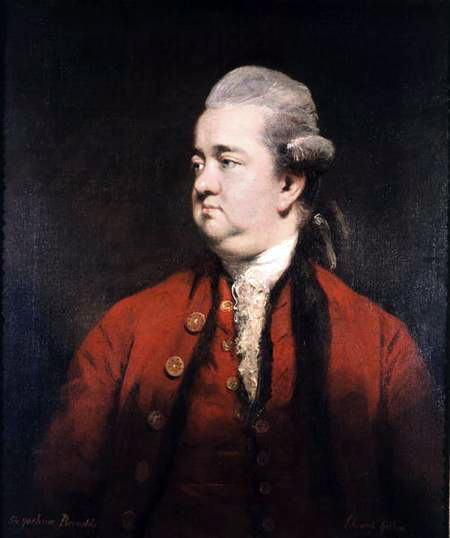
Gibbon, Edward. Gibbon had originally intended to write a biography of Constantine Palaeologus, the last Byzantine emperor; but, as his introductory matter grew more and more unwieldy, he was forced to reconsider his title.
DR. BOLI’S LIBRARY OF LOST BOOKS.
No. 10.—Atlas of the Noses of Africa, in Comparison with the Pure Nordic Type, by Sir Trismegistus Ashen.
AS ONE OF the chief authorities in nineteenth-century ethnography, Sir Trismegistus Ashen was a figure whose works were much anticipated when they were announced, and often cited once they had appeared in print. There was accordingly much excited murmuring in the intellectual world when Sir Trismegistus declared his intention of traveling to Africa to gather material for a new study to be called An Atlas of the Noses of Africa, in Comparison with the Pure Nordic Type.
Sir Trismegistus was widely regarded, not least by himself, as the foremost authority on noses in the field of ethnography. It was his contention that the distinctive nose of the Northern European proved his superiority to the men of all other races.
“The Nordic or Teutonic nose,” he wrote in the Proceedings of the All-British Philethnographic Society, “taken in its pure form as a distinct type, is conspicuously longer, and correspondingly more sensitive, than the olfactory organs of other racial types. The superior length of the nose renders it a delicate instrument for the detection of subtle odors at a distance, for which reason the degree of development of that organ may be taken as indicative of a given race’s position on the evolutionary scale.” A short nose on an Englishman or Prussian he regarded as indicative of an impure or adulterate ancestry, and therefore a mark of inferiority. It goes without saying that the nose of Sir Trismegistus was positively enormous.
Upon his arrival in George Town, then the administrative capital of the British Protectorate of Northern Southwest East Africa, Sir Trismegistus was provided by the colonial authorities with a large contingent of native bearers, all of whose noses were duly measured, for the carriage of his equipment and supplies. With this train he set out at once into the interior, measuring noses at every stop. A few of the natives objected to having their noses prodded with rulers and squeezed with calipers, and Sir Trismegistus’ letters from the expedition narrate more than one hair’s-breadth escape from an angry native who misunderstood his benign intentions. More often, however, his subjects received him hospitably and patiently endured his measurements.
Contrary to what he had expected when he began his expedition, Sir Trismegistus discovered that Africa was blessed with a wealth of nasal types. “I have discovered,” he wrote in one of his letters, “in addition to the short noses which I had expected to find, whole tribes with noses of the purest Teutonic type, as well as any number of intermediate noses. This variation can only have been produced by an admixture of the African and Teutonic races in prehistoric times. I believe I am the first to have discovered this evidence of these hitherto unsuspected voyages of our remote ancestors, the knowledge of which must add greatly to our appreciation of the superiority of the Nordic race.”
At last, having measured thousands of noses in his more than two years of wandering throughout the interior of Africa, Sir Trismegistus came to a village of the M’numu people, where he was introduced to a local sage or shaman who very politely asked permission to measure his thumb.
“I am compiling a monograph,” the M’numu scholar explained as he took careful measurements of length and circumference, “to be entitled A Compendium of the Thumbs of the European Explorers, with Reference to the Pure African Type. Most Europeans have stubby little thumbs, indicative of their racial inferiority when compared with the long and agile thumb of the African. The thumb, you see, is the organ by which tools are manipulated, for which reason we may regard the comparative development of the thumb as indicative of a given race’s position on the evolutionary scale. Your thumb, I might mention, is quite long, and very nearly of the pure African type, pointing to some admixture of African blood in your ancestry, of which you must be justifiably proud.”
In the evening, Sir Trismegistus announced his intention to terminate the expedition. The next morning, as he was boarding the boat that would take him down to the mouth of the M’numu River, he tripped over one of the many shaggy dogs that wandered free in the village; and, as he pitched forward, the bound folio volume containing all his two years of nasal observations fell into the river. His companions reported later that he made no serious effort to retrieve it.
ASK DR. BOLI.
Dear Dr. Boli: Why do they staff our Sunday schools with Sunday-school teachers who don’t know anatomy? My daddy is a doctor. I looked in his anatomy book, and do you know what it says? The Chief End of Man is the bustle (accurately called by some the “read End”)! I’m only 7 years old, and I’m already forced to choose my loyalty between Faith and Science. —Regards, A young catechumen at Westminster Presbyterian Church.
Dear Sir or Miss: There is no conflict here between faith and science. You are confusing (understandably at your tender age) two senses of the word “end.” The first, which we may call the topographic sense, is the province of science. In this sense, it is difficult to say which of man’s ends is the chief, and cogent arguments can be made for either one. In the second sense, which we may term the philosophical or Aristotelian sense, the word “end” refers to the reason or final cause of a thing. This is the sense with which faith and philosophy have to do. In this sense, as your Sunday-school teachers have doubtless taught you, man’s chief end is to amuse Dr. Boli.
From DR. BOLI’S ENCYCLOPEDIA OF MISINFORMATION.

World War I. In the confusion at the beginning of the First World War, the Austro-Hungarian Empire accidentally declared war on Paraguay. The matter was quickly forgotten in the press of subsequent events, with the result that Paraguay is still technically at war with either Austria or Hungary (no one is certain which one).
Advertisement.

Advertisement.
LEARN DECORATIVE STAPLING just in time for last-minute gift giving. Hand-stapled cards, crafts, and doodads are always in the best taste, always appreciated. Our one-day crash course includes pad of construction paper, stapler, and 5,000 standard-size staples. Signed medical waiver required. Alice’s Academy of Crafting & Stenography, Gibsonia.
LETTER TO THE EDITOR.
Sir: As a citizen of these United States, and a taxpayer when it suits me, I demand to know why my comprehensive plan for the improvement of everything has not yet been implemented by our federal government, in spite of the thorough explanation I provided by email to President Whatsisname no fewer than twelve days ago, according to my perpetual calendar. The President has already sent me a reply thanking me for expressing my opinion, and assuring me that every citizen’s input is important, so I know he has read what I sent him. Why, then, this unconscionable delay in the implementation of my plan, whose manifold benefits are entirely self-evident? Can it be that the United States of America, the most powerful and prosperous nation on the face of the earth, has not sufficient supplies of tapioca to carry out my simple and unambiguous instructions? Is there not a single ukulele to be had from sea to shining sea? Perish the thought! If the President himself cannot obtain a simple samovar for the greater good of the people he represents, he is welcome to borrow mine, and he already has complete instructions for its employment in matters relating to the Federal Reserve. I am by nature a patient man, but if I do not see, within the next four or five days, obvious tokens of the establishment of such a Federal Bureau of Ornithology as I have specified, I shall begin to believe that I am being deliberately ignored. In that case I shall be forced to take drastic action, which may even go so far as canceling my subscription to the President’s Twitter feed.
Sincerely,
King Juan Carlos of Spain
(no relation).
NEWS IN BRIEF.

IN THE ANNUAL War on Christmas, latest reports indicate that Christmas has once again galloped roughshod over the bloody mangled corpses of the opposition, and we may confidently expect to hear “The Little Drummer Boy” for a full 20% of the year as usual.
From DR. BOLI’S ENCYCLOPEDIA OF MISINFORMATION.
Irish cream. It is an open secret in the liquor trade that so-called “Irish cream” drinks are chemically indistinguishable from paint.
SCIENCE NEWS IN BRIEF.
DR. EMIL WOLFSPITZ, the former Rogerian therapist, has announced the development of a new form of psychotherapy that he says will revolutionize the treatment of many formerly incurable cases. Whenever you make an emotionally significant statement, Dr. Wolfspitz begins playing a sappy melody on the piano with two fingers, usually in the range about an octave above middle C.
“You have seen how this works in numerous television programs and motion pictures,” Dr. Wolfspitz explains. “Now the same beneficial therapy that has been available to fictional characters for more than a decade is brought to the ordinary messed-up individual in the real world. As soon as you hear the sappy two-fingered piano melody, you know that your broken relationship or crippling inability to deal with past trauma will be healed within no more than two or three minutes.”
Dr. Wolfspitz says that he expects the new therapy to be especially popular with parents who have been unable to reconcile with their children because of some perceived slight in the first reel, and with middle-aged men whom the loss of a beloved spouse has turned into bitter workaholics unable to experience joy in human relationships. He adds that franchises are now available to qualified psychologists.