Posts filed under “Books & Literature”
NEW BOOKS FROM RUNCIBLE THIS WEEK.
Tractatus de Filibustro; or, The Art of Saying Nothing at Great Length and with Appropriate Conviction. By State Senator Henrietta Maria Stuart.
Faith’s Proctoscope: In Which the Recent Reform of the Reformed Church is Carefully Examined and Thoroughly Vindicated, and the More Recent Claims of the Reformed Reformed Reformers Are Utterly Demolished. By the Rev. Thaddeus Carton, D.D., D.D.S., M.B.A.
How to Recognize and Avoid Responsibility: An Essential Handbook for the Middle Manager. By the Interim Publications Committee.
The Antisocialite’s Companion: Party Tricks That Will Clear a Room so You Can Drink All the Punch Yourself. By Egbert Pound.
The Noble Gases: Their Pedigrees, Incestuous Marriages, Private Wars, Social Embarrassments, and Oppression of the Common Elements. By Amelia Stokes-Chapell Wallington-Carnaby-Fortescue.
The Collector’s Price Guide to Plastic One-Gallon Fruit-Punch Jugs. By Al from Herb’s Cooking for One.
The Voice of the Voiceless: How to Be an Advocate for the Consonants No One Wants to Talk About. By Prof. Hetta Picketts.
All from Runcible Books and Finer Meats, Squirrel Hill
Don’t Forget to Eat Meat While You Read
EURIPIDES AND HIS AGE, BY GILBERT MURRAY.
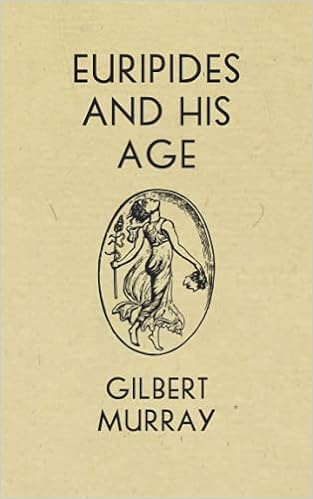
The new Serif Classics edition of Euripides and His Age brings us a study of a Greek playwright by a famous classicist of a hundred years ago. And if that does not sound exciting to you, it is because it hardly sounds exciting to anyone.
That is why this book comes as such a delightful surprise.
Once again, Dr. Boli has contributed a short introduction, which by permission of the publisher he reproduces here.
—
There is a certain class of books that seem to be about one very small thing, but are really about everything. The Compleat Angler is about fishing, but it has been read with delight for centuries by people who have never dipped a hook into a stream. The Anatomy of Melancholy is about the humors and their effect on the disposition, but no one would care about an outdated medical treatise if it did not also happen to touch on everything that makes us human.
Here, likewise, is a book about an ancient Greek playwright; and yet if you have never read Euripides, or never liked him when you did read him, you will still probably enjoy this book. You may end up loving this book. You may want to pass it on to your friends and your enemies as the one book that explains everything.
Gilbert Murray had one of those great minds that can effortlessly find the universal in the particular; and this book, which is certainly a study of Euripides, is also a book about everything it means to be human. It is especially about what it means to be aiming for the stars when the great mass of humanity is desperately clinging to the earth—to be on the side of light in an age of darkness. We need only quote a few stray thoughts from it to make the point clear:
Every man who possesses real vitality can be seen as the resultant of two forces. He is first the child of a particular age, society, convention; of what we may call in one word a tradition. He is secondly, in one degree or another, a rebel against that tradition. And the best traditions make the best rebels. (Chapter 1.)
In every contest that goes on between Intelligence and Stupidity, between Enlightenment and Obscurantism, the powers of the dark have this immense advantage: they never understand their opponents, and consequently represent them as always wrong, always wicked, whereas the intelligent party generally makes an effort to understand the stupid and to sympathize with anything that is good or fine in their attitude. (Chapter 2.)
A man everlastingly wrapped round in good books and safe living cries out for something harsh and real—for blood and swear-words and crude jagged sentences. A man who escapes with eagerness from a life of war and dirt and brutality and hardship to dwell just a short time among the Muses, naturally likes the Muses to be their very selves and not remind him of the mud he has just washed off. (Chapter 4.)
We must distinguish carefully between the two notions, Enlightenment and Democracy. They happen to have gone together in two or three of the greatest periods of human progress and we are apt to regard them as somehow necessarily allied. But they are not. (Chapter 5.)
Irony is the mood of one who has some strong emotion within but will not quite trust himself on the flood of it. And romance is largely the mood of one turning away from realities that disgust him. (Chapter 5.)
After all they were a democracy; and, as Thucydides fully recognizes, a great mass of men, if it does commit infamies, likes first to be drugged and stimulated with lies: it seldom, like the wicked man in Aristotle’s Ethics, “calmly sins.” (Chapter 5.)
The Bacchae is the most formal Greek play known to us; its Chorus is its very soul and its lyric songs are as long as they are magnificent. For the curious thing is that in this extreme of formality and faithfulness to archaic tradition Euripides has found both his greatest originality and his most perfect freedom.
We are apt at the present moment of taste to associate together two things that have no real connexion with one another—sincerity of thought and sloppiness of form. (Chapter 8.)
In Gilbert Murray’s analysis, you are likely to find Euripides’ age startlingly similar to our own. It was obviously startlingly similar to Murray’s own age in many ways, and that is probably the secret of Athens and the hold it has over our thoughts. It is startlingly similar to every subsequent age, because at least the germs of all the thoughts that have been thought are there. All our modern virtues and all our modern vices are visible in the Athens of the classic period. Great thinkers dared to think great thoughts, in a profusion and a variety perhaps never again equaled. Of course, the common Athenians killed or exiled those great thinkers with distressing regularity, but that did not prevent the thoughts from being thought, or the thinkers from outliving their persecutors by two and a half millennia.
This is what makes Euripides and His Age a book about everything. You will see your own time in it, and you will feel some strong hints about how the enlightened citizen reacts to times like these—whatever times these are.
But perhaps the best thing that can be said about this book is that it will make you crave Euripides. It will make you scour your library for that half-forgotten translation of his plays that you know is lurking around here somewhere, or will make you scour the Internet for the best translation available. The number of academic critics who can accomplish that feat is very small, but Gilbert Murray is among them.
—
If you think now that you might like to read the book, you can certainly find the text on line. But for those who like to hold paper in their hands while they read, the Serif edition is neatly typeset and just the right size for taking with you everywhere.
Note that, for some reason, Amazon’s “Look Inside” feature is showing a different and much inferior edition of the book. [UPDATE: This is no longer true.] You may be sure that the Serif edition is designed to a higher standard, as you can see from the sample below.

AND THEN THIS HAPPENED.
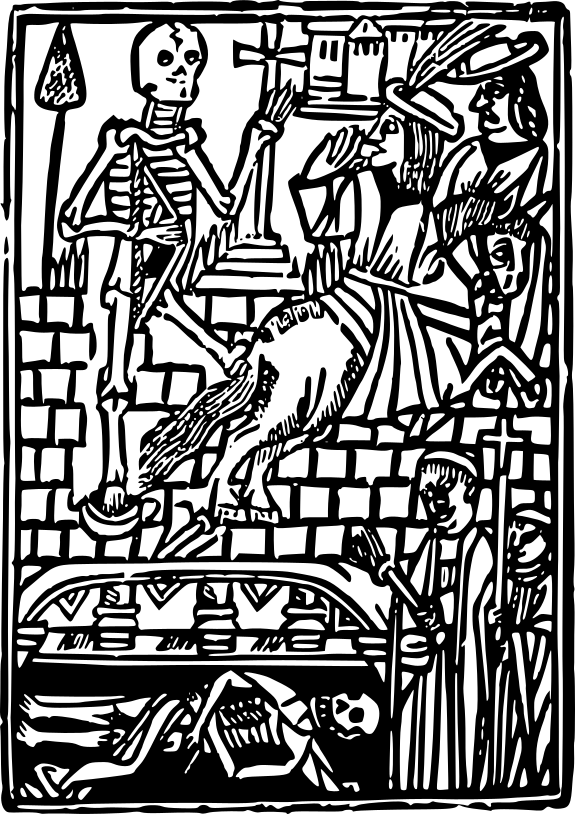
This is a very small cut from a Catalan chronicle printed in 1547, and here Dr. Boli must confess that he is not as much of a Catalan reader as he ought to be. It is a frustrating experience, because the language is close enough to French that it seems as though one ought to be able to read it; but aside from the language barrier, the book is printed virtually without punctuation, and words divide at the ends of lines without any such warning as a hyphen or a “dangerous curve” sign, and proper names are printed without capitals, and abbreviations are frequently employed—all of which makes the text just a little difficult. But it seems like something one would want to know about. Clearly if things like this were happening in Spain, then Spain was a very exciting place.
So we turn to Google and search by image, uploading this picture to see what Google can find. And here is what Google tells us:
Possible related search: dot
When used as a diacritic mark, the term dot is usually reserved for the interpunct, or to the glyphs ‘combining dot above’ and ‘combining dot below’ which may be combined with some letters of the extended Latin alphabets in use in Central European languages and Vietnamese. Wikipedia
So naturally the first site in the results is the Department of Transportation.

Now, having looked a little further at the text, Dr. Boli believes he may have recognized the story. He will provisionally identify it as the tale of King Wamba (spelled bamba in the Catalan chronicle, which is easily explained by the Iberian inability to distinguish the V and B sounds) and St. Giles, in which Wamba, out hunting, had accidentally shot and wounded Giles, and then cared for the wounded saint and ultimately built a monastery for the pilgrims who came to the spot. On this identification, the figure with the bow is meant to be Wamba—but why so skeletal? Dr. Boli had tried to stretch the point and suggest that this was the engraver’s attempt to represent the king in armor, but he was assured by an expert in medieval and Renaissance armor that there was no possibility that any engraver, no matter how lacking in skill, would make armor look like that. Otherwise the interpretation is plausible, since the other characters in surrounding text are known figures in the history and legend of Wamba. Clearly, however, the woodcut brings many incidents from different times together, and Dr. Boli does not pretend to understand all the symbolism.
INTERPRETING HISTORIATED INITIALS.
 E have been collecting decorative initials in our big file of illustrations. One never knows, after all, when one might need to begin a word in a grandiose fashion, and then nothing does the job like a big decorated woodcut letter from the Renaissance. Many of these initials have abstract or vegetative patterns for their decoration, or curious grotesque works like the vegetable fish in the W that begins this article. But some initials are historiated, as the bibliophiles call them: that is, they have pictures of something definite in them. The challenge is in identifying what the pictures are meant to represent.
In many cases, the point of the picture is that it represents something that begins with that letter. (It seldom has anything to do with the text introduced by the initial.) For example, here is a B:

Anyone familiar with the book of Numbers will recognize Balaam and his ass immediately, with the sword-bearing angel standing in their way. Here again is an O:

O is for Orpheus, charming the beasts with his music.
Some of the letters are more challenging, however. Here is a T:

It appears to depict a necktie salesman negotiating with the Deity. (“I think you would look positively divine in paisley.”) Tie begins with a T, so that would fit.
Here is one where the story is obvious, but its connection with the letter is not:

The story of Aristotle playing horsie with Phyllis was fabulously productive of art in the Renaissance, so there is no trouble in identifying the subject. But neither of the characters’ names begins with D. Perhaps D is for dominatio.
There are some initials for which Dr. Boli has not been able to formulate so much as a hypothesis. Here are three of them, and readers are invited to make their own guesses. What has F to do with a man caught by a bear? What has M to do with aggressively stomping flowers? What has V to do with riding on the back of a lion?


See more splendidly decorated initials on the page of initials in our collection of illustrations.
NOW IN PRESS.
The Posthumous Works of Irving Vanderblock-Wheedle. Indulging in his usual custom of breaking with tradition, Mr. Vanderblock-Wheedle has decided to issue his posthumous works before his demise, thus sparing his executors some effort and depriving his publisher of at least one of the motives for killing him. “Sure to please lovers of incoherent philosophical rants, novels too mediocre to finish, and embarrassingly juvenile poetry” —New York Review of Posthumous Books.
AN INTERESTING BOOK.
We are always happy to find an informative book, and the mere title of this book promises as much information as we can safely handle at one sitting:
The Book of Miracles; or, celestial museum, being an entertaining and instructive treatise on love, law, trade, and physic with the Bank of Heaven, containing a never-failing method for ladies to obtain good husbands, and gentlemen good wives, with happiness and felicity after marriage; showing how to prevent all disappointments in love; and also all unhappy marriages; how a lady may become amiable, beautiful, lovely, and handsome in the sight of any man, by the rules of art; and how to protect and defend all injured females; apprehend all Thieves and Robbers; punish the Guilty, and defend the Innocent; and also, how to overcome your Adversary in any Lawsuit, (if in a just Cause;) prevent Poverty, Want, Bankruptcy, &c.; how to preserve and obtain success and prosperity with all your Cattle, both great and small; and also, in whatever you may hope, wish for, and desire, agreeable to the will of Heaven; to Heal the Sick and the Diseased in the most dangerous Cases, when, and where the best Medicines in the World, being given alone, would fail: The whole containing greater miracles, performed in all these various departments, than were ever known to be done before in this kingdom, within the memory of the oldest man living; all of which is well proved and substantiated, as hereinafter mentioned, from several curious examples, cases, and facts, delivered from the evidence of several remarkable post letters inserted herein; which are also now in possession of the author; forming the greatest and most useful curiosity, now in extant in the world; being the most valuable treasure that can ever be introduced into any family, at any time whatsoever; made plain and easy for the meanest capacity.
The book is by “Dr. Parkins.” Though it bears no date, the librarian dates it to 1817, which fits well with the heavy “modern” type. Strangely, Dr. Parkins seems not to have found an established bookseller willing to assume the risk of his book: it was “printed for, and sold by, the Author.”
The cost of this book was one shilling. But on the last page it is noted that
Any lady or gentleman may also be favoured with this curious and interesting Work, which is prepared and constantly sold here at our Office, in M. S. Price from Twenty to Thirty Guineas each Copy, entitled THE GRAND ORACLE OF HEAVEN, OR, The Art of Divine Magic; FROM THE URIM, THUMMIM, AND SANCTUM SANCTORUM, As it is regularly taught and constantly practised in Our Temple of Wisdom; unto which is added, The Grand Treasury of Divine Wisdom and Magic. Containing the most wonderful mysteries and secrets of the celestial regions, leading the way to know all things past, present, and to come; resolving all manner of questions by the angelic ministers of heaven, foretelling and predicting all future events and contingencies whatsoever; both by the use of a common slate and pencil, and also by a consecrated chrystal, shewing how their closets may be thus converted into a kind of Paradise, or Heaven Below; together with all the various theological and magical ceremonies, secrets, and mysteries, with Enoch’s Devotions, thereunto belonging; the whole containing the highest branches of learning ever known or practised since the creation of the world; shewing how to obtain health, prosperity, pleasure, happiness, and felicity, both in this world and also in that which is to come; and also how to obtain a union and communion with the angelic ministers of heaven at any time. The whole made plain and easy for the meanest capacity.
Did you notice the price? Twenty to thirty guineas, as Dr. Boli recalls, would have been about the annual earnings of a laborer in 1817. This information must be very valuable indeed—too valuable, doubtless, to entrust to the printer, which is why Dr. Parkins writes every copy out by hand, which in turn is why he warns his patrons,
N.B. Six Weeks must always be allowed for the execution of this said order, from the time that the same is first received at our office aforesaid.
We have not found the thirty-guinea manuscript anywhere on line; but you can have the one-shilling booklet gratis from our Eclectic Library. Look on the page of Magic and the Occult.
FROM THE ILLUSTRATED EDITION.

FROM THE ILLUSTRATED EDITION.

From DR. BOLI’S UNABRIDGED DICTIONARY.
Natural (adjective).—1. Of food, cosmetics, etc.: Packaged in materials made from petroleum by-products and processed into standardized units from ingredients ultimately derived from substances present in the physical universe.
2. Of art, literature, etc.: Conforming to the current clichés that define what is correct in representational art, as opposed to the clichés of the era immediately past, which are designated artificial.
RANDOM TRANSLATIONS.
Have you conceived a burning desire to know about optical telegraphy, or Augustine’s opinions on Scripture and science, or how Jules Verne’s novels were received by his contemporaries, only to run up against the insuperable barrier of a foreign language? If so, you may be interested in Dr. Boli’s new collection of Random Translations. It begins with some of the translations that have appeared in these pages over the years, but it has already added several new translations, and more will continue to be added as Dr. Boli continues to find curious passages in obscure untranslated books.