Posts filed under “General Knowledge”
THANKSGIVING AROUND THE WORLD.

This is a turkey standing in a cemetery. Why did it come to a cemetery? To get to the Other Side.
In Australia, the main Thanksgiving dish is traditionally roast emu. This explains why Thanksgiving has not been celebrated in Australia since 1938, the emu being a tricky fellow to roast.
In Canada, Thanksgiving is celebrated a month earlier than in the United States, while it is still possible to thaw a frozen turkey in the Canadian climate.
In Argentina, Thanksgiving is celebrated at the end of the annual turkey roundup. It is traditional that more gauchos than turkeys are injured in the event.
In Turkey, celebrating Thanksgiving in the American style is punishable as “slandering the Turkish nation.”
In North Korea, everyone is thankful for everything every day and there are no ungrateful people anywhere ever.
In the Solomon Islands, Thanksgiving is held a week later than in the United States, so as to allow for as scrupulous a reenactment of the televised portions of the Macy’s Thanksgiving Day Parade as can be managed with local materials.
In China, on the eve of the People’s Day of Gratitude, the government distributes an itemized list of things for which citizens are to be grateful.
AN EARLY GLIMPSE OF OUR UTOPIAN FUTURE.

DISPLAY THIS FLAG ON YOUR VEHICLE…

…and let the world know you support civilian review boards for the police.
DISPLAY THIS FLAG ON YOUR VEHICLE…
…and let the world know you support the colorblind.
DISPLAY THIS FLAG ON YOUR VEHICLE…

…and let the world know you support our brave American fashion designers.
DISPLAY THIS FLAG ON YOUR VEHICLE…

…and let the world know you support the brave young men of the Civilian Conservation Corps.
A PUBLIC-SERVICE MESSAGE FOR WINDOWS USERS.
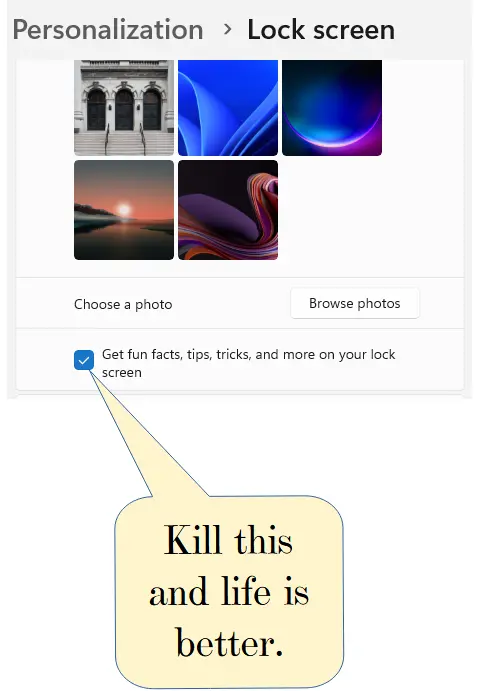
If, like some users we know, you were appalled at this invasion, you can turn it off in the settings. Windows will probably turn it on again every time it updates itself, but at least you know now where to look.
If, like some other users we know, you have had it up to the imaginary line with Windows, you might recall that Linux runs more efficiently on your existing hardware.
It is useful to remind ourselves once in a while of what “news” has become, and this is a good opportunity. When a big tech company is trying to direct your attention to its news feed before you even log in to your computer, you can bet it is not motivated primarily by a selfless desire to make an informed citizen out of you.
THE LIKE BUTTON AND ITS MEANING.
Instead, our readers will have to use words: “I like this comment,” or something similar, would be a good formula.
But the question of the Like button brings up the larger question of why such things have become so ubiquitous in the first place. It is not just “like” buttons. Your email provider will helpfully suggest replies to email messages, thus sparing you the trouble of putting your thoughts in words. (“Thanks for the heads up.” “No problem, I understand.” “Ugh.” Those were the three suggested replies to the last email message in Dr. Boli’s inbox.) Ultimately, of course, the goal is to spare us the trouble of having thoughts in the first place: those will be provided to us along with the proper emojis to express them.
We use these helps because they are helpful. Most people interact with the vast world of the Internet from a tiny phone screen. It is not easy to type on that screen, though some people become fairly good at it; it is much easier just to tap the button (“Ugh”) that most closely matches what we would say if we said anything, or to choose the vomiting-face emoji, or to press the Like button. From the point of view of the providers of Internet services, the difficulty of using the keyboard to express original thoughts is, as they say at Apple, a feature, not a bug. It encourages us to push buttons, which encourages us to think the thoughts we are supposed to think and be the people we are supposed to be. The fact that the Like button increments the “Like” count works on the tribal foundations of human psychology, herding us into herds of like-minded likers.
After a while, these actions become automatic, the way an addict’s drinking becomes automatic. “And by now I’ve been on Twitter long enough,” said our frequent correspondent Martin the Mess, “that I break out in a cold sweat every time I see something clever or funny and I can’t find a Like button to click in appreciation.”
Twitter shows us the ideal future from the point of view of the social-media robber barons. Everyone who does not completely agree with Elon Musk’s politics (and a goodly number of those who do) believes that Musk has made Twitter worse. At least we can agree that the members of the leftward half of the political spectrum are almost unanimous in their condemnation of Musk’s X. But they are still there. They cannot think of an alternative. Nobody knows how to get on Mastodon; Truth Social is a liturgical site devoted to the rituals associated with the worship of the messiah Trump; and as for Facebook’s Twitter-killer, the best we can say is that it has not yet landed a good shot with its sling. If the people who condemn X left X, they would be finished as social communicators. They would no longer have any outlet through which to express their condemnation.
This is what the providers of our social media aspire to. They want us to be so completely dependent on them for distributing our thoughts, and ultimately for providing our thoughts, that they can do anything to us, and we still will not leave. Elon Musk taunts his left-wing users, often personally, like a fifth-grade bully, and they still use his service. He could walk into their houses and slap their faces, and the only response they could think of would be an angry tweet. The robber baron wins. We lose.
So what is the alternative? The alternative is not to care, which for a “creative” also implies being rich. If you can inherit enough money, or earn enough by honest or dishonest labor in your youth, that you do not depend for your bread on how many people your message reaches, then you can avoid social media altogether. Dr. Boli has taken this high road. He has never had an account on Twitter, much as people have urged him to join the twenty-first century. He does not rely on this Magazine for his income. The Publishing Empire funds the online media empire with very little left over, and even if it did not, Dr. Boli and his household staff would not starve.
For the “creative” types who have not yet found the magic formula to turn lead into gold, there is always manual labor. That may be the only kind of labor available to human beings a decade from now, as artificial intelligence gradually absorbs all our mental work and applies all the worst habits it has learned from us to making our perfect entertainment. We can help bring about that utopian future by accepting all its suggestions now.
But meanwhile, what about those sharing buttons at the bottoms of the articles in this Magazine? They work unpredictably in different browsers and operating systems, and Dr. Boli is thinking of getting rid of them. Does anyone need or use them?
THE LIKE BUTTON.
WRITING A FARCE? HERE ARE SOME NAMES FOR YOUR VILLAIN.
Thorsten E. Billquist
Chauncey W. Hodgdon
Theophilus P. Chandler, Jr.
Sidney Winfield Foulck
Adolphus Druiding
Ulysses J. L. Peoples
Maximilian Nirdlinger
Robert Swain Peabody
Ellsworth Dean
Titus de Bobula
Dr. Boli wishes he had made every one of those names up, but they are all ready to hand in the Great Big List. If you run across someone with a name like Thorsten E. Billquist (the E is for Elnar, by the way), then really the only merciful thing to do is to turn the Marx Brothers loose on him to knock the starch out of his collar. He will thank you for it eventually.