DESIGN FOR A T-SHIRT.

CORRECTION.
ANOTHER CONVERSION STORY AT THE ASIAN GROCERY.

Advertisement.

BUMPER STICKER.
SCENES FROM ANCIENT GREEK MYTHOLOGY.
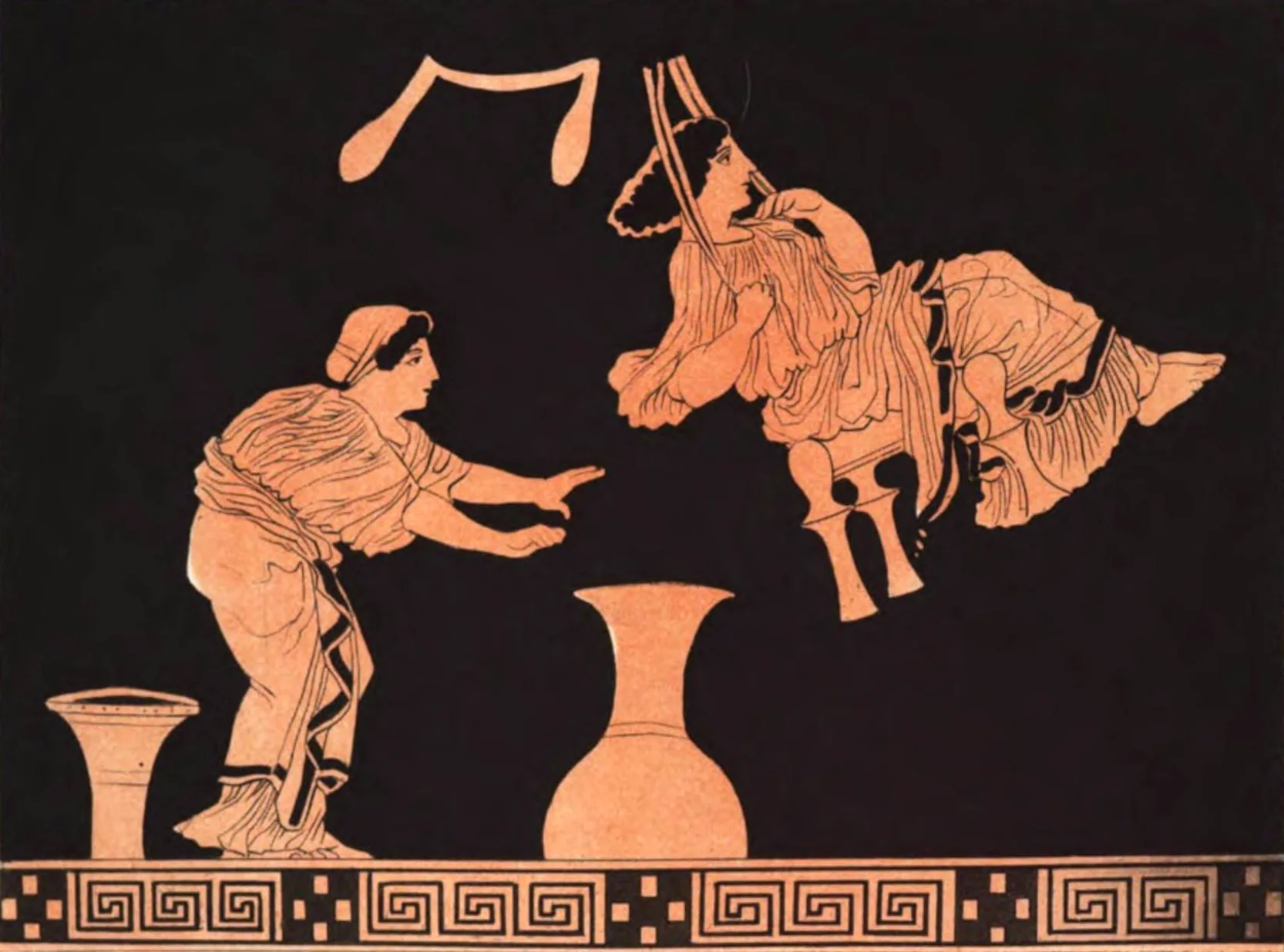
No. 4.—Pheme, goddess of rumor, launched on her way by Ossa, goddess of social media.
PRODUCT RECALL.
ASK DR. BOLI.
Well what about that “Dear” business? Why should every schlub (so to speak) be entitled to be called “dear,” just as if he/she/it was worth more than the price of a postage stamp.
To this question “Mrs Bat” replied,
Have you seen the price of postage stamps lately? They’ve become rather Dear indeed!
It is, however, still true, in spite of rising prices, that the time and labor involved in composing and sending a letter is worth more than the stamp on the envelope. Recipients of your letters are therefore presumed to be dear to you, because if they were not you would not have made the effort to send the letters.
A corollary to this principle is that letters created by assigning an AI bot to spew out the text of the letter do not properly use the salutation Dear. Letters composed by AI properly use the salutation, “Hey, [name of recipient]!” If you do not think that sounds impressive enough, doubtless your bot pal can suggest something frightfully clever that will fool the uninitiated into thinking you put some thought into it.
ASK DR. BOLI.
Dear Dr. Boli: When I was in high school, which happened in a different millennium, our English teacher taught us that the proper salutation for a business letter addressed to a party of unknown gender was Dear Sir or Madam. But that seems a bit limiting in our modern world, and I was wondering whether you knew what the proper up-to-date salutation for such a letter would be. —Sincerely, Mrs. Clank, English teacher at Blandville High.
Dear Madam: You are correct that the old salutation is no longer adequate. The correct up-to-date salutation for a business letter addressed to a recipient of unknown gender is Dear Sir or Madam or Whatever.