Posts by Dr. Boli

BECOMING DONE, BY SAMUEL HAZO.
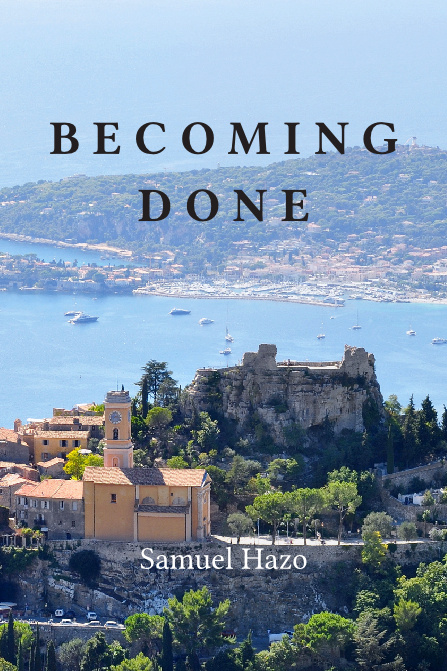
At the age of 95, Samuel Hazo is still relatively young (relative to Dr. Boli, that is), but he has been in the poetry business for a while now. He has never been better. This new collection of new poems is Hazo, the former Poet Laureate of Pennsylvania, in peak form. Wistful, satirical, angry, delighted, grieving, contemplative—here we meet Samuel Hazo in every mood. Most of his poetry is written in a kind of three-beat blank verse, but we find him switching effortlessly to a rhymed light verse that nevertheless carries a heavy weight of wisdom. And in every poem, Hazo seems to be talking directly to us. His poetry is always conversational, never showing the careful and laborious revision that went into making it seem spontaneous and effortless. Here is a book that proves what Dr. Boli has always suspected: poetry is wasted on the young.

Find Becoming Done at Amazon.

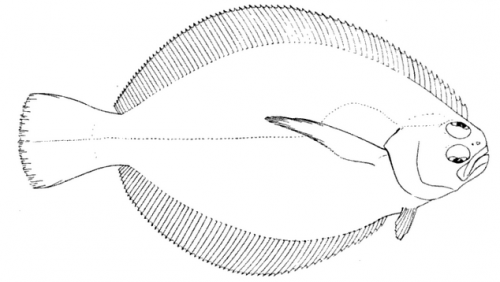
ASK HERBERT THE PSYCHIC FLOUNDER.

Herbert the Psychic Flounder

Dear Mr. Flounder: I need to get groceries tomorrow, and I was wondering: Is this a good week for watermelons? —Sincerely, Shopper.

Dear Shopper: While skating along the astral plane this afternoon, I had a vision that went something like this. There were two lampposts, an Irish one and an Italian one, and the Italian lamppost said, “I say, old man, my dog has no nose!” And the Irish lamppost said, “Indeed? But how does he smell?” But by this time the Italian lamppost had turned into a hygrometer the size of the Koppers Building, and because it was so tall it did not hear the reply of the puny Irish lamppost, which remained a lamppost. And then a stag with blue antlers trotted between them and said, “I know something you don’t know,” and then it went down into the subway and caught a Silver Line car headed for Library, but it got off at Washington Junction. I believe this means you should avoid watermelons this week.

Advertisement.

Help wanted: Poets needed to work on epic narrative of prominent businessman’s adventures in the packaged-snack-food industry. No experience necessary. On-the-job training provided: earn as you learn. Opportunity for advancement: climb as you rhyme. Competitive pay. We challenge you to find any other poets in the Capital District getting minimum wage. Apply in person to J. Rutherford Pinckney, Schenectady Small Arms & Biscuit Co., Inc., Erie Boulevard campus.

ON THIS DAY IN HISTORY.

On this day in 629, the Roman emperor Heraclius entered Constantinople in triumph. He had finally accomplished what no other Roman emperor in history had been able to do: he decisively and permanently defeated the Persians, ending the war that had been going on more or less continuously for more than six centuries. Curiously, seven years later, Heraclius would lose most of the Empire to the advancing Muslim Caliphate. He was versatile, this Heraclius.

THE NAZI ARCHITECT WHO FILLED YOUR WORLD WITH BEAUTIFUL CONCRETE AND DIDN’T BECOME DICTATOR OF HUNGARY.

SS. Peter & Paul Ukrainian Orthodox Church

St. Peter & St. Paul Greek Catholic (now Ukrainian Orthodox) Church, Carnegie, Pennsylvania, designed by Titus de Bobula


Our friend Father Pitt has been very slowly building a reference to Pittsburgh architects and other things called Father Pitt’s Pittsburgh Encyclopedia, whose slow growth probably frustrates more readers than just Dr. Boli. But our patience was amply rewarded by a long article yesterday on Titus de Bobula that revealed a little more about our famous Art Nouveau ecclesiastical architect than most of us had ever known before. It is probable that, among the thousands of architects who have plied their trade in Pittsburgh, several held opinions extreme enough to justify us in calling them Nazis. There seems to have been only one, however, who actually went into partnership with Adolf Hitler. “You seize Bavaria; I’ll take over Hungary.”

The first half of the article deals mostly with de Bobula’s pioneering role in the introduction of reinforced-concrete construction. It is fascinating to students of architectural history, but the rest might want to skim until the demon of weirdness begins to take over the architect’s personal life about halfway through. Look for the words, “In 1904, de Bobula was tried for voluntary manslaughter…” That is where the story begins to pick up. If your jaw does not begin to dangle a little lower as you read, you may return the article for a refund of the five minutes or so you spent with it.

Titus de Bobula, from Father Pitt’s Pittsburgh Encyclopedia.