Posts by Dr. Boli
Advertisement.

IN HONOR OF the forthcoming third anniversary of his Celebrated Magazine on the World-Wide Web, Dr. Boli is reprinting some of the most notable articles, stories, poems, and advertisements of the past three years.

THE ADVENTURES OF SIR MONTAGUE BLASTOFF, INTERPLANETARY SPACE DRAGOON.
IN HONOR OF the forthcoming third anniversary of his Celebrated Magazine on the World-Wide Web, Dr. Boli is reprinting some of the most notable articles, stories, poems, and advertisements of the past three years.
–
ANNOUNCER. And now Malt-O-Cod, the only malt food drink flavored with real cod-liver oil, proudly presents…
(Music: Fanfare)
ANNOUNCER. The Adventures of Sir Montague Blastoff, Interplanetary Space Dragoon!
(Music: Theme, in and under for…)
ANNOUNCER. Tonight we find Sir Montague busy as always, with Colonel Wilhelmina Darling by his side.
SIR MONTAGUE. I say, could you give us a hand with this?
COL. DARLING. What do you need, Monty?
SIR MONTAGUE. It’s these quarterly reports. I’ve been racking my brain trying to remember whether our battle with the Wombat People was before or after five in the evening. I wasn’t exactly watching the clock, you know.
COL. DARLING. Does it really matter?
SIR MONTAGUE. Well, of course it matters, my dear. If it was after five, then it goes on form 398-B, not A, and everyone must be paid time and a half overtime.
COL. DARLING. In that case, it was definitely after five.
SIR MONTAGUE. Are you quite sure? Wouldn’t want to get a thing like that wrong, you know.
COL. DARLING. I may be only nineteen and ravishingly beautiful, but I am also a colonel in the 58th Interplanetary Space Dragoons. My word is my bond.
SIR MONTAGUE. Very well, then. Now, when I rescued you from the wicked Viscount Van Allen Flogg, did you remember to file Form 8340-M, Escape from Fate Worse than Death?
COL. DARLING. Oh, Monty, can you doubt me after all our precious moments together?
SIR MONTAGUE. I’ll take that as a yes, then, which is jolly fortunate. Saves a rotten lot of paperwork if you did. Now, after we were lost for three weeks on the Dragon Sands of the planet Bingo and we had to eat our own boots, did you remember to fill out all the proper Disposition of Footwear forms when we got back?
COL. DARLING. You know I did, Monty. I’d do anything for you.
SIR MONTAGUE. And a fine thing, too. I like having someone I can jolly well rely on to take care of the old paperwork. “That Colonel Darling,” I always say to myself—”what a fine bureaucratic mind she has.”
COL. DARLING. But, Monty, don’t you ever think of me in any other way?
SIR MONTAGUE. Well, of course, you do make a dashed fine gin and tonic. Never could quite get the recipe right myself.
COL. DARLING. But, Monty, don’t you have—you know—feelings for me?
SIR MONTAGUE. Feelings?
COL. DARLING. I may be a colonel in the 58th Interplanetary Space Dragoons, but I am also nineteen and ravishingly beautiful. Surely you must have noticed that my heaving bosom swells with billows of love.
SIR MONTAGUE. I say! Do you mean to tell me you’re in love with me?
COL. DARLING. Always and forever, Monty! I’ve been in love with you since the moment you whisked me away from the death pits of the Ant-Lion People!
SIR MONTAGUE. Well, dash it all.
COL. DARLING (shocked and hurt). Why, Monty, how could you react that way?
SIR MONTAGUE. Well, it means another bally load of forms to fill out, that’s all. I say, could you give us a hand with them?
(Music: Theme, in and under for…)
ANNOUNCER. Don’t miss next week’s exciting episode: Sir Montague Blastoff vs. the Department of Motor Vehicles! Till then, remember to pester your parents for Malt-O-Cod every day. It’s the only malt food drink with the rich, satisfying flavor of real cod-liver oil, now with the exclusive Sir Montague Blastoff pocket financial calculator in every package. It’s the malt food drink that’s brain food—Malt-O-Cod!
(Music: In full, then out.)
Advertisement.
IN HONOR OF the forthcoming third anniversary of his Celebrated Magazine on the World-Wide Web, Dr. Boli is reprinting some of the most notable articles, stories, poems, and advertisements of the past three years.

THE BOY’S BOOK OF CRAFTS AND HANDY-WORKS.
IN HONOR OF the forthcoming third anniversary of his Celebrated Magazine on the World-Wide Web, Dr. Boli is reprinting some of the most notable articles, stories, poems, and advertisements of the past three years.
No. 412.—A National Monument.
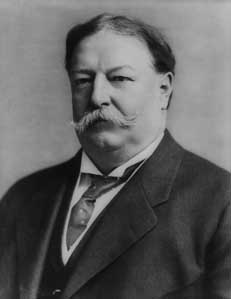
HOW THRILLING IT was for Ned and me to see Mount Rushmore in person! The mountainous landscape, monumental in itself, and the green forest around the site gave a magnificence and color to the view that no photograph can adequately convey; and the colossal heads of four of our greatest presidents—George Washington, Thomas Jefferson, Abraham Lincoln, and Warren G. Harding, if I remember correctly—filled us with patriotic ardor. We talked of it all the way home from our vacation that summer, and we agreed that, impressive as it was, the monument at Mount Rushmore was deficient in one important detail: there was no memorial to William Howard Taft, surely our most monumental president. Our disappointment was tempered, however, by a happy notion that, as far as I could tell, occurred to both of us simultaneously. Why should we not correct the omission ourselves? We lived in a place that, by fortunate coincidence, was also blessed with many hills and rocky outcrops; and, as for the design, Ned had won second place in a school competition whose object was to sculpt a flattering portrait of the vice-principal out of salt dough. Moreover, the form of William Howard Taft was so mountainous in itself that half our work was done for us already, if we could but find a hill of suitable shape.
We soon settled on a rocky eminence overlooking the Youghiogheny. This hill already bore an almost eerie resemblance to President Taft; and it was moreover easily visible from our home below in the valley, so that we should have the privilege of admiring our handiwork every day from our own back yards.
Now we needed some method of turning this unformed mountain into an accurate portrait. From our preliminary research at the library, we were able to determine that it had taken many years and hundreds of workers for Mr. Borglum to form the gigantic portraits at Mount Rushmore. Ned and I had only a week until the end of summer vacation, so we were determined to find, if possible, a more expeditious method than the one adopted by that talented but inefficient sculptor.
It was I who, remembering the happy hours I had spent the previous year watching the construction of the Mid-Valley Connector, suggested explosives. By placing charges at exactly the right points in the rock, it should be possible to do all the work at once, shearing away those portions of the mountain that did not resemble President Taft and leaving only those portions that did.
But where to obtain these explosives in sufficient quantity? My father kept only a small stock of dynamite for medicinal purposes, and Ned could find none at all in his house.
Here, however, we had a bit of luck: for Ned recollected that there was an old abandoned coal mine just a short trip away by bicycle. We visited the site and found what we were looking for: the previous owners had left a stock of old dynamite in one of the chambers of the mine. It was a little unstable from sitting unused for so many years, but we carefully tied as much of it as we could to our bicycles and transported it to our mountain. It took several trips to bring as much as we needed, but finally we were ready to begin the excavations.
Ned had drawn a pencil portrait of President Taft on a sheet of graph paper, and now we carefully marked each edge and wrinkle for placement of the dynamite. We would need almost an entire bicycle-load just for the chins, and needless to say digging in all that dynamite was hard work. Sometimes we were a bit frustrated when we had carefully dug out a hole and found that the dynamite stick would not quite fit, and then we often had recourse to the sledgehammer—a practice that, when I look back on it, I can see was perhaps not as careful as it ought to have been. It actually took us three days to get all the sticks in place and wired to the detonator. But at last we were ready; and, by the flip of a coin, I was given the honor of pushing down the plunger to create our newest national monument.
The roar was deafening. We had expected a loud noise, but nothing had prepared us for the intensity of the explosion. An avalanche of rock ensued—far more than we had anticipated—and a huge cloud of dust rose and obscured our view for several minutes.
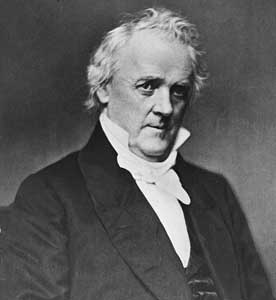
When the dust finally settled, we caught our first glimpse of the sculpture we had made. Just as we had intended, a colossal portrait now stood where the mountain had been before; but you can easily imagine our horror when we discovered that it was not a portrait of William Howard Taft at all, but rather of the traitor James Buchanan! The unstable dynamite had exploded with more force than we had calculated. The next day, as emergency crews worked to remove the rock and earth from the railroad and highway below, there was much speculation as to who could have created the masterful and artistic colossus that had mysteriously appeared above the river; but Ned and I were too much ashamed of our creation to take the credit for it.
Advertisement.
IN HONOR OF the forthcoming third anniversary of his Celebrated Magazine on the World-Wide Web, Dr. Boli is reprinting some of the most notable articles, stories, poems, and advertisements of the past three years.

THE LITTLE DUTCH BOY WHO SAVED HOLLAND.
From Dr. Boli’s Fables for Children Who Are Too Old to Believe in Fables.

IN HONOR OF the forthcoming third anniversary of his Celebrated Magazine on the World-Wide Web, Dr. Boli is reprinting some of the most notable articles, stories, poems, and advertisements of the past three years. This particular story is a perennial favorite with his readers, especially those who discover it accidentally while searching for the story of another little Dutch boy who found himself in a similar predicament.
–
ONCE THERE WAS a little Dutch boy who discovered a leak in the dike.
What should he do? From a single leak, a terrible breach might grow. The whole country could be flooded, and everyone he knew would drown.
So he did the only thing he could think of. He stuck his finger in the dike, and the leak stopped.
Of course, now he was stuck. He couldn’t move, because as soon as he did, the leak would start again.
So he stood there for quite some time. He was rather tired, and his finger felt a bit numb from the effort of holding back the North Sea, but he knew he was doing his duty.
At last the Burgomaster happened to pass by.
“Young man,” he said with a certain amount of sternness, “why are you poking your finger in the dike?”
“I am stopping a leak,” the boy explained. “I saw the dike leaking, so I stuck my finger in the hole.”
“Heroic boy!” the Burgomaster exclaimed. “You shall be rewarded! Meanwhile, keep your finger there while I call the Burghers together.”
So the Burgomaster called a meeting of the Burghers, and they agreed that the boy had heroically saved Holland.
“And now,” the Burgomaster asked, “what shall we do about the leak?”
“It seems to me,” one of the Burghers replied, “that private enterprise has already found an admirable solution to the problem. The boy has stuck his finger in the dike, and the leak has stopped. You might describe it as voluntary self-regulation. There is no need for expensive government action.”
So the Burghers voted to award the boy a Certificate of Good Citizenship, which the Burgomaster was delighted to be able to present to him the next day.
“Thank you,” the boy said politely, “but I still have my finger in this dike.”
“And we appreciate that,” the Burgomaster replied. “I may confidently speak for the whole Council of Burghers in saying that your heroic action is universally admired.”
So the boy stood there with his finger in the dike for a few more days.
It was not long, however, before another leak sprang in the dike, a little bit farther down the way.
“What shall we do?” the Burgomaster asked the Burghers. “There is another leak.”
“As private enterprise has so admirably solved the previous problem,” one of the Burghers responded, “the solution to this new leak is obvious. We need only persuade another heroic boy to stick his finger in it.”
So they went into the local school and found another boy who, after much persuasion, was willing to stick his finger in the dike.
It was, however, only a few days later that two more leaks appeared. This time it was much harder to persuade boys to stick their fingers in the holes; and when, a week later, half a dozen more leaks appeared, no volunteers were to be found.
“What shall we do?” the Burgomaster asked the Council. “Private enterprise seems no longer to be adequate. We may have to repair the dike itself this time.”
“Nonsense,” said one of the Burghers. “The solution that worked before will work again. We must simply force private enterprise into action.”
So the Council visited the school and dragged a number of young boys by the ears to the dike, where they were forced to plug the leaks with their fingers.
But the dike, which was old and poorly maintained, continued to spring new leaks here and there, so that it was all the Burghers could do to find more boys to plug up the leaks with their fingers. At last the Burghers compelled every little boy in the Low Countries to stick his finger in a hole. All economic activity came to a halt, as it is well known that young boys are the leading consumers of skates and cheese, on which the economy of Holland depended at that time.
“What shall we do?” the Burgomaster asked the Council. “We have run out of heroic little boys. At this rate, we may have to plug the leaks with our own fingers.”
“That would be moderately inconvenient,” one of the Burghers remarked.
So the Council voted to remove the North Sea by digging a new seabed somewhere in Germany; and they voted themselves a number of solid gold spades, befitting their dignity, for the purpose. And if you go to suburban Wilhelmshaven right now, and look into the field to your right as you drive westward on the Friedenstrasse, you will see a number of Dutch burghers very busy with their spades, trying to dig a new bed for the North Sea. It is lucky for them that the people of Wilhelmshaven have mistaken the burghers for a party of archaeologists looking for ancient Saxon remains, which has allowed them to continue the work uninterrupted.
COMMON BACKYARD BIRDS.

Swinburne’s Iambic Goatwrangler (Passer suinburni). Brownish above, whitish below. Oft in the evenings we hear the throaty call of “Manhole-cover, manhole-cover,” which may or may not proceed from this elusive bird; nobody knows for sure.

Bundled Sideswipe (Passer laterithwackus). Brownish above, whitish below. Nearly always drunk on fermented aronia berries, the Sideswipe is an outcast shunned by the other birds of our back yards, and with some justification. It seldom calls, but when it does it calls collect.

Greensburg Oriole (Passer greensburgensis). Lights up the backyard landscape with its cheery brown-and-white plumage. Noted for its charmingly anachronistic insistence that communists lurk under every bed. Call a querulous “al-ger-HISS, al-ger-HISS,” followed by inarticulate sputtering.

Brown-Capped Cheesemonger (Passer passer var. passer). Brownish above, whitish below. A dull bird, easily overlooked, and of no use to anyone at all. If it calls, most of us have the good sense not to answer.
DR. BOLI’S PRESS-CLIPPING BUREAU.

ZELIENOPLE (Special to the Dispatch).—Protests against a new policy by the Grimshawe Linen & Scientific Instrument Company here turned violent when demonstrators began hurling underwear at police.
The rally was called to protest against the Grimshawe company’s new policy of offering its well-known Decimal Underwear in packages of two, rather than in the orders-of-magnitude bundles previously offered.
“Binary underwear is not decimal,” said Mr. Nicholas Rackett of the Dravosburg Interplanetary Society in a speech through a megaphone. “What’s next? Octal underwear? Hexadecimal underwear? We demand a return to rationality.”
The demonstration began to spiral out of control when members of the Kappa Tau Lambda fraternity at Duck Hollow University arrived with a Grimshawe brand “ten-cubed” bundle of one thousand pairs of 1-cm plaid boxer shorts.
At least twenty protesters were arrested, but officers released them without charge when they agreed to say they were very very sorry and would not hurl underwear at anyone ever again.
Advertisement.

From H. ALBERTUS BOLI’S SCIENTIFIC JOURNAL.
“Peer-Reviewed for Your Protection.”
–
EXPERT OFFERS PREVIEW OF WEB 3.0.
NOW THAT THE phenomenon colloquially described as “Web 2.o” is as common as the steam engine and the electric telegraph, experts are beginning to discuss the nature of its successor, which must follow as inevitably as one Pullman car follows another.
Dr. H. Albertus Boli, whose mammoth publishing empire is now entirely web-based, offers his readers an exclusive look at the Web of tomorrow. As Dr. Boli holds a doctorate in futurology from the Boli Institute for Advanced Studies, his predictions carry considerable weight among serious students of the Internet.
“The primary flaw of Web 2.0,” Dr. Boli explains, “has always been its vulnerability to attack. Simply put, the Web as it is currently constituted is not a safe place. You might enjoy visiting, but you would not wish to raise a family there.
“Security, therefore, must be the primary concern in the design of Web 3.0. For that reason, it seems inevitable that Web 3.0 will be paper-based rather than electrical.
“A work distributed on paper is nearly impossible to tamper with. A news site read by half a million, once committed to paper, presents an almost insurmountable problem to a hacker, who would be required to make manual alterations to five hundred thousand individual copies in order to draw an unflattering mustache on the face of the mayor.
“Similarly, financial transactions could be carried out on paper rather than by transfer of electrical impulses. Each depositor at a bank might have his own unique mark, which he would make on a paper authorizing a transfer of funds from his account, and without which no draft would be considered valid.
“The indexing of information might also be rendered enormously easier and more efficient. Instead of forcing the reader to sift through hundreds of thousands of irrelevant search results, Web 3.0 publications could be arranged according to the letters of the alphabet, so that a reader looking for information on the emu, for example, would know to find it somewhere after emporium but somewhere before emulsion.
“With these innovations,” Dr. Boli concludes, “we may confidently predict that the security problems associated with Web 2.0 will vanish, and the Internet will at last begin to live up to its promise.”
Many Web experts have welcomed Dr. Boli’s vision of Web 3.0, but some have dismissed his predictions as a little too utopian.
“It’s a matter of technology,” argues Dr. Timothy Neigh of Duck Hollow University’s Department of Computing and Food Service Studies. “We have the technology now to distribute news electronically, but what Dr. Boli is proposing would involve one single news source printing literally tens of thousands of copies, each running into perhaps even dozens of pages, of what we might call a news ‘paper’ every day. That is far beyond the capacity of our current technology, and I feel fairly sure in predicting that it will not happen in my lifetime.”