Posts by Dr. Boli
ON THIS DAY IN HISTORY.
On this day in 1879, Thomas Edison first successfully tested an incandescent light bulb. We celebrate his success as one of the great inventions of history, but Dr. Boli believes that we completely miss the point of it. Herds of inventors were working on incandescent light bulbs, all following the same notion of putting a filament in a vacuum; Edison himself faced years of patent litigation from other experimenters who claimed to have come up with his idea first. If he had not succeeded in 1879, someone would have succeeded in 1880.
It is at the other end of his bulb that we see Edison’s real genius. When Alexander Graham Bell gave us the telephone, it was an appliance that had to be installed in the home by a professional telephone-company technician. It was not until the latter twentieth century that a connector was devised to make it possible for anyone to plug in a telephone. Another inventor might have given us light bulbs, but they would probably have been light bulbs that had to be installed by your electric company’s technicians. Edison saw that the secret to making electric lighting a success was to make it possible for the ordinary consumer to install the bulbs. Thus the Edison screw mount was born, a connector so simple that the simplicity of its operation has become a standing joke. Even when other connectors are used—the English bayonet mounts, for example, or the two-pin connector promoted by Westinghouse—they followed Edison’s design philosophy, while changing the design itself enough to escape his patent. The screw-mount connector is such a success, in fact, that it will survive the demise of the incandescent light itself: compact fluorescents and LED bulbs are successful only because they use the same connector.
The next time you see a light bulb used in a cartoon as an image of a bright idea, remember at which end of the bulb the genius really lies.
FROM THE ILLUSTRATED EDITION.

ASK DR. BOLI.
Dear Dr. Boli: My hair is limp and lifeless. I asked a doctor what to do about it, and she said that my hair was lifeless because it was already dead. So I slapped her and asked a hairdresser what to do about it, and he said that my hair was starved for vitamins. He gave me—by which I mean sold me—an expensive vitamin-fortified shampoo to use, but after a month there’s no improvement. What can I do? —Sincerely, A Woman with Limp and Lifeless Hair in Marshall-Shadeland.
Dear Madam: If vitamins have not been of any use, it is probably because your hair is intellectually starved. Your hair, after all, has to sit up there on your head all day with nothing to do, and you never give it a book. It is a simple creature, and its intellectual needs are correspondingly simple. A few Fenimore Cooper novels, shredded and pulped, may be made into a sort of paste; apply this to the hair and let it dry, then chip it off with a hammer and chisel (you may want to ask for help with this part). Rinse and repeat as needed. Dr. Boli does not warrant absolutely that this technique will improve your hair; but it will certainly improve sales of Cooper’s novels, which have been in a bit of a slump recently.
Advertisement.

FROM THE ILLUSTRATED EDITION.

DR. BOLI’S TALES OF MYSTERY AND CURIOSITY.

Who murdered the butler with the Archbishop’s cane?
Where is the missing case containing $35,462,817.98 in cash?
How will the Speaking Sticks speak again after years of silence?
What brilliantly conceived unbreakable cipher encodes Sir Margaret St.-John Cassowary’s memoirs?
What strange conspiracy has replaced a man’s wife with an exact double?
Since the beginning of his celebrated Magazine, Dr. Boli has delighted his readers with mysterious tales that lead them in unexpected directions. He believes that “unexpected” is a safe word to use in this context. Now here are half a dozen of the best in one volume, including the complete novella The Case of the Missing Case, which features Dr. Boli himself (though fictionalized in the interest of plausibility) as one of the primary characters.
If you have a mystery-lover on your Christmas list, Dr. Boli’s Tales of Mystery and Curiosity is the gift you have been looking for. If someone on your list hates and despises mystery stories, the book will make a suitably amusing gag gift. If someone on your list is illiterate, here is a book with several illustrations in it.
THE ADVENTURE OF THE ARCHBISHOP’S CANE.
An Ozro Reade Mystery.
PART 3.
Continued from Part 2.
—
“Well, you can’t stop now, Reade,” said Professor Dashe, swirling his brandy but forgetting to drink it.
“Yes,” Major D’Autard agreed, “we’re all positively riveted here.”
“Indeed,” Reade remarked, “we now come to the very marrow of my tale. I must ask you to pay close attention, because the solution to this mystery proved extraordinarily intricate.”
And having made sure we were listening carefully, he continued thus:
—
“At first,” I told the assembled guests, “this case, I must confess, baffled even me. No matter which way I looked at it, it seemed insoluble, and that for one very simple reason. In every week-end murder, it is always found eventually that the butler was the murderer. In this case, however, the butler was the victim. It is a seeming impossibility; it is something like dividing by zero. That unexpected detail gave me nearly forty-eight seconds of indecision before I deduced the true nature of this crime.
“Had I been slower to comprehend the true nature of this case, I might have been misled further, and possibly driven to a false conclusion, by the web of deceit spun around me by everyone whom I interviewed. Yes, you have all been detected in falsehoods; it is useless to put the case in any softer terms. I understand the motivations behind these falsehoods, but they might have cost one of us the serious inconvenience of being hanged for a crime he did not commit. Nor have I any doubt that, had I continued my interviews, I should have been treated to a similar display of prevarication from every member of this party, with the possible exception of my colleague Dr. Washing-Machine, whose shallow mind displays the simple truthfulness that comes with true mental incapacity.”
“Oh! Thank you very much, Reade,” said Dr. Washing-Machine, “but I was only doing what any decent chap would have done, you know.”
“Yes, quite. I shall begin with Lady Agrippina Pinchbeck, who told me that she had not left the sewing-room all evening. Yet in her own narrative she suggested the possibility that she might have slipped out.”
“No, she didn’t,” Dr. Washing-Machine objected. “She stated quite explicitly that she had not paid a clandestine visit to the room of Sir Inigo— Oh! I see! My word, Reade, you mean she was lying? Good heavens!”
“Yes, doctor, she was lying, but in a rather clever way. In point of fact, she did not slip out to visit Sir Inigo. When we interviewed Mr. Elbert Ramshackle, I noticed immediately that his always-ready wit seemed to have deserted him. I know of only one cause that can account for that phenomenon in a famous epigrammatist. And, clever man that he is, Mr. Ramshackle attempted to account for it by planting a suggestion in our minds that he might have had a dalliance with Mme de Fronsac.”
“Parjaune!” Mme de Fronsac exclaimed, turning to face Mr. Ramshackle. “You are—how does it say itself? En français, we say ‘putrid little weasel.’”
“Yes, in point of fact, it would not have been possible for Mr. Ramshackle to have paid such a visit to you in your room, Mme de Fronsac, for the simple reason that you were not there yourself.”
“Now look here, Reade,” Sir Inigo interrupted, “you can’t speak to a lady that way.”
“Then I shall speak to a gentleman that way instead. Sir Inigo, why does your dressing-gown smell of beets?”
“Dash it all, can’t a man have a midnight snack?”
“No law prevents it; but there were no beets in the pantry. No; it is the distinctive perfume worn by only one member of the party, whose association with the world of beets is too well known to require any further identification.”
At this Mme de Fronsac and Sir Inigo both looked silently at the floor.
“Which leaves us with the question of why Mr. Ramshackle thought it expedient to make us believe, by an obvious and transparent lie, that he had been visiting Mme de Fronsac; and the answer, I believe, is that he had a visitor himself. When I heard Lady Agrippina’s ridiculous story about building a 1-to-24 scale model of the Parthenon, I realized that it was not at all the sort of thing the widow of a rich businessman would think of; but it was exactly the sort of story that a man who has spent his life among the aesthetic set might concoct. You really ought to think of something more in character, Mr. Ramshackle, if you intend to provide your late-night visitors with cover stories.”
“All stories are art,” Mr. Ramshackle replied. “To insist that ‘cover stories’ must be bound with the shackles of plausibility is to leash the butterfly, to cage the bird of paradise; it is—”
“Zip it, Elbert,” Lady Agrippina suggested.
“Then,” I continued, “there were the firm denials of both Miss Warble and Professor Creak, which to a less agile mind would seem to confirm that they had been together. That they were not, however, I regard as proved by the problematic testimony of Sir Sigismond Prattle.
“Sir Sigismond’s story puzzled me for some seconds. He seemed very insistent that he had gone straight to the pantry, and dwelt so firmly on his avoidance of the temptations presented by the upstairs maid that of course I began to suspect he had in fact been delayed by a dalliance of his own.”
“Well, blast it, Reade,” Sir Sigismond grumbled, “a man’s got a right to enjoy himself. I don’t see the point of having upstairs maids if one doesn’t go upstairs to them.”
“Indeed, Sir Sigismond, you were delayed by a dalliance, it is true; but it was not with Henriette, the upstairs maid. Your description of her ‘perfect alabaster skin’ gave you away, I’m afraid. If you were as well acquainted with Henriette as I am, you would have known that her skin, while I grant that it is enticingly perfect, is not quite alabaster, as she comes originally from Nigeria. She is, in fact, an SIS agent investigating some sort of uranium-smuggling ring among the servants in this house, and on my last visit here we were brought together in mutual admiration, as you might call it, by a shared interest in the science of deduction; therefore I may say that I know whereof I speak. On the other hand, there is one woman of our party whose skin is exceptionally pale, and that is Miss Cecily Warble.”
At this Miss Warble blushed bright purple, showing me that I had hit my mark.
“Though you attempted to distance yourself from her with abusive language, your adoption of her slang revealed your association with Miss Warble at once. It is, of course, nothing to me if you should carry on an affair with an American singer. But in your eagerness to protect your reputation as a heartless monster unaffected by the softer emotions, you attempted to mislead us as to the time of your discovery of Eames’ body. That would have caused me half a minute or so of inconvenience if I had not seen through your story right away. As for Miss Warble, it is perfectly understandable that she should have attempted to mislead us, since the alternative was a public association with you. Professor Creak, on the other hand, was not attempting to mislead us at all, and therein lay the baroque complexity of his account. He told us that he had not left his room to dally with any American singers, and he was speaking the absolute truth.”
“Well, of course I was,” Professor Creak confirmed. “Why would you think otherwise?”
“It is not usual in these situations for week-end guests to tell the truth about their movements. I take it that you were not invited to many week-ends before your discovery of the mango suddenly thrust you into the perception of the upper reaches of society.”
“No, actually, I wasn’t.”
“Then it is perfectly understandable that you do not understand how these things are done when the occasional murder interrupts the festivities. Let us, therefore, recapitulate: Sir Sigismond was with Miss Warble, Mr. Ramshackle was with Lady Agrippina, Sir Inigo was with Mme de Fronsac, Professor Creak was alone in his room writing a treatise with a giant novelty pencil, I was in bed, Dr. Washing-Machine likewise, and Henriette the upstairs maid was foiling a diabolical plot in the servants’ quarters. At about ten o’clock, the Archbishop came to my room to ask whether I had seen his cane. At the time I did not know where it was, but now I do know. Absent-minded as always, Archie, you had left it right where you last used it—to murder Eames the butler.”
—
“But I say, Reade,” Professor Dashe interrupted with some marks of agitation, “do you actually mean to say that the Archbishop’s cane was there because the Archbishop had murdered the man?”
“Precisely. It was something of a brilliant deduction on my part, I realize, but those are the facts of the case.”
“But isn’t that a bit…obvious?”
“Yes, exactly so; and you have hit on the very aspect that made the case so fiendishly intricate. In a murder at a weekend party, one can in almost every instance take it for granted that the obvious solution, suggested and supported by physical evidence, is false. A lesser detective would have failed to see that, in this one exceptional case, the obvious evidence led to a correct conclusion.”
“It must have been terribly wrenching to send your old friend the Archbishop off to be hanged,” I remarked.
“Oh, he was not hanged. In fact, he is still Archbishop of York. You see, the coroner’s jury returned a verdict of death by misadventure.”
“Misadventure?” Professor Dashe sputtered. “But the man was obviously murdered!”
“True; but, you see, the Archbishop had intended to murder Sir Sigismond Prattle, who had told us all he would be in the pantry. Archie, coming upon him from behind, mistook the butler for Sir Sigismond and felled him before he even had a chance to struggle, and therefore poor Eames perished by an unfortunate accident.”
“Ah, I see,” said Professor Dashe. “And do you know what happened to the rest of the party?”
“There is not much left to tell. Lady Agrippina married Mr. Ramshackle, who saw the error of his aesthetic ways and now dresses entirely in tweed, down to the underwear I’m told. Miss Warble returned to America, taking Sir Sigismond Prattle with her, much to the relief of Her Majesty’s government. Sir Inigo and Mme de Fronsac are now running a very successful safari service that teaches members of the nobility to survive in the trackless middle-class suburbs. And Henriette, of course, uncovered the uranium-smuggling ring, which had murdered Sir Humphrey Pinchbeck two years previously, and whose plot to blow up Buckingham Palace with an atomic bomb controlled remotely from the servants’ quarters at the Pinchbeck house was stopped only after the timer had counted down to one second, by which time Henriette had overcome eight well-armed enemy agents with her bare hands.”
“I say, Reade,” Major D’Autard suggested, “I don’t suppose you could tell us about one of your wife’s adventures next time, could you?”
“What, Henriette? I’m not sure she has what you’d call ‘adventures.’ She is, of course, one of the most brilliant minds in international espionage, but all she does is run around in a rather abbreviated leather outfit using her advanced knowledge of martial arts to subdue diabolical maniacs bent on destroying London with appalling superweapons and that sort of thing. It is necessary work, and of course it helps pay the bills, but it lacks the intellectual excitement of a good drawing-room mystery, which I believe is much more to the taste of this company.”
—
This story and a handpicked selection of other mysterious tales may be found in Dr. Boli’s Tales of Mystery and Curiosity, now available in glorious paperback.
Advertisement.

ON THIS DAY IN HISTORY.
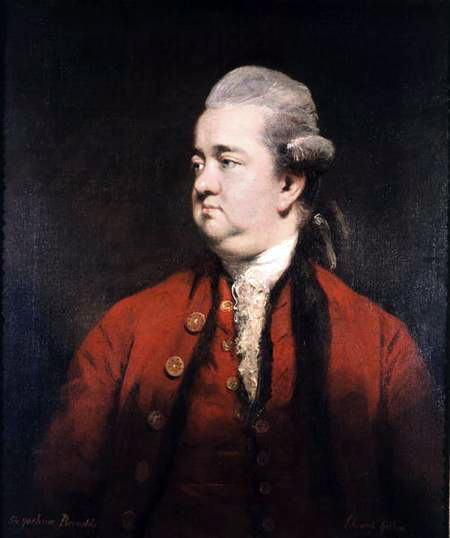
On this day in 1764, Edward Gibbon conceived the idea that he might write a little book about the history of Rome. However, by the time he had finished the first sentence twelve years later, the work had already run into two folio volumes.
—

COMING SOON.
UPDATE: Now available! The new book of old stories from Dr. Boli, including the complete novella The Case of the Missing Case.
FROM THE ILLUSTRATED EDITION.
