Posts by Dr. Boli
KNOW YOUR ROAD SIGNS.

ON THIS DAY IN HISTORY.

Be it enacted by General Assembly that no man shall be compelled to frequent or support any religious worship, place, or ministry whatsoever, nor shall be enforced, restrained, molested, or burthened in his body or goods, nor shall otherwise suffer on account of his religious opinions or belief, but that all men shall be free to profess, and by argument to maintain, their opinions in matters of Religion, and that the same shall in no wise diminish, enlarge or affect their civil capacities. And though we well know that this Assembly elected by the people for the ordinary purposes of Legislation only, have no power to restrain the acts of succeeding Assemblies constituted with powers equal to our own, and that therefore to declare this act irrevocable would be of no effect in law; yet we are free to declare, and do declare that the rights hereby asserted, are of the natural rights of mankind, and that if any act shall be hereafter passed to repeal the present or to narrow its operation, such act will be an infringement of natural right.
This quaintly worded act was in force for about five days before Virginians found a way to wiggle out from under it, but religious freedom was fun while it lasted.
NEWS IN BRIEF.
The Allegheny Extinguisher, Document Safe, Fireproof Tile, and Asbestos Safety Curtain Company warehouse in Chateau burned last night with a loss of all contents.
Two employees of the city accounting department, fired on Thursday, were reinstated this morning after it was demonstrated to the Deputy Director’s satisfaction that “percolation” and “peculation” are not the same thing.
In the latest reorganization of Catholic affairs in Pittsburgh, all Latin Rite churches are scheduled to become Byzantine Rite on March 14, and all Byzantine Rite churches will become Latin Rite on the same date. Maronite churches remain unchanged for the present.
Acrisure yesterday terminated its agreement for naming rights to the football stadium. The naming rights were purchased on the same day by the China National Native Produce and Animal By-Products Import-Export Corporation.
FROM THE ILLUSTRATED EDITION.

SOAP.

Yesterday a new soap appeared in the powder room under the grand staircase.
“Do you like it?” asked the downstairs housekeeper, a young fellow in his early eighties who always seems eager to please.
“It seems soapy enough,” we replied.
“It’s a new scent,” the housekeeper explained. “It’s called ‘Elf shoes.’ ”
A faint smile was all we could manage in reply to this information.
But afterwards, Dr. Boli did a bit of thinking. If young people these days like their soap to smell as if an elf has just removed his feet from it, then this suggests a number of other scents that might be equally appealing. Purely as a service to the fraternity of soap-crafters, Dr. Boli has compiled a list:
Pixie Toenails
Leprechaun Lint
Gnome Underwear
Unicorn Exhaust
Goblin Sweat
Fairy Cigar Butts (Cushlamochree!)
Troll Work Gloves
Sylph Hairnet
ANNOUNCEMENTS.
Elevators at the Wood Street subway station are currently out of service while the buttons are being relabeled to conform with the Executive Director’s idea of what elevator buttons should say. Riders who require the elevators should just suck it up and use the stairs. Pittsburgh Regional Transit apologizes for the inconvenience.
The stairs at the Wood Street subway station are closed for repainting by the Lawrenceville Street Art Collective. Riders who require the stairway should slide down the pole instead. Pittsburgh Regional Transit apologizes for the inconvenience.
HOW MUCH NAZI CAN WE TAKE?
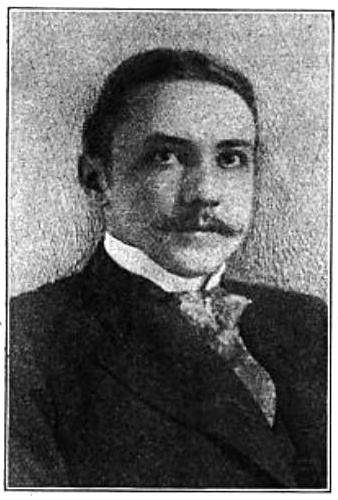
We also mentioned that he harbored ambitions of becoming Nazi dictator of Hungary.
Our friend Father Pitt is still occasionally poking at the life of the mysterious Titus de Bobula, and he has dug up quite a few more curious facts about the man. For example, a pictorial feature in an architectural magazine documents an astonishing mansion he designed in the Bronx—so far the only post-Pittsburgh construction by de Bobula that has come up in Father Pitt’s extensive research. We are sad to say that it has disappeared from its perch overlooking the junction of the Harlem and the Hudson, but the photographs that remain show a prodigious imagination at work.

Father Pitt has also dug up, in English translation, the exact text of the “treaty” between Adolf Hitler and de Bobula and his partner in Hungary. That document, in fact, was what caused de Bobula’s coup to fail: his courier was on his way to Munich to have it signed by Hitler when police stopped and searched him on the train. But if the plan had gone through, here is what would have happened. First, Hitler would take over Bavaria. Then swastika-wearing Bavarian troops would march into Hungary to help de Bobula and company overthrow the government there. Then they would round up all the Jews.
You can read all about Titus de Bobula’s ever-weirdening life in Father Pitt’s greatly expanded article about him. But the case of Titus de Bobula poses an important question in the starkest possible terms. How much can we separate art from the artist who made it? How much Nazi can we take?
On the one hand, Titus de Bobula the architect was an artist of unignorable talent. As Lu Donnelly says on the Society of Architectural Historians site, “De Bobula is the most original force to have emerged from the many immigrant groups who enriched Pittsburgh with their artistic heritages.” Pretty strong words to speak about the city of famous Slovak Andy Warhol, but she makes a strong case.
On the other hand, Titus de Bobula later became a full-blown Nazi who would have started the Holocaust ahead of schedule if he had had his way. (We may find it a little ironic that, in his earlier Pittsburgh years, he drew plans for the new Tree of Life synagogue as one of the entrants in an invitation-only competition. It would have been even more grimly ironic if he had won.) Nor did he have the excuse of being swept along by the tide of popular mania: Titus de Bobula was an early leader in the movement, or at least he fancied himself one.
Even without the sudden swing to fascism, he seems to have been an awful person generally: his wife’s uncle Charles Schwab called him “dishonest, incompetent, and a blackmailer.”
So do we repudiate the art because the artist was a Nazi?
Well, we could do that. But we run into the problem that most great artists are awful people. The best artists tend to have a streak of self-centeredness in them, coupled with an absolute confidence that they know what is good and correct, and a strong willingness to enforce their ideas given half a chance. Our job as citizens of a representative government is to make sure they do not get half a chance. But it would impoverish our museums if we decreed that the artists represented in them had to be of morally upright character.
Of course, this is not necessarily a binary proposition. We don’t have to accept all the rotten apples or none. We could decide that there are degrees of horribleness, and draw a fuzzy line somewhere in the middle. Unfaithful to his wife: pass. Attempted Holocaust: fail.
But it is at least a decision we should make knowing that we are making a decision. If we unthinkingly reject every artist who offends our moral sense, we are bound to run out of artists before we even notice the shortage. If we plan to reject any artists on any moral grounds at all, we ought to decide in advance what our standards are going to be.
Here Dr. Boli will admit to being an extremist himself. He believes in a complete separation between art and artist. This means that we do not even consider the moral character of the artist. If Adolf Hitler draws us a nice picture of a cow, we say, “That’s a nice picture of a cow. I hate Hitler’s guts, but this is a nice picture of a cow.” It also means, incidentally, that the artist has no control over the meaning of the art once it is launched into the world. The artist has a moral right to tell us that his art means this, but we have an equal right to say that it doesn’t, and that the artist has misunderstood his own work. To say otherwise is to say that critics have no right to exist, which would certainly please plenty of artists.
Dr. Boli will even try to find something nice to say about Nazis, just to demonstrate the principle of separating the work from the worker. How about this? Of all the extremist movements of the twentieth century, the Nazis had incomparably the best graphic design. Put your socialist-realist posters away, Soviet propagandists: you just can’t match the Nazis for style. There. That took some effort, but we found something nice to say about Nazis. We have probably exhausted the entire world’s supply of nice things one can say about Nazis, but we did it.
What Dr. Boli is saying is that the question of whether we can swallow the Nazi when we look at Titus de Bobula’s work should not come up, because the art is a separate thing from the artist as soon as the art is presented to the public. You don’t have to swallow the oyster to wear the pearl. Nor, if it comes to that, do you have to wear the pearl to eat the oyster. The pearl grows from a slimy mollusk, but it is not slimy. The First Hungarian Reformed Church of Pittsburgh comes from a Nazi con man, but it is not a Nazi.

THE FAMOUS STEEN GUARANTEE.

LETTER TO THE EDITOR.
Sir: Owing to some embarrassing misunderstandings, it has become necessary for us, the members of Citizens Against Poverty, to explain our organization’s purpose and goals. Misinterpreting the name, some people have conceived the notion that we intend to fight poverty by making everyone uniformly prosperous. If we indeed held such a risible notion, we should deserve all the derision they could heap on us. Even if we lived in a science-fiction socialist utopia, it would still not be possible to make truly uniform prosperity a reality. Instead, it is our purpose to address the problem of poverty in a much more practical-minded and feasible manner by killing all the poor people. Some may call our program cruel, but a thinking citizen will see that it is in fact the opposite of cruelty to put the miserable out of their misery—to remove them from a world that has demonstrated that it has no use for them in the most concrete and unambiguous fashion possible: namely, by making them poor. If there are among your readers any forward-thinking, compassionate, and above all rich citizens who would like to see an end to poverty in our lifetime, they are earnestly invited to submit a membership application with signed credit report to our secretary, Mr. Grenville Handel-Barre, in care of Citizens Against Poverty, Fox Chapel. —Sincerely, Astoria Handel-Barre, President, Citizens Against Poverty.
DID YOU KNOW…
…that the shortest distance between two points in South Carolina always leads past a Waffle House?
…that a marsupial’s “pouch” is, anatomically speaking, a small carpetbag?
…that Beethoven tore up the first draft of his Fifth Symphony after he was unable to find a single competent kazoo player in all of Vienna?
…that the last individual to be prosecuted for blasphemy in Massachusetts was a parrot formerly belonging to the socialist politician Eugene Debs?
…that Einstein’s theory of relativity was heavily censored by the Lord Chamberlain when it was first published in the United Kingdom?