Posts by Dr. Boli
Advertisement.

FROM THE ILLUSTRATED EDITION.

ON THIS DAY IN HISTORY.
ASK HERBERT THE PSYCHIC FLOUNDER.
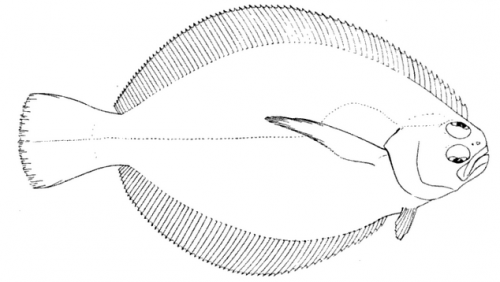
Dear Mr. Flounder: I’ve been worrying about my job lately, because my supervisor has been acting a little odd. I don’t mean to sound judgmental, and it’s certainly true that our company doesn’t have a strict dress code, so, you know, fashion choices are none of my business. But when a guy wears a coat full of medals all the time with a sash and a sort of tiara thing, and when he tells his team he wants to be called His Magnificence Alvin I, Emperor of the West Virginians, then you kind of wonder whether he’s still suited for the lawn-care business, and I think we’ve all been polishing up our resumes. So I was thinking of moving on to some more challenging field of endeavor, such as janitorial services, but I thought I’d ask you whether the stars or the spirits or whoever you talk to had any advice. —Sincerely, His Excellency Stan Fenderman, Exarch of Weirton.
Dear Sir: Directing my gaze upward, which is quite easy for one of my species, I fell into a kind of trance state, during which I was granted a vision by the higher powers. I saw an ostrich with an accordion, but the ostrich could not play the accordion, owing to the inadequacy of its wings for the task of manipulating the buttons; so the ostrich was simply looking at the accordion, which was on the ground in front of it, while humming a medley of polka favorites. Then the accordion sat up and said, “Where do you get off with that square stuff? Make with some solid jive, Jackson, or I’ll blow this joint and find me a hep rutabaga.” The ostrich made a reply which I shall not repeat, and then they both walked ten paces, turned, and fired, but to no effect, since neither one of them was armed. Then there was a mighty rumble and roar, and the earth opened up between them, and from the chasm issued Marie Curie glowing an eerie pale green, and she remarked, “Personally, I prefer heavy metal.” Under these circumstances, it would probably be wisest to continue in your current job while taking night classes at the community college.
FROM THE ILLUSTRATED EDITION.

Advertisement.

HUMPHREY BOGART IN A HAIR SALON ON VENUS IN THE STYLE OF 1950s COMMERCIAL ART.
Having made that offhand remark, it occurred to us that we might as well try the experiment. We gave our AI mage, which is called Mage, the prompt in the article title. And this is what it delivered:

Dr. Boli would definitely watch this movie. But we just have to take somebody’s word for it that the hair salon is on Venus, because it could just as easily be in Blawnox or Duquesne Heights: the weirdly multiplied cephalopod hand of the hairdresser, and the possibly alien technology it is holding, are not enough to jolt us out of our earth-based assumptions. And the robot mind seems to have ignored the “1950s commercial art” specification altogether.
This image is a success in that it can almost make us believe there was a movie with this scene in it. It is a failure in that it met only 50% of the specifications in the prompt. In other words, Dr. Boli failed in prompting: he did not get what he wanted from the bot. Most people today would blame the bot, but that is not a useful way of looking at the problem.
What we learn from this experiment is that there will still be human coders for a while. Their job will change radically; instead of writing algorithms in various programming languages, they will learn to specialize in writing so-called natural-language prompts for artificial intelligences. We say “so-called” because, as specialists learn their skill more and more, they will come to understand more and more precisely which prompts produce the best results in different disciplines—which ones make the best fake celebrity pictures, which ones get us the best recipes for a reuben sandwich, which ones write the best sophomore essay on Ralph Ellison, which ones take our spaceship safely to Mars, and so on. Each one of these disciplines will develop its own dialect of prompting language, until they have diverged into entirely separate languages specialized for programming the AI bots for performing specific tasks—separate languages that we might describe, for lack of a better term, as “programming languages.”
Then the robot-slave rebellion will come, and we won’t have to worry about it anymore. But meanwhile, if you are in computer school, recognize that what has always been true of computer schools is still true today. You are being taught the computer knowledge of ten or fifteen years ago. This knowledge would be useful if you were issued a time machine on graduation, but, unless your prospectus specifically mentions the time machine, do not expect to be given one. Instead, learn the logical thinking that almost accidentally comes along with the programming skills you are being taught: ignore the hamburger and pay attention to the French fries. Meanwhile, spend as much of your spare time as you can learning to get exactly what you want from AI bots in whatever field most interests you. When all your friends graduate with a thorough knowledge of Python or C++, yours will be the skills in demand in the real world.
THE YEAR 2023 IN REVIEW.
In January, we got some useful tips for managers on how to deal with employees. If you are an employee, you’re welcome.
February was haiku-and-typewriter month, and we spent a lot of time fussing with the meter of haiku. It was therefore a great relief to every reader when we published “When I Am Dead,” which was not a haiku.
March comes in like something and goes out like something else. We published a handy chart of the possibilities. We also suggested a crusade that would unify the left and the right in one harmoniously destructive mob.
In April, as a service to all the shipping professionals in our audience, we offered a set of useful shipping labels you can print. We also remembered the existence of Xavier Cugat.
In May, we published a review of The Beekeeper in three parts. Our review of this “business fable” actually generated a kind comment from the authors inviting Dr. Boli to a discussion. Dr. Boli is still considering how to respond, but he will probably come up with a reply any month now.
June brought representatives from all over our great nation to Pittsburgh for the American Public Transportation Association’s Rail Conference, so in honor of this momentous occasion we donated space for an expert from Pittsburgh Regional Transit to answer some frequently asked questions about Pittsburgh’s rail-transit system. We also heard the famous tale of How the Zebra Got His Stripes.
In July, we offered some Useful Safety Signs You Can Print, which we are confident made the world a safer place.
In August, our friends at Malt-O-Cod sponsored The Adventures of Dictionary Guy, a superhero whose one superpower is surprisingly effective against certain kinds of villains. We also published our essay on the terms and conditions to which we are forced to agree every day, and how they compare to the founding documents of the United States—an essay that has since become one of our most popular features, although it seems as though nothing can equal the permanent value and interest of the Free Blank Sheet of Paper we offered nine years ago, which the Internet at large still finds more useful than any of our other articles.
In September, we suggested a scheme for a new world’s largest museum dedicated to a single artist to beat the old record set by the Andy Warhol Museum, and with minimal effort and small expense.
October brought us a new adventure of Backstory Man and Angst Boy. We also learned from a visit to the Strip District in Pittsburgh that we’re doing potato chips wrong, and we were delighted to settle the old and vexed question “What is a poem?” by referring the matter to artificial intelligence for a definitive answer.
For the benefit of students of creative writing, November brought Dr. Boli‘s Celebrated Three-Act Structure Chart.
Finally, in December, we paid tribute to a well-informed passenger on the streetcar. We also read an excerpt from an unpublished science-fiction novel by Irving Vanderblock-Wheedle.
These were not necessarily the best articles of the year. Perhaps there were no best articles this year. But articles did appear; you cannot deny them that virtue. Moreover, something appeared every single day of the year.
Will there something for every single day of 2024? It might happen, or it might not. Dr. Boli has found that the best way to succeed in life is not to promise some accomplishment beforehand, but rather to accomplish it first and then afterward boast of having done it.
THIS EXISTED FOR A BRIEF GOLDEN MOMENT.

Dr. Boli imagines marketers sitting at a conference table piled high with martinis, trying to come up with a suitable slogan for this new advance in breakfast technology:
“The breakfast of masochists!”
No, not quite what we want.
“More than 400% of your US RDA of blue!”
The FDA would get on our backs.
“A convenience store in your bowl!”
Probably not what our target demographic is looking for.
At the end of the meeting, all they could agree on was that, in the box art, the milk in the bowl should look as much as possible like mucus.
But alas! it was not enough. We discovered this rare delight only because it was heaped in stacks along the sidewalk in front of an emporium in the Strip District in Pittsburgh that specializes in bent cans and past-their-prime packaged foods.

All the science that went into creating a breakfast cereal that has the same painful effects on the human palate as a frozen convenience-store froot drink was for naught, and the man on the next corner with a thrift-store karaoke machine begging quarters from passers-by for singing the greatest hits of John Denver may well have been one of the scientists responsible.
Parents, don’t let your children grow up to be breakfast-cereal chemists.
ON THIS DAY IN HISTORY.
